Get in touch
Questions about growing, workshops, the cooperative or partnerships? Send us a message and we will reply by email.
Prefer email? Write to erasmus@evec.org.gr
EVEC Microgreens
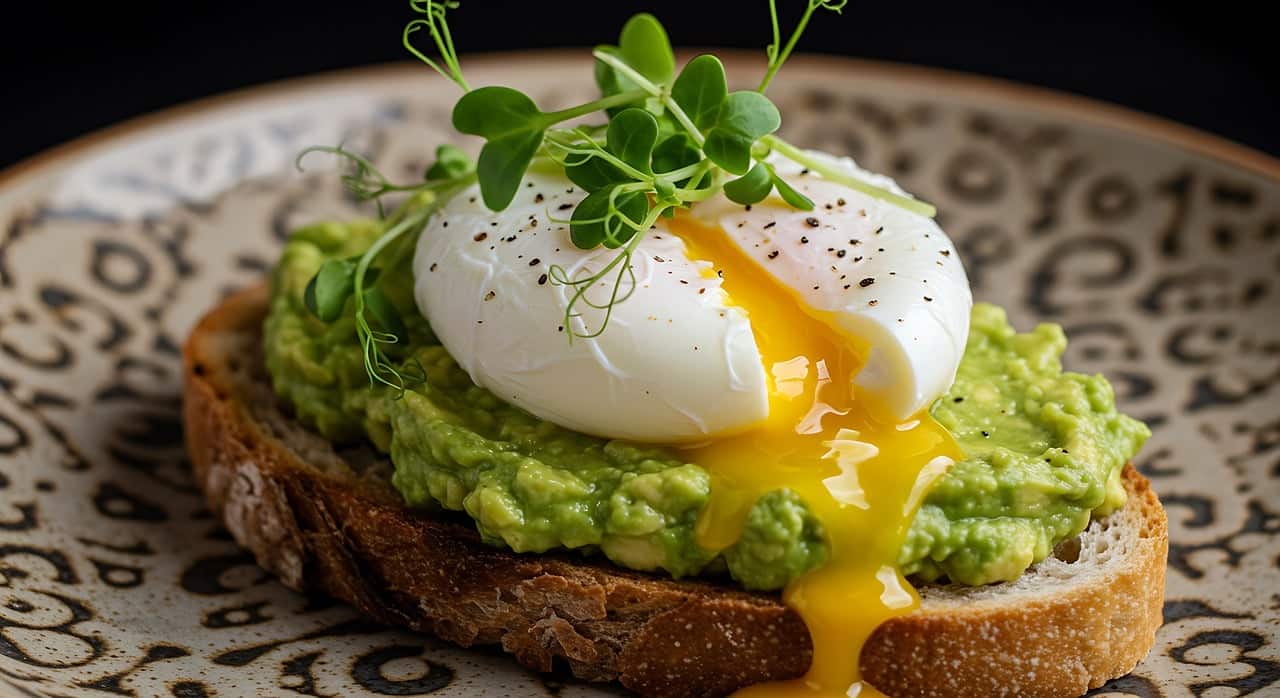
Why some microgreens are spicy and others sweet: glucosinolates, green leaf volatiles and phenolics, and how light, harvest timing and growing stress shift the flavour.
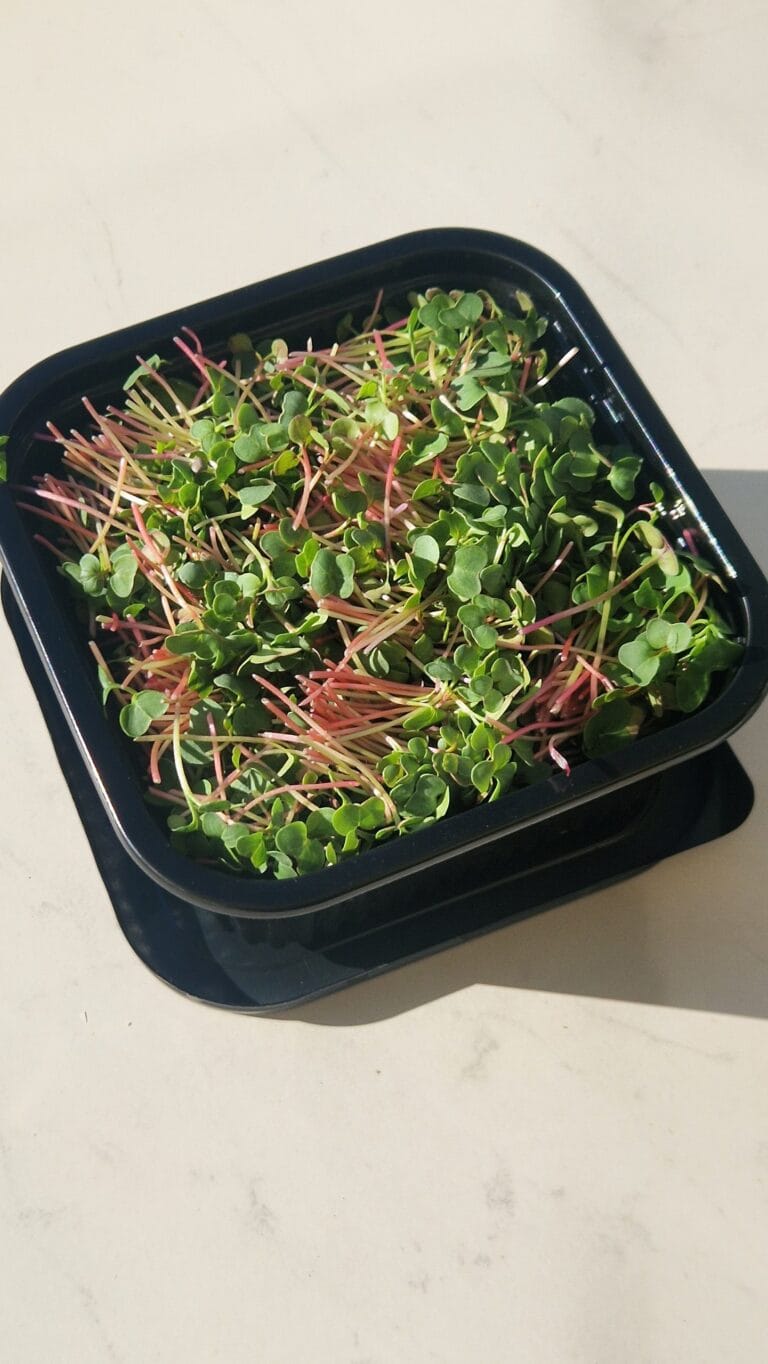
Are microgreens spicy? Some are and some are not, and the split is predictable. Radish, mustard and arugula turn sharp on the tongue; pea, sunflower and corn taste sweet; wheat, barley and cilantro read like freshly cut grass. Microgreens are valued for their nutritional content and visual appeal, but it is the sensory profile that separates one species from another.
Why does this happen? The answer lies in the interaction between genetics, phytochemical composition, and growing conditions, all of which can be explained through sensory analysis.
Sensory analysis is the scientific discipline that evaluates food using the five senses: sight, smell, taste, touch, and hearing. In the case of microgreens, attributes commonly analyzed include:
Sensory studies conducted on different microgreen species show that consumers clearly perceive differences between varieties, even when they look visually similar. These differences are closely linked to the chemical compounds present in each species.
If you have ever tasted radish, mustard, or arugula microgreens, you have likely noticed a sharp, tingling sensation on the tongue or even in the nose.
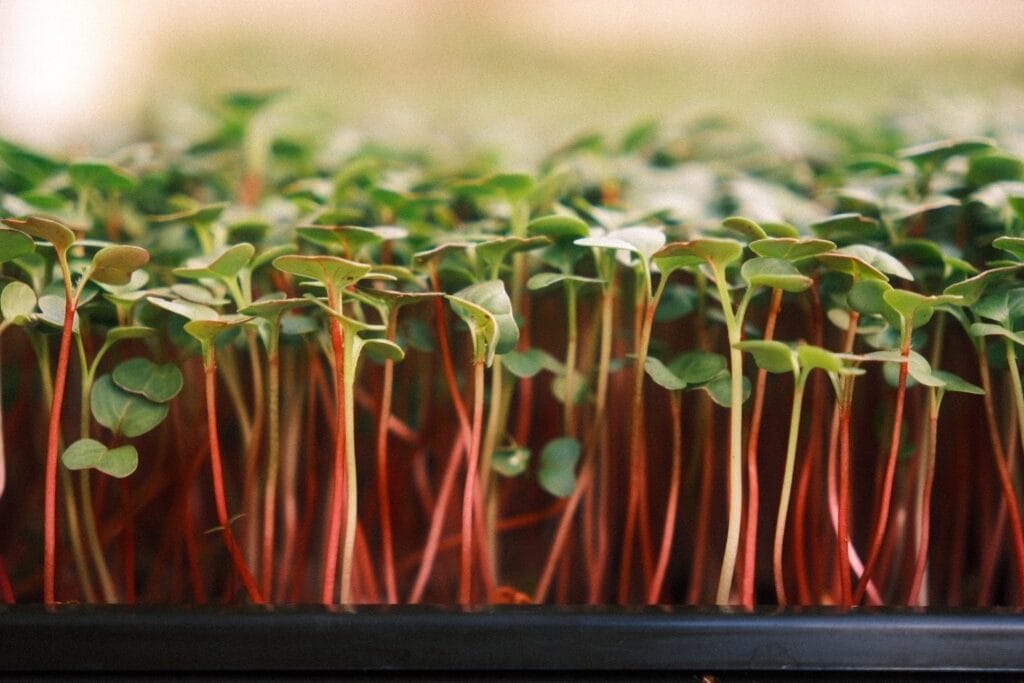
The main cause is glucosinolates, sulfur-containing compounds typical of the Brassicaceae family. When the plant is cut or chewed, these compounds are converted into isothiocyanates, which are responsible for:
Glucosinolate levels differ sharply from one species to the next at the microgreen stage. In a 2024 comparison of six Brassicaceae microgreens, Savoy cabbage and Brussels sprouts carried the highest loads — roughly 76 and 78 mg sinigrin equivalents per gram of dry matter — well clear of the others grown alongside them.
You will often read that microgreens always hold more glucosinolate than the mature plant, and that this is why radish microgreens taste sharper than a full-grown radish. We could not source that as a general rule, so we are not asserting it. What the measurements do support is that the gap between species is large, and that the pungency you taste tracks the glucosinolate load of the particular species in front of you.
Some varieties, such as pea, sunflower, or corn microgreens, have milder and sweeter flavor profiles.
Sweetness in microgreens is mainly due to:
Sensory studies show that these varieties tend to have higher acceptance among general consumers, especially those who are less accustomed to bitter or intense flavors.
Additionally, factors such as proper lighting and harvesting at the optimal time can enhance sugar accumulation, intensifying the perception of sweetness.
Many microgreens evoke the aroma of freshly cut grass. This characteristic is due to so-called green leaf volatiles.
These compounds are released when plant tissue is damaged (for example, during cutting or chewing) and generate:
This profile is typical in varieties such as wheat, barley, cilantro, or young lettuces.
From a sensory perspective, these notes are often described as:
The intensity depends on both the species and its stage of development.
Phenolic compounds are natural antioxidants present in many microgreens. Although they provide nutritional benefits, they also influence flavor.
At high concentrations, they can produce:
In gourmet cuisine, this profile can be highly valued for adding complexity.
Flavor does not depend solely on species. The environment also plays an important role.
1. Light
Light intensity and type affect the production of phenolic and sulfur containing compounds.
2. Harvest Time
A microgreen harvested a few days earlier may taste milder; a few days later, more intense.
3. Growing Stress
Factors such as temperature or water availability can increase the production of secondary metabolites, intensifying flavor and aroma.
Acceptance studies reveal interesting patterns:
However, in professional kitchens, intense profiles are valued as tools for contrast and sensory design.
Are microgreens spicy, sweet, or reminiscent of fresh grass? Which one you get is not random. It is the result of:
In short, microgreens may be small in size, but they are enormous in sensory complexity. Understanding this diversity allows us not only to appreciate them more fully, but also to cultivate them strategically according to the desired flavor profile.
Carlota
In July 2026 we removed a seed retailer’s page and a sensory consultancy’s blog post from this list and put a peer-reviewed measurement of Brassicaceae glucosinolates in their place. A seed seller has no business appearing under “Sources” in a science library — see our editorial standards.
Caracciolo, F., El-Nakhel, C., Raimondo, M., Kyriacou, M.C., Cembalo, L., De Pascale, S., & Rouphael, Y. (2020). “Sensory Attributes and Consumer Acceptability of 12 Microgreens Species”. Agronomy, 10(7), 1043. Open the study ↗
Baños Ardavín, E. J., Urrutia Albisua, E., Rodríguez Regordosa, H., Olmos López, J., & Díaz Vázquez, A. Análisis sensorial. Universidad Popular Autónoma del Estado de Puebla. https://investigacion.upaep.mx/micrositios/assets/analisis-sensorial_final.pdf
Bhaswant, M., Shanmugam, D.K., Miyazawa, T., Abe, C., & Miyazawa, T. (2023). “Microgreens — A Comprehensive Review of Bioactive Molecules and Health Benefits”. Molecules, 28(2), 867. Open the study ↗
Šola, I., Vujčić Bok, V., Popović, M., & Gagić, S. (2024). “Phytochemical Composition and Functional Properties of Brassicaceae Microgreens: Impact of In Vitro Digestion”. International Journal of Molecular Sciences, 25(21), 11831. Open the study ↗
Universidad Autónoma del Estado de Hidalgo. Sensory evaluation of food products. https://www.uaeh.edu.mx/scige/boletin/icbi/n3/m1.html
This article is part of the free knowledge portal of EVEC Microgreens. Wherever you are on your microgreens journey, there is a path for you:
Co-funded by the European Union.
This portal presents the microgreens methodology; the organisation behind it is EVEC Athens — the European Voluntary and Educational Center (evec.org.gr). Views and opinions expressed are those of the author(s) only and do not necessarily reflect those of the European Union or the European Commission. Neither the European Union nor the granting authority can be held responsible for them.
Open licence. Except where stated otherwise, the educational materials on this portal are licensed under CC BY 4.0 — free to use, adapt and share, including commercially, with credit. See the licence terms.
Accessibility. We aim for WCAG 2.1 AA and publish what does and does not yet meet it — see the accessibility statement. If anything here blocks you, tell us and we will send the material in a format that works for you.