Get in touch
Questions about growing, workshops, the cooperative or partnerships? Send us a message and we will reply by email.
Prefer email? Write to erasmus@evec.org.gr

EVEC Microgreens
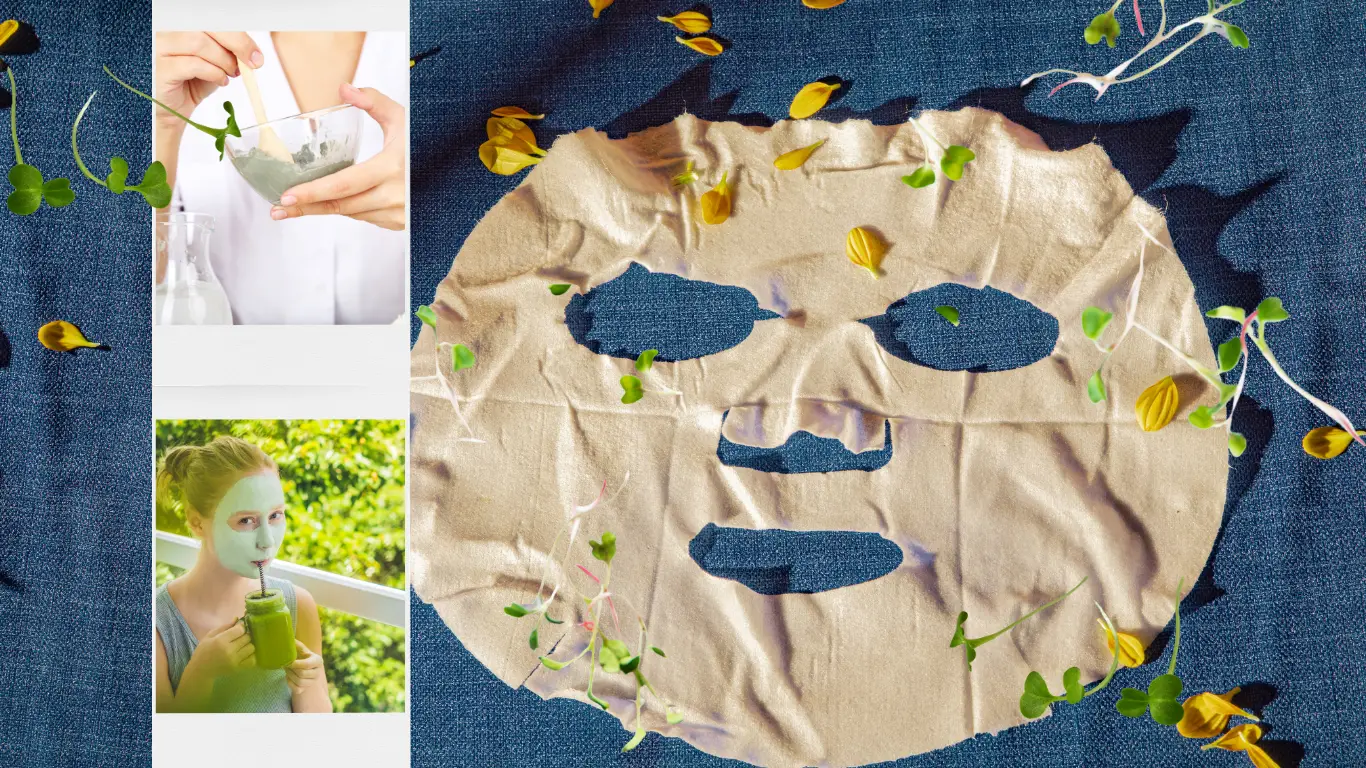
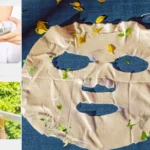
Part 1 of the beauty series: a spinach microgreen and flaxseed face mask, plus a microgreen and fruit smoothie — presented as homemade cosmetics, not as skin treatments.
Homemade cosmetics made from a tray of greens. That is what this four-part series is, and it is worth saying so at the top.
Microgreens turn up in a lot of DIY skincare, almost always with a promise attached about what their vitamins and antioxidants do to your face. Skin is a barrier, and the nutrients in a blended plant largely do not cross it, so that is not a promise we make. What is left is simpler and still worth your afternoon: these recipes are cheap, they use something you already grow, and they are pleasant to make.
Today, let’s look at two simple ways to use them: masks and smoothies.
What we corrected in this article. This page used to say microgreens are “packed with vitamins, minerals, and antioxidants that nourish and protect your skin”, that spinach microgreens are “especially beneficial” for mature, dry or flaky skin, that their organic acids “restore vitality”, and that a microgreen smoothie is a “powerful inside-out glow booster”. None of that had a source behind it, and topical application is not how nutrients reach skin. The recipes are unchanged. The promises attached to them are gone. The same correction has been applied across all four parts of this series.
One of the easiest things to make with microgreens is a face mask. Microgreens do contain:
Spinach is the microgreen we reach for here for practical reasons: it blends to a smooth paste, it is mild, and it is easy to grow. It does contain vitamins B3, B6, K, E and C — and those matter to skin when you eat them. A mask is a mask, not a delivery route, so we are not going to tell you spinach suits mature or flaky skin better than any other kind.
Here are 3 DIY spinach microgreen masks, from easiest to most advanced:
You’ll need:
How to make:
You’ll need:
How to make:
You’ll need:
How to make:
The dietary side is where the evidence actually sits, and it is narrower than it sounds. Skin needs vitamin C to make collagen, and microgreens are a measured source of it — that is an argument for eating vegetables, not a promise about your complexion, and we set the whole case out in our article on vitamin C, collagen and microgreens. The practical reason to put them in a smoothie is that their flavour is mild enough to disappear into fruit.
Ingredients:
You can swap in strawberries or blueberries for a different flavor twist or any other fruit.
Instructions:
Today we covered microgreen face masks and a microgreen smoothie: two cheap, simple things to make at home from a tray of greens.
Not quite your thing? Part 2 covers toners and bath soaks, on exactly the same terms as this one.
In the meantime, our companion article “Eat your skincare: vitamin C, collagen and microgreens” sets out what the evidence does and does not support. Or browse the rest of the site for more on these tiny mighty little leaves.
See you in Part 2!
Julia
“Eat your skincare: vitamin C, collagen and microgreens”
This article is part of the free knowledge portal of EVEC Microgreens. Wherever you are on your microgreens journey, there is a path for you:
Co-funded by the European Union.
This portal presents the microgreens methodology; the organisation behind it is EVEC Athens — the European Voluntary and Educational Center (evec.org.gr). Views and opinions expressed are those of the author(s) only and do not necessarily reflect those of the European Union or the European Commission. Neither the European Union nor the granting authority can be held responsible for them.
Open licence. Except where stated otherwise, the educational materials on this portal are licensed under CC BY 4.0 — free to use, adapt and share, including commercially, with credit. See the licence terms.
Accessibility. We aim for WCAG 2.1 AA and publish what does and does not yet meet it — see the accessibility statement. If anything here blocks you, tell us and we will send the material in a format that works for you.

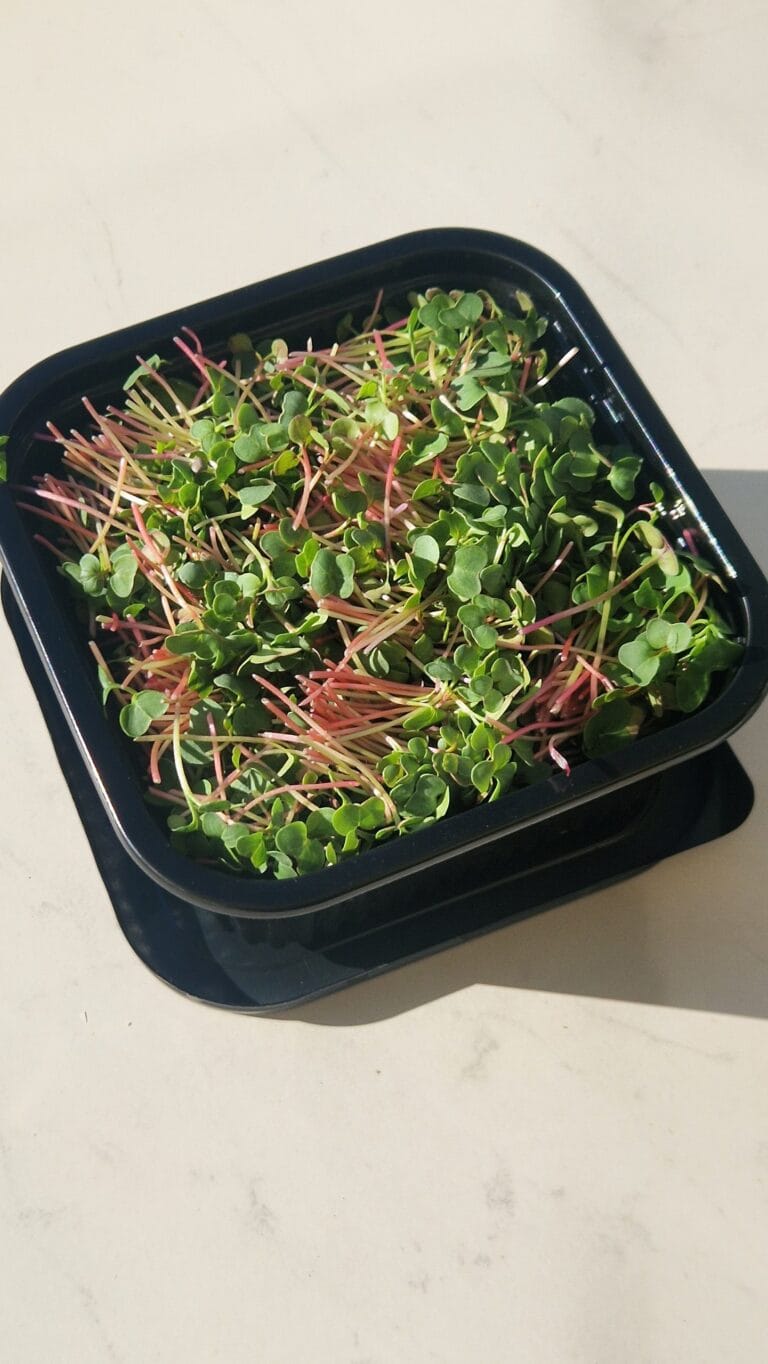

[…] How to Incorporate Microgreens into Your Beauty Routine – Part 1/4 […]
[…] How to Incorporate Microgreens into Your Beauty Routine – Part 1/4 […]
[…] How to Incorporate Microgreens into Your Beauty Routine – Part 1/4 […]
[…] How to Incorporate Microgreens into Your Beauty Routine – Part 1/4 […]