Get in touch
Questions about growing, workshops, the cooperative or partnerships? Send us a message and we will reply by email.
Prefer email? Write to erasmus@evec.org.gr
EVEC Microgreens
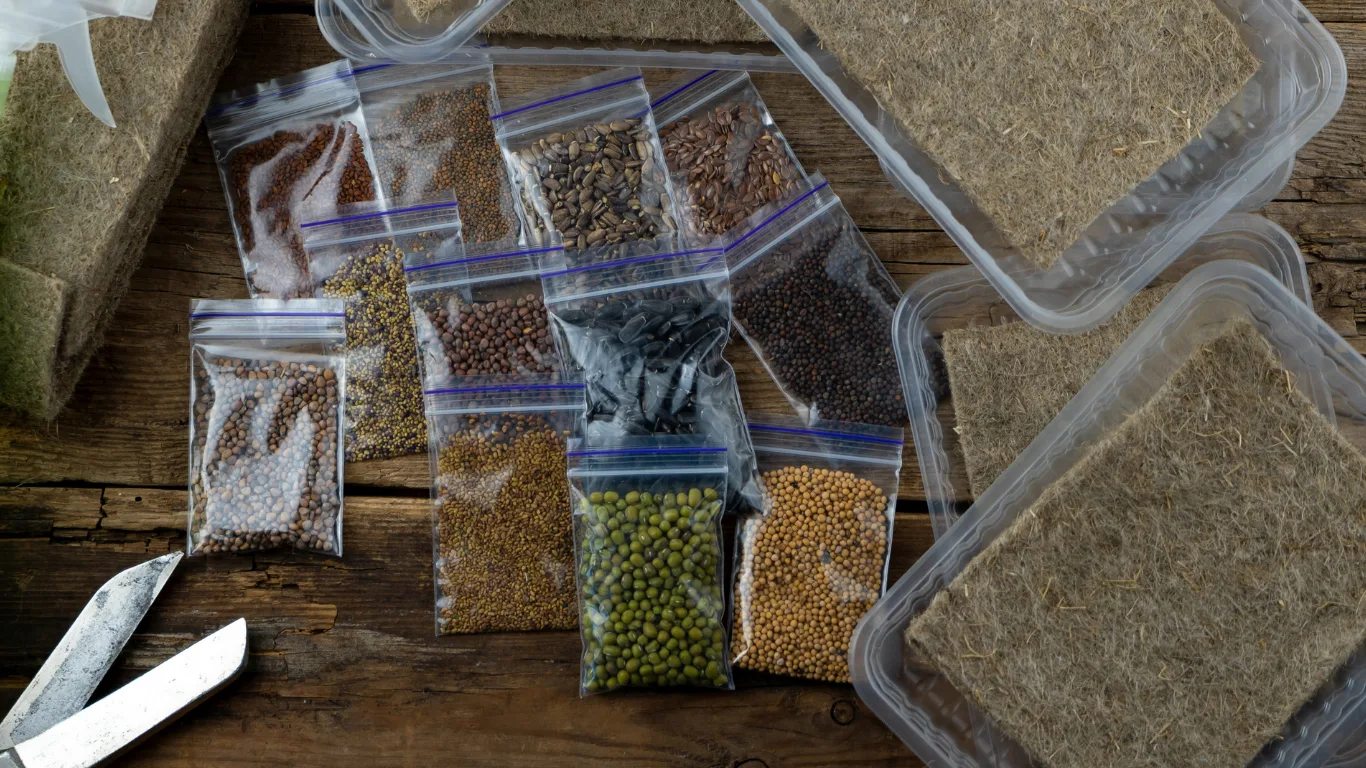
How to extend the shelf life of microgreens: harvesting, drying, temperature and storage methods that keep them fresh for days instead of hours.
Mould is the challenge most growers meet first, but it is not the one that limits what you can do with a crop. That limit is time. This article looks at what actually happens to microgreens after harvest, and what the research says about slowing it down.
The biggest weakness of these tiny greens is their extreme perishability. Unlike other leafy vegetables, they begin to lose quality almost immediately after harvest. This is what constrains large-scale marketing and distribution, and it is the reason microgreens are so rarely found in supermarkets despite the interest in them. On a smaller scale it is a familiar problem in our own growing space too: a tray comes ready all at once, and there is more than anyone can eat before it turns.

When stored at room temperature, the shelf life of microgreens can be as short as 24 to 48 hours. After that, they begin to wilt, lose their crunchy texture, and, most importantly, their nutrient content decreases. On top of that, humid conditions encourage the growth of microorganisms that can compromise food safety.
1. Preharvest treatments
One of the most common methods is applying calcium solutions to the plants before harvest. In trials, pre-harvest calcium sprays raised antioxidant enzyme activity, kept cell membranes intact (less electrolyte leakage), improved visual quality and slowed microbial growth in storage. In the broccoli trial that is usually cited for this, a 10 mM calcium chloride spray roughly doubled yield and left the harvested tissue in better condition through storage — but note that this is one species under controlled conditions, not a figure to expect from every crop.
2. Washing and disinfection
After harvest, washing with chilled chlorinated water (around 5 °C) is effective for reducing the initial microbial load. Concentrations between 50 and 100 mg/L of chlorine have been shown to reduce that load without harming the appearance of the greens. One caveat is important, though, and it is often left out: a chlorine wash knocks the count down at day zero, but the surviving population regrows during storage, and by roughly a week the difference between washed and unwashed product can largely disappear. Washing buys time; it does not sterilise, and it is no substitute for cold storage. As a more sustainable alternative, researchers are exploring mixtures of citric and ascorbic acids combined with ethanol.
3. Packaging and atmosphere control
Packaging plays a crucial role, and the detail that matters most is the film’s oxygen transmission rate (OTR). Microgreens respire very fast for their weight, so a sealed bag with a low OTR drives the oxygen inside down until the tissue switches to fermentation and develops off-odours. The film has to let enough oxygen through to keep pace with that respiration. This is why the modified atmospheres reported as favourable are only mildly reduced — oxygen around 14–16 kPa against 21 kPa in ordinary air, with carbon dioxide kept low at 1–1.5 kPa. The aim is a gentle brake on metabolism, not an airtight seal.
4. Optimal storage temperature
Cold storage is the single most effective lever, and nothing else on this list compensates for getting it wrong. Trials on brassica microgreens have reported shelf lives of two to three weeks at around 1 °C, which is what makes distribution to distant markets conceivable at all.
Two qualifications belong with that number. First, it comes from specific crops under research conditions — a domestic fridge typically runs at 4–7 °C, so at home the realistic target is simply as cold as the fridge goes without freezing, and the expectation should be days rather than weeks. Second, near-0 °C storage is not universally safe: basil and other chilling-sensitive species are damaged well above freezing and are better held around 10–12 °C. The right storage temperature depends on the crop.
Two lines of research are worth watching, with the caveat that both are still exploratory. Edible coatings based on alginate or chitosan form a thin protective film that slows water loss and gas exchange; most of the published work is on fruit and cut vegetables, and evidence specific to microgreens remains thin. Low-intensity light during storage has been reported to help leafy greens retain chlorophyll and vitamin C, but results differ by species and light dose, and it adds cost and complexity to a cold chain. Neither is standard commercial practice today.
Taken together, pre-harvest treatment, careful washing, the right packaging film and — above all — an unbroken cold chain can move microgreens from a 24-hour product to one that survives a week or more. None of it is free: every step trades cost, quality or convenience against time. And no treatment reverses decline, it only slows it. For a grower, that is the difference between selling at a local market and reaching a supermarket shelf. For a household, the practical lesson is simpler — harvest, dry the leaves, chill them fast, and eat them soon.
Storage tolerance differs from crop to crop: the crop database covers the individual varieties, the harvesting guide covers the step just before storage, and the Science Library collects the published research on microgreens.
That’s all from us today, friends. We hope you found this article useful.
See you next time!
Carlota
This article is part of the free knowledge portal of EVEC Microgreens. Wherever you are on your microgreens journey, there is a path for you:
Co-funded by the European Union.
This portal presents the microgreens methodology; the organisation behind it is EVEC Athens — the European Voluntary and Educational Center (evec.org.gr). Views and opinions expressed are those of the author(s) only and do not necessarily reflect those of the European Union or the European Commission. Neither the European Union nor the granting authority can be held responsible for them.
Open licence. Except where stated otherwise, the educational materials on this portal are licensed under CC BY 4.0 — free to use, adapt and share, including commercially, with credit. See the licence terms.
Accessibility. We aim for WCAG 2.1 AA and publish what does and does not yet meet it — see the accessibility statement. If anything here blocks you, tell us and we will send the material in a format that works for you.

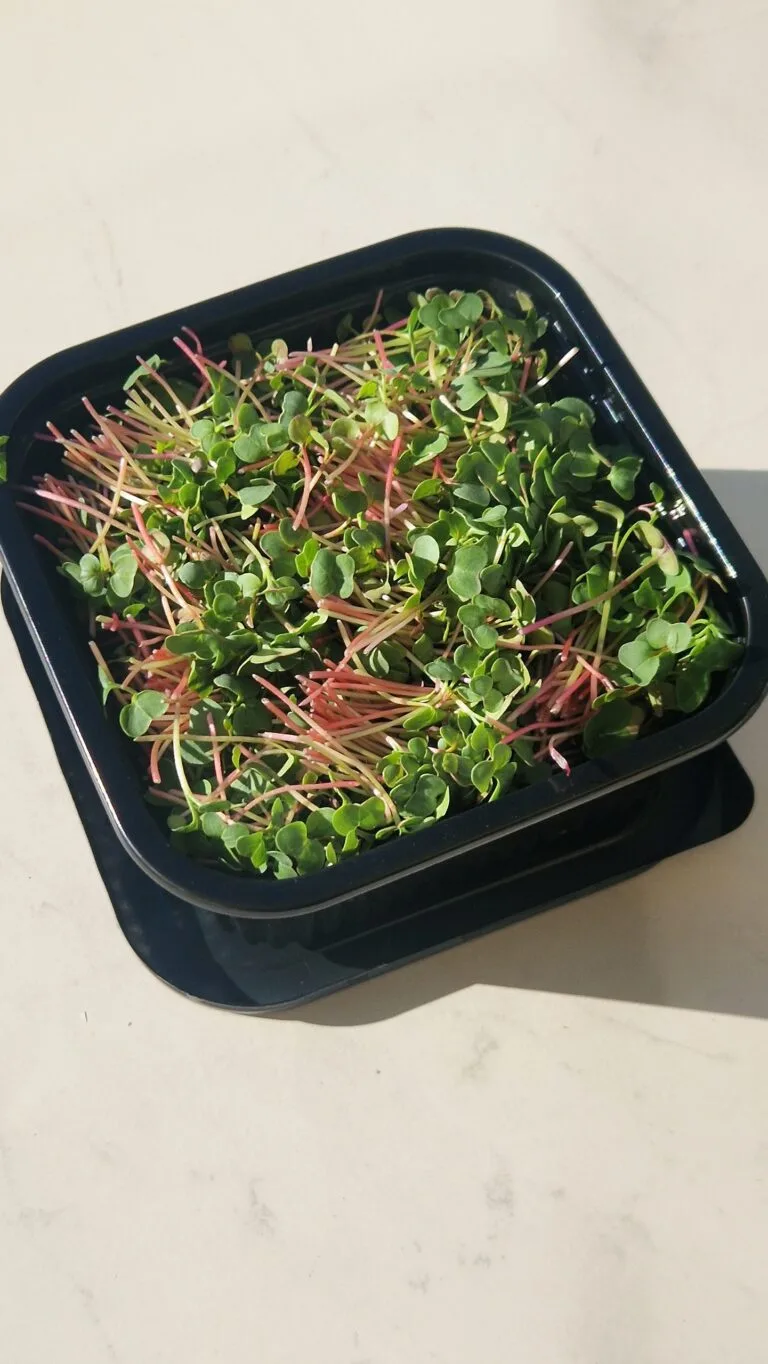

[…] we mentioned in previous articles, microgreens have a very short shelf life after harvest, posing challenges for storage and […]
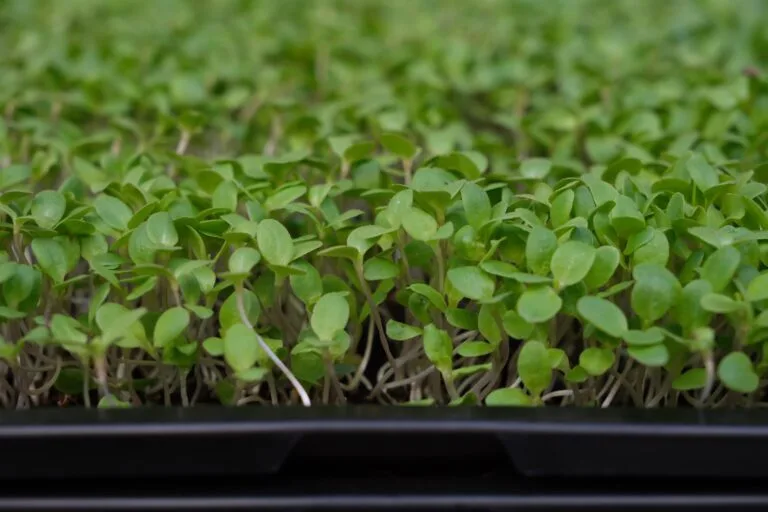
[…] negative aspect of microgreens, one we’ve also mentioned before, is their short shelf life after harvest. Due to their fragility and high water content, microgreens begin to wilt and lose […]
[…] For chefs and microgreen producers, these processes can also help extend the product’s shelf life, an important aspect given that fresh microgreens are highly perishable. […]