Get in touch
Questions about growing, workshops, the cooperative or partnerships? Send us a message and we will reply by email.
Prefer email? Write to erasmus@evec.org.gr
EVEC Microgreens
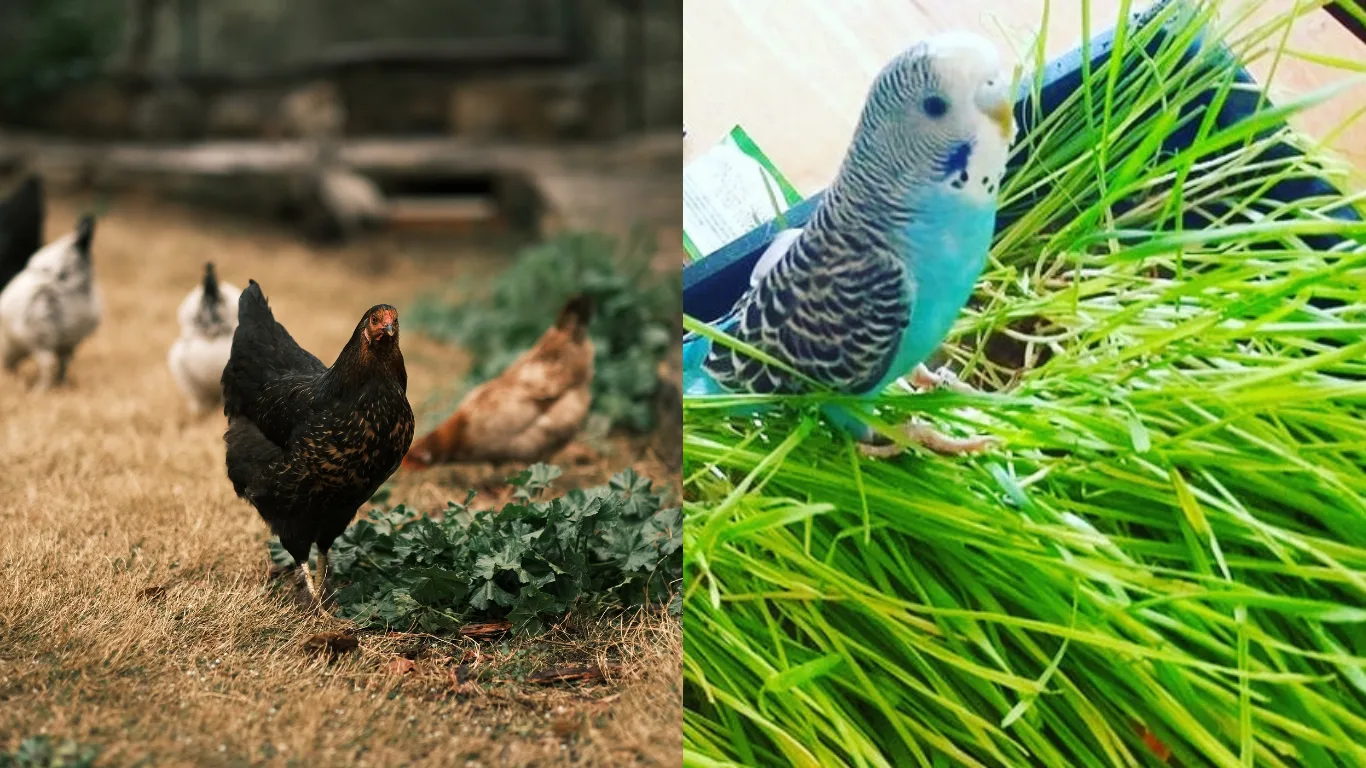
Microgreens for chickens, parrots and budgies: a treat alongside complete feed, not a percentage of it. What the extension and veterinary sources actually say, and what we removed.
This is the last article in our series on microgreens across the animal kingdom, which has already covered reptile diets and what to feed pet snails. This one goes to the birds — backyard chickens, parrots, budgies and the rest.
Most people who keep birds end up upgrading things over time. Better feed, fresher vegetables, eventually growing something themselves. Microgreens fit that instinct neatly: fresh, fast, and grown where you can see exactly what went into them.
What we changed in this article. An earlier version told chicken keepers to “keep them to around 10 to 15 percent of the total diet”. We could not trace that figure to any poultry nutrition source, so it is gone — replaced below with what an extension service actually says. Two more things went with it: a claim that sprouts supply “enzymes that support digestion”, which is not a supportable nutritional statement, and a Reddit thread plus a quoted user comment that were being presented as sources.
Microgreens are young vegetable plants harvested a week or two after sowing. Their nutrient content has been measured: Xiao, Lester, Luo and Wang (2012) assayed 25 commercially available microgreens and found total ascorbic acid ranging from 20.4 to 147.0 mg per 100 g fresh weight, along with β-carotene, lutein/zeaxanthin, phylloquinone (vitamin K1) and tocopherols (vitamin E), concluding that the cotyledon leaves possessed higher nutritional densities than mature leaves in the USDA database.
Note what that does and does not establish. It is a compositional study of the plants — good evidence that microgreens are nutritious food. It is not a feeding trial in chickens or parrots, and it says nothing about health outcomes in birds. Fresh plant matter as forage and enrichment is a sound reason to offer them; a claimed health effect is not one we can give you.
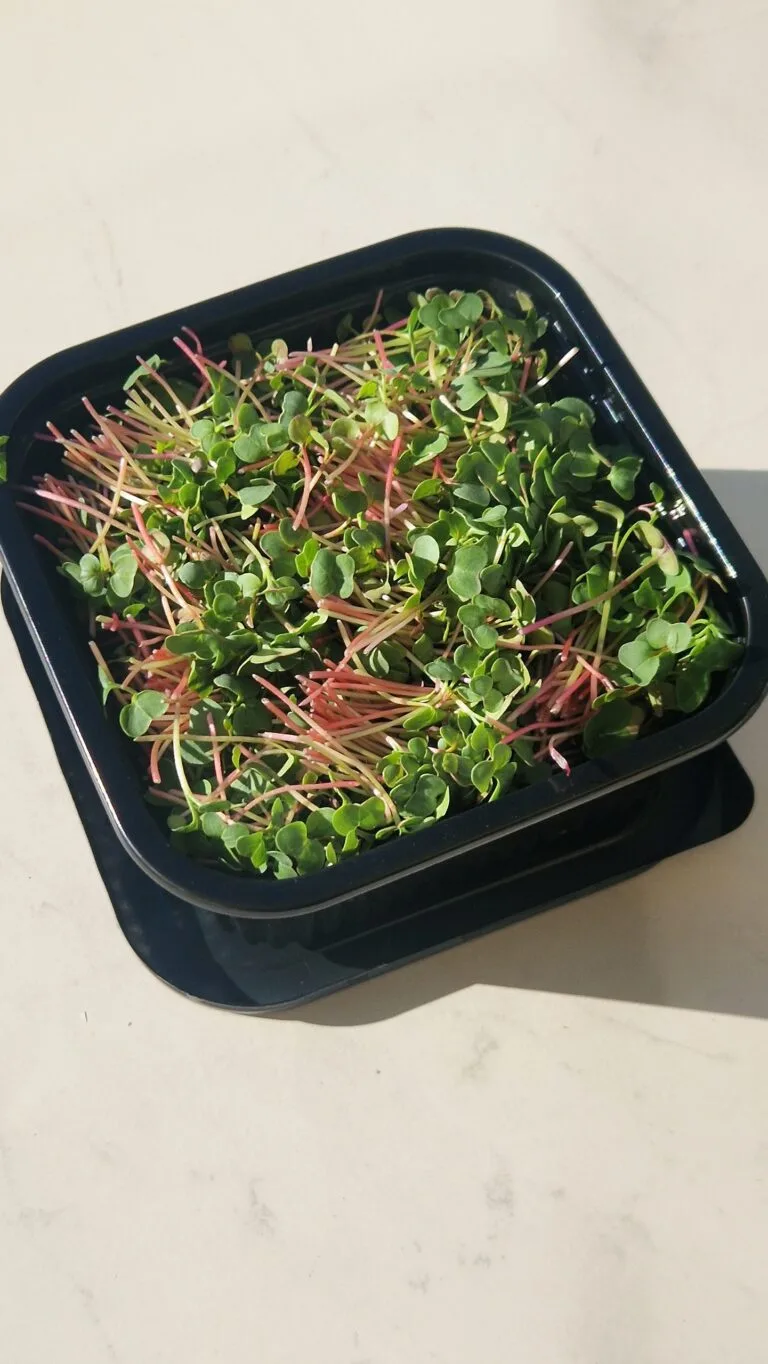
Chickens are not fussy. Most flocks will go straight for tender fresh greens. Sunflower, pea shoots, radish, buckwheat and broccoli are the varieties most often grown for them, with clover and alfalfa also common.
How much? Here is the sourced answer, in place of the percentage we removed. The University of Georgia Extension circular Nutrition for the Backyard Flock (Circular 954) is explicit that a formulated poultry feed is designed to be complete, and that supplementary material is not: scratch feed “should not be considered a complete feed for any type of bird… it does not have a complete balance of any of the nutrients a chicken needs to live”, and it “should only be thrown out as an occasional treat for the birds. It also should never be mixed with a complete formulated diet. Doing so causes a nutrient imbalance in the total diet of the birds, increasing the calories while reducing the protein, vitamin, and mineral content.”
Microgreens are a treat in exactly that sense. Offer them as an occasional extra, keep the complete feed available and unadulterated, and do not let greens crowd it out. The circular does not give a percentage figure, and neither will we.
What to keep away from the flock — and how strong the evidence is. Nightshade seedlings (tomato, potato, pepper) are the clearest case: Penn State Extension’s Plants Toxic to Horses entry for nightshade states that “all livestock are affected”, naming the vegetation as a poisonous part, with central nervous system and gastrointestinal signs. On onion and other alliums, the Merck Veterinary Manual documents Heinz body haemolytic anaemia in cats, dogs and production animals including cattle, sheep, goats and pigs — poultry are not among the species it names, so we exclude allium seedlings as a precaution rather than on a chicken-specific finding. Rhubarb appears in the ASPCA’s database as toxic to dogs, cats and horses on account of soluble calcium oxalates; again, not a poultry source. We would rather tell you the shape of the evidence than pretend a tidy poultry toxicity list exists, because we could not find one.
For parrots and small birds, the case for fresh plant food is stronger than for most species, because the default diet is often worse. The MSD Veterinary Manual’s chapter on Nutrition in Psittacines states that “strictly seed diets, regardless of supplementation, are suboptimal for psittacine species because seeds are deficient in vitamin A, protein (the amino acids lysine and methionine, in particular), calcium, and other nutrients”.
That is the real argument for greens in a parrot’s bowl: they are part of moving a bird off a seed-only diet, alongside a formulated pellet. Broccoli, radish, alfalfa and clover microgreens are commonly offered, as are sprouted grains. Legumes such as lentils and mung beans should be properly sprouted or cooked before feeding.
We have dropped the “living food… still biologically active” framing that used to be here. Sprouts are fresh, which is a real advantage over stale produce. The enzyme story attached to it is not something we can source.
Anyone who has owned a budgie knows they can be dramatic about food. New items get inspected and ignored, sometimes for weeks. Mixing greens with something familiar, or presenting them in a different shape or position in the cage, is the usual way through it, and persistence generally wins.
That is owner experience, including ours, and we are calling it that. This article used to make the same point by quoting an anonymous Reddit user and listing the thread as a source. The observation was fine; the sourcing was not.
A tray, growing medium, water and light. Most microgreens are ready in 7 to 14 days, so a small rotation gives you a steady supply.
For birds, plain sprouting is easier still: soak seed, rinse it daily, let it grow. Hygiene is the whole game here — sprouting conditions suit bacteria and mold as well as seeds, so rinse thoroughly, use clean equipment and throw away anything that smells wrong.
Chickens need their complete feed. Parrots and small birds need a formulated pellet base, with vegetables and some seed around it. Microgreens add freshness, variety and something to forage at — a genuine improvement to a feeding routine, and not a substitute for any part of it.
This article is general information for bird keepers, not veterinary advice. Species-specific diet questions — including how much of anything to feed, and anything concerning a sick bird — belong with an avian veterinarian.
Removed from this list: a Reddit thread, a YouTube video, and four vendor and hobby-blog pages. They were the only support for the feeding percentage and the “living food” claims, which is why both have been rewritten above.
This article is part of the free knowledge portal of EVEC Microgreens. Wherever you are on your microgreens journey, there is a path for you:
Co-funded by the European Union.
This portal presents the microgreens methodology; the organisation behind it is EVEC Athens — the European Voluntary and Educational Center (evec.org.gr). Views and opinions expressed are those of the author(s) only and do not necessarily reflect those of the European Union or the European Commission. Neither the European Union nor the granting authority can be held responsible for them.
Open licence. Except where stated otherwise, the educational materials on this portal are licensed under CC BY 4.0 — free to use, adapt and share, including commercially, with credit. See the licence terms.
Accessibility. We aim for WCAG 2.1 AA and publish what does and does not yet meet it — see the accessibility statement. If anything here blocks you, tell us and we will send the material in a format that works for you.