Get in touch
Questions about growing, workshops, the cooperative or partnerships? Send us a message and we will reply by email.
Prefer email? Write to erasmus@evec.org.gr
EVEC Microgreens
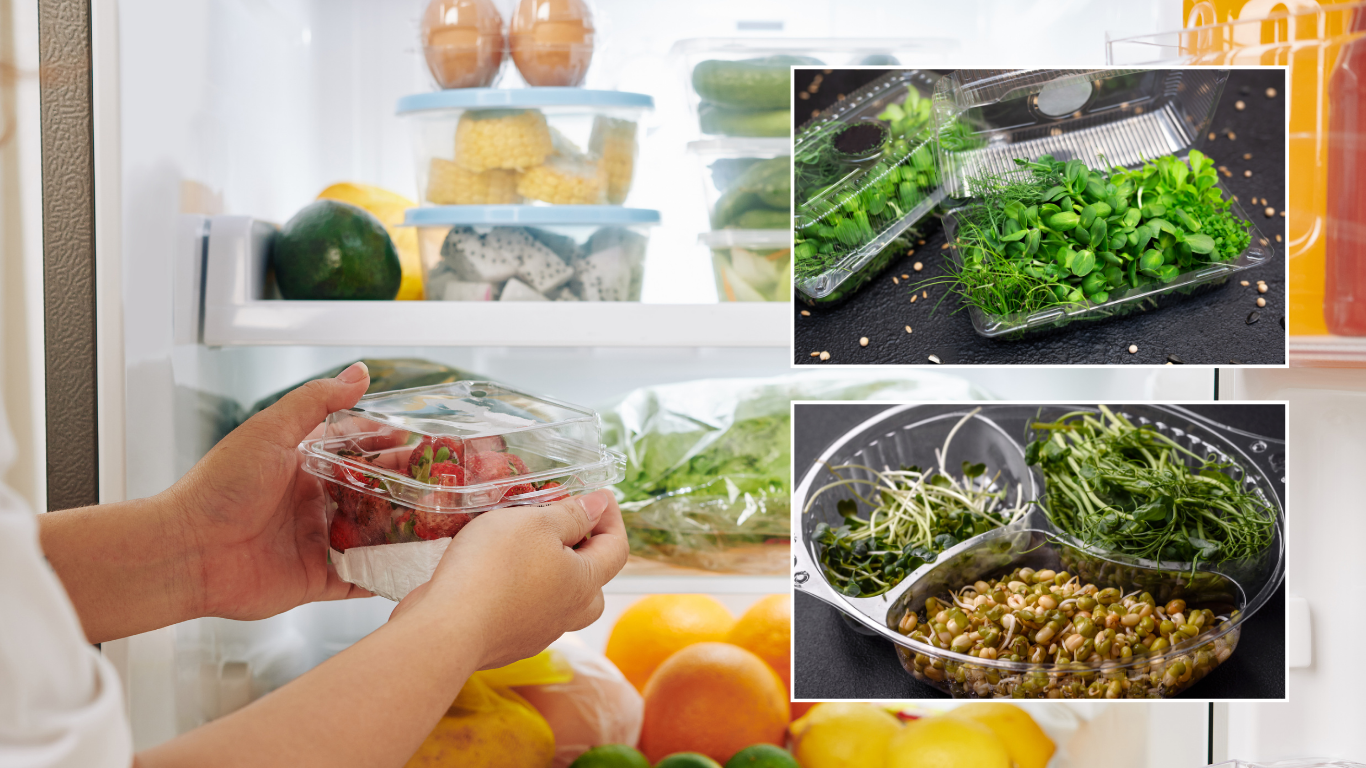
How to keep microgreens fresh through the distribution chain — cold chain, packaging and handling tips for growers who need their harvest to reach customers alive.
Hello everyone!
We hope you’re doing well. Today we bring you an article about how to maintain the freshness and quality of microgreens throughout the distribution process, while also keeping in mind sustainability and respect for the environment.
As we know, our little green friends are highly sensitive to heat, dehydration, and handling. Their quality can deteriorate within just a few hours if temperature and humidity are not properly managed.
Let’s get more specific…
Microgreens continue to respire intensely after being cut, which accelerates weight loss and wilting. Moreover, they lack the ability to rehydrate.
For this reason, the cold chain becomes essential: maintaining a constant temperature between 4 and 8 °C can double or even triple shelf life, depending on the species and type of packaging used.
In trials conducted with buckwheat microgreens, storage at 4 °C preserved texture and color for a week, whereas at 20 – 25 °C the product became unusable within just one day. Temperature, therefore, acts as a real “biological clock” that determines the rate of deterioration.
The type of container also directly influences preservation.
Several studies indicate that humidity controlled or micro perforated packaging helps reduce condensation and prevent fungal growth. Completely sealed containers, on the other hand, can trap excessive moisture and accelerate physiological damage.
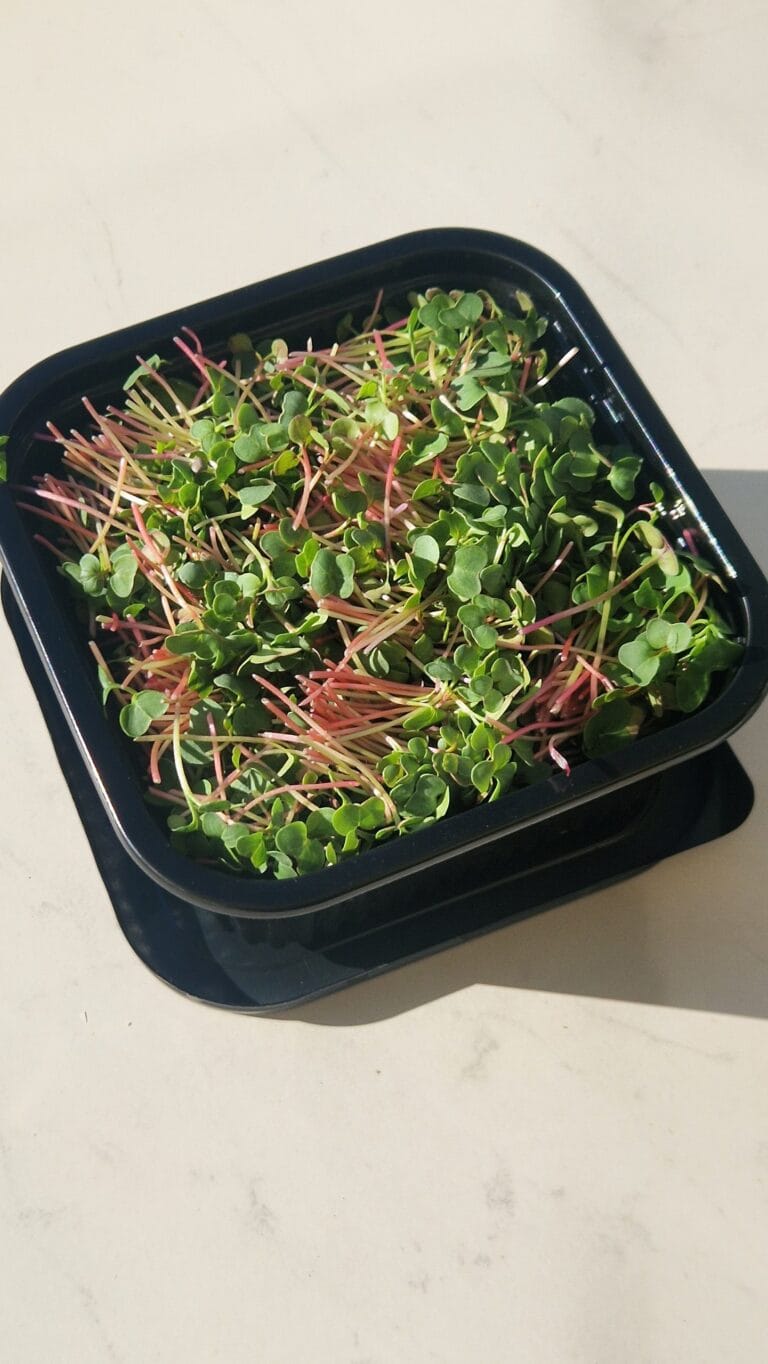
That’s why many producers use PET or PLA trays with small ventilation holes. Although plastics are still predominant, the trend is moving toward compostable or biodegradable materials, combining sustainability with freshness.
In urban settings, microgreens are often distributed over short distances, from a vertical farm to a local restaurant or market. This shortens delivery times and lowers emissions, but doesn’t eliminate thermal challenges.
According to specialized sources, even short trips can raise the internal temperature of packaging by several degrees, especially in vehicles without refrigeration. To minimize this risk, early morning deliveries, reusable thermal boxes, and immediate cold storage upon arrival are recommended.
Some producers also use temperature and humidity sensors to monitor the cold chain in real time, a practice that improves traceability and allows quick responses to any break in the chain.
The key to success in the microgreens distribution chain lies in understanding that, from the moment they are cut, every minute and every degree matter.
Applying proper post-harvest practices, such as thermal control, suitable packaging, and rapid distribution, not only extends shelf life but also ensures a safer, fresher, more nutritious, and visually appealing product for consumers.
That’s it for today’s article. We hope it has inspired you to take the leap and start your own microgreens garden.
See you in the next one!
Carlota
Sources
Berba, K. J., & Uchanski, M. E. (2012). Post-harvest physiology of microgreens. Journal of Young Investigators. https://www.jyi.org/2012-july/2017/9/12/post-harvest-physiology-of-microgreens
Brooklyn Grange Farm. (n.d.). Sustainable packaging. https://www.brooklyngrangefarm.com/sustainable-packaging
Microgreens World. (2025, February 12). Microgreens post-harvest processing: Protocols ensuring …https://microgreensworld.com/microgreens-post-harvest-processing/
Turner, E. R. (2020). Microgreen nutrition, food safety, and shelf life: A review. Journal of Food Science. https://ift.onlinelibrary.wiley.com/doi/10.1111/1750-3841.15049
Yan, H., Li, W., Chen, H., Liao, Q., Xia, M., Wu, D., Liu, C., Chen, J., Zou, L., Peng, L., Zhao, G., & Zhao, J. (2022). Effects of storage temperature, packaging material and wash treatment on quality and shelf life of Tartary buckwheat microgreens. Foods, 11(22), 3630. https://www.mdpi.com/2304-8158/11/22/3630
This article is part of the free knowledge portal of EVEC Microgreens. Wherever you are on your microgreens journey, there is a path for you:
Co-funded by the European Union.
This portal presents the microgreens methodology; the organisation behind it is EVEC Athens — the European Voluntary and Educational Center (evec.org.gr). Views and opinions expressed are those of the author(s) only and do not necessarily reflect those of the European Union or the European Commission. Neither the European Union nor the granting authority can be held responsible for them.