Get in touch
Questions about growing, workshops, the cooperative or partnerships? Send us a message and we will reply by email.
Prefer email? Write to erasmus@evec.org.gr
EVEC Microgreens
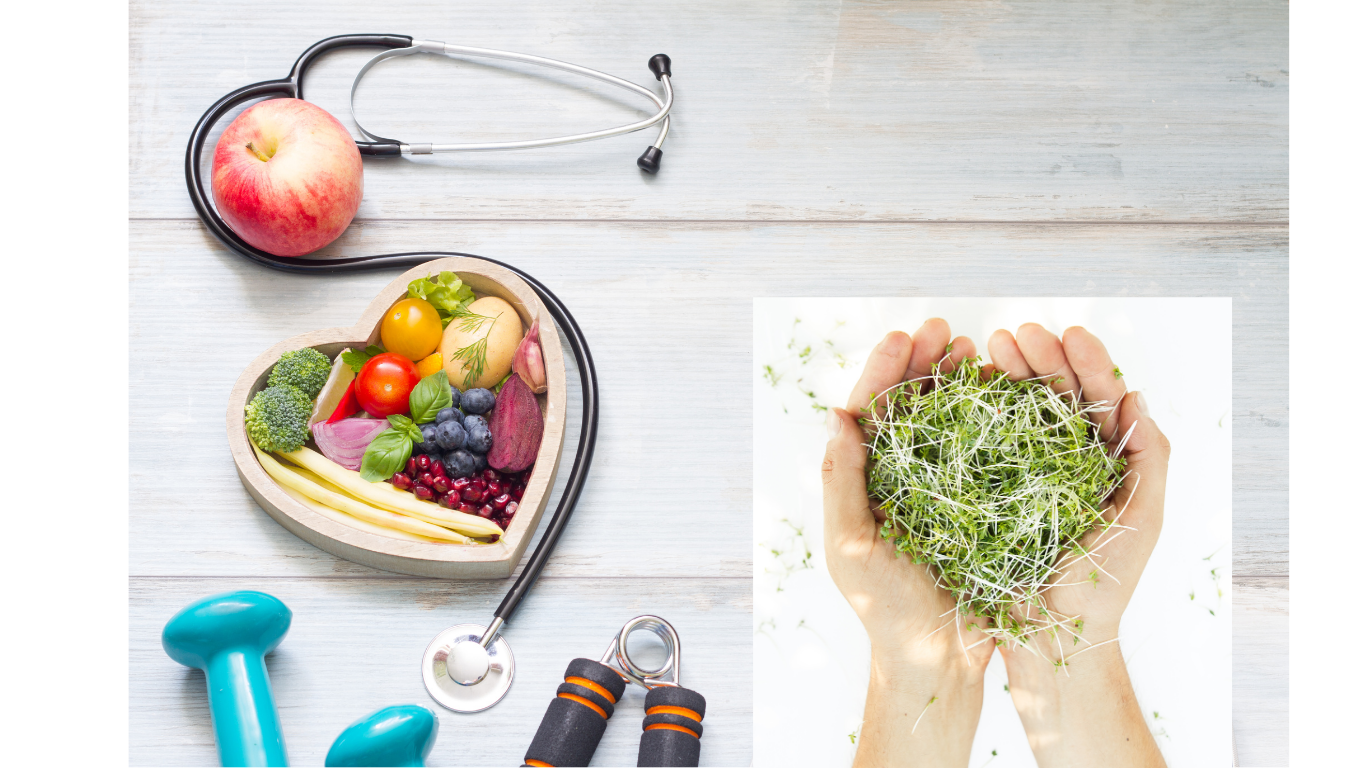
What the antioxidant research on microgreens actually measures — compounds in the plant and laboratory assays — and why that is not the same as a demonstrated health benefit.
Yes, the antioxidants in microgreens are real, and they have been measured: Vučetić et al. (2025) recorded 996.36 mg/100 g of lutein in kale microgreens and an ABTS antioxidant capacity of 43.47 mmol TE/100 g in Sango radish microgreens. What has not been measured is any effect in a person. Every figure of this kind comes from the plant itself or from a laboratory assay, and no clinical trial has tested whether eating microgreens changes inflammation, metabolism or disease risk in a human body. This article sets out what that research covers — and, just as importantly, where it stops.
What kind of evidence this is. The sources cited below report laboratory measurements of antioxidant compounds and antioxidant capacity in the plants themselves, or they review measurements of that kind. None of them is a clinical trial in people. High antioxidant activity in a test tube does not establish that eating the food reduces inflammation, prevents disease or slows ageing in a human body — that step requires trials that have not been done for microgreens. We previously wrote this article as though it had. This is general nutrition education, not medical advice.
This article sets out what those studies and reviews actually measured, and where the evidence stops.
Several studies have measured high concentrations of phenols, flavonoids, carotenoids, vitamin C and vitamin E in microgreens. These are the compounds that account for the antioxidant capacity recorded in laboratory assays.
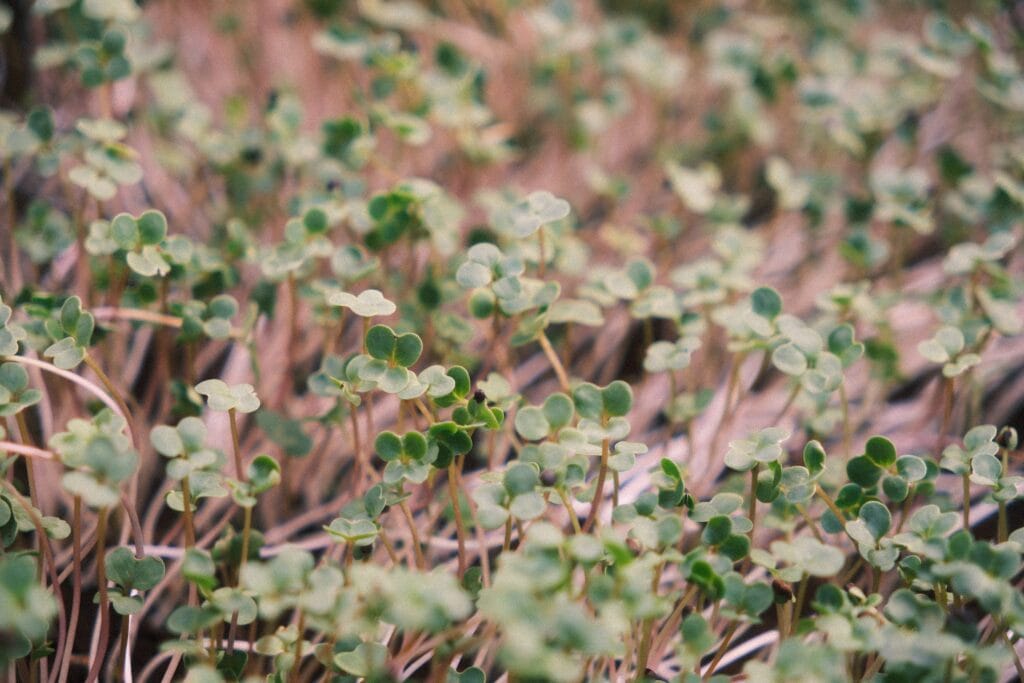
For example, Vučetić et al. (2025) recorded very high levels of total phenols, ascorbic acid, and carotenoids in microgreens from the Brassicaceae family, accompanied by strong antioxidant activity.
Balik et al. (2025) recorded a broad profile of flavonoids, polyphenols and organic acids. Assays of this kind measure how readily a plant extract neutralises free radicals in a test tube. They do not measure what happens after the food is eaten.
Oxidative stress is one of the mechanisms researchers study in relation to cellular damage, chronic inflammation and metabolic disease. That is why antioxidant-rich foods attract interest. It is a reason to investigate microgreens, not a finding about what they do.
The composition of microgreens is the reason they are studied at all. None of the work cited here has tested whether eating microgreens changes inflammation, metabolism or disease risk in a person.
Marta et al. (2024) grew spinach, mustard and radish microgreens on hemp and coconut substrates and measured their carotenoids, chlorophyll, polyphenols and flavonoids, along with antioxidant capacity by the ABTS and DPPH assays; the hemp substrate gave the higher readings. That is a measurement of the plants in a laboratory, not of any effect on inflammation in a person.
During infectious or inflammatory diseases, or in situations involving metabolic stress, the body increases its production of free radicals.
Some authors have described microgreens as a concentrated source of antioxidant compounds, and have suggested this makes them worth studying in conditions where the demand for antioxidants is higher.
That remains a proposal drawn from what the plants are made of. No trial has tested whether eating microgreens reduces inflammation or supports recovery in a person, so we cannot say that they do, and nothing on this page should be used in place of medical treatment.
For a range of compounds, studies have measured higher concentrations per gram at the seedling stage than in the mature plant. This holds for specific compounds in specific species, not for every nutrient in every crop. Several explanations are proposed:
• they are in a phase of rapid development and produce more phytochemicals
• they accumulate secondary metabolites as a defense mechanism
• their young structure has not yet distributed nutrients toward adult leaves or fruits
This is why microgreens are interesting nutritionally at small serving sizes. It does not follow that a small serving produces a measurable health benefit — we have removed a sentence that said it did.
The areas researchers are investigating, on the strength of composition and laboratory-assay data, are listed below. Read them as hypotheses under study, not as benefits you can expect:
Assays such as ABTS and DPPH record how readily microgreen extracts neutralise free radicals in a test tube. Whether eating them changes oxidative stress in a person has not been tested.
Brassica species such as broccoli, cabbage and radish are among those profiled in the sources cited here. What has been measured in them is compound content and antioxidant capacity in the plant, not inflammation in a person.
Some studies report changes in blood lipids in experimental models fed microgreen preparations. These are animal experiments and do not establish an effect in people.
These are present in microgreens, and their amounts have been measured. What eating them does to immune function in people has not been tested in microgreens specifically.
Oxidative stress is one of the processes studied in relation to biological ageing, which is part of why antioxidant-rich foods draw interest. No study has tested whether eating microgreens affects it.
Authors in this field have proposed that microgreens be examined in dietary research on chronic inflammation and metabolic disease, and developed as a food ingredient. These are proposals for work that has not yet been done. No clinical trial has tested whether eating microgreens changes inflammation, metabolism or disease risk in a human body.
In conclusion, microgreens are a nutrient-dense vegetable and a legitimately active research subject. Whether that research turns into demonstrated health benefits is an open question, and we will report it here when trials in people are published.
See you next time, friends, hope you enjoyed it!
Carlota
Read next: the papers behind this field are indexed in our Science Library of original papers — including Functional and Antioxidant Potential of Beetroot, Mustard and Radish Microgreens — and the growing profile for each crop is listed in the microgreens variety database.
Correction note: this article previously asserted that microgreens prevent chronic disease, reduce inflammation, strengthen the immune system and support healthy ageing. The sources cited here report laboratory measurements of antioxidant compounds or antioxidant capacity in the plants, or they review measurements of that kind; none is a clinical trial in people.
We have rewritten those assertions as the research questions they actually are, and corrected the Zhang et al. (2021) citation, which had omitted its fifth author. We have since removed a remaining claim that microgreens “can complement a dietary strategy aimed at reducing inflammation and supporting recovery”, which contradicted the evidence note at the top of this article, and corrected a species error: the substrate study cited here (Marta et al., 2024) used spinach, mustard and radish, not arugula.
On 30 July 2026 we also retitled two headings that still asserted preventive power in the heading text itself — “They contain a high concentration of antioxidants, the key factor behind their preventive power…” and “Practical applications for prevention and daily health” — because both contradicted that same evidence note, and we removed a stray block delimiter that had been left in the page source.
On the same date we corrected this note and the evidence box, both of which had said that every source cited here measures antioxidants in the plants or in laboratory assays: two of the five (Tallei et al., 2024 and Zhang et al., 2021) are reviews, and report other researchers’ measurements rather than making their own.
On 12 August 2026 a further review found claims of the same family still live here, including in the article title, which had read “Microgreens and their anti inflammatory, antioxidant, and preventive potential”.
We have retitled the article; rewritten the list of research areas, whose bolded labels had asserted reduction of oxidative stress, support for natural anti inflammatory systems, improvement of lipid metabolism with reductions in cholesterol and protection against fatty liver, strengthening of the immune system, and cellular protection and healthy ageing; removed a statement that microgreens are useful during infectious processes or inflammatory episodes; removed references to therapeutic diets for patients with chronic inflammation and to preventing chronic diseases; and renamed two heading anchors that still carried the retired wording. See our editorial standards.
Tallei, T. E., Kepel, B. J., Wungouw, H. I. S., Nurkolis, F., Adam, A. A., & Fatimawali. (2024). A comprehensive review on the antioxidant activities and health benefits of microgreens: Current insights and future perspectives. International Journal of Food Science & Technology, 59(1), 58–71. https://academic.oup.com/ijfst/article/59/1/58/7807901
Marta, A. E., Stoica, F., Ostaci, Ș., & Jităreanu, C. D. (2024). The antioxidant profile of some species of microgreens cultivated on hemp and coconut substrate under the action of a biostimulator based on humic acids. Horticulturae, 10(12), 1238. https://www.mdpi.com/2311-7524/10/12/1238
Balik, S., Elgudayem, F., Yildiz Dasgan, H., Kafkas, N. E., & Gruda, N. S. (2025). Nutritional quality profiles of six microgreens. Scientific Reports, 15, 6213. https://pmc.ncbi.nlm.nih.gov/articles/PMC11842852/
Vučetić, A., Šovljanski, O., Pezo, L., Gligorijević, N., Kostić, S., Vulić, J., & Čanadanović-Brunet, J. (2025). A comprehensive antioxidant and nutritional profiling of Brassicaceae microgreens. Antioxidants, 14(2), 191. https://www.mdpi.com/2076-3921/14/2/191
Zhang, Y., Xiao, Z., Ager, E., Kong, L., & Tan, L. (2021). Nutritional quality and health benefits of microgreens, a crop of modern agriculture. Journal of Future Foods, 1(1), 58–66. https://www.sciencedirect.com/science/article/pii/S2772566921000057
This article is part of the free knowledge portal of EVEC Microgreens. Wherever you are on your microgreens journey, there is a path for you:
Co-funded by the European Union.
This portal presents the microgreens methodology; the organisation behind it is EVEC Athens — the European Voluntary and Educational Center (evec.org.gr). Views and opinions expressed are those of the author(s) only and do not necessarily reflect those of the European Union or the European Commission. Neither the European Union nor the granting authority can be held responsible for them.
Open licence. Except where stated otherwise, the educational materials on this portal are licensed under CC BY 4.0 — free to use, adapt and share, including commercially, with credit. See the licence terms.
Accessibility. We aim for WCAG 2.1 AA and publish what does and does not yet meet it — see the accessibility statement. If anything here blocks you, tell us and we will send the material in a format that works for you.