Get in touch
Questions about growing, workshops, the cooperative or partnerships? Send us a message and we will reply by email.
Prefer email? Write to erasmus@evec.org.gr
EVEC Microgreens
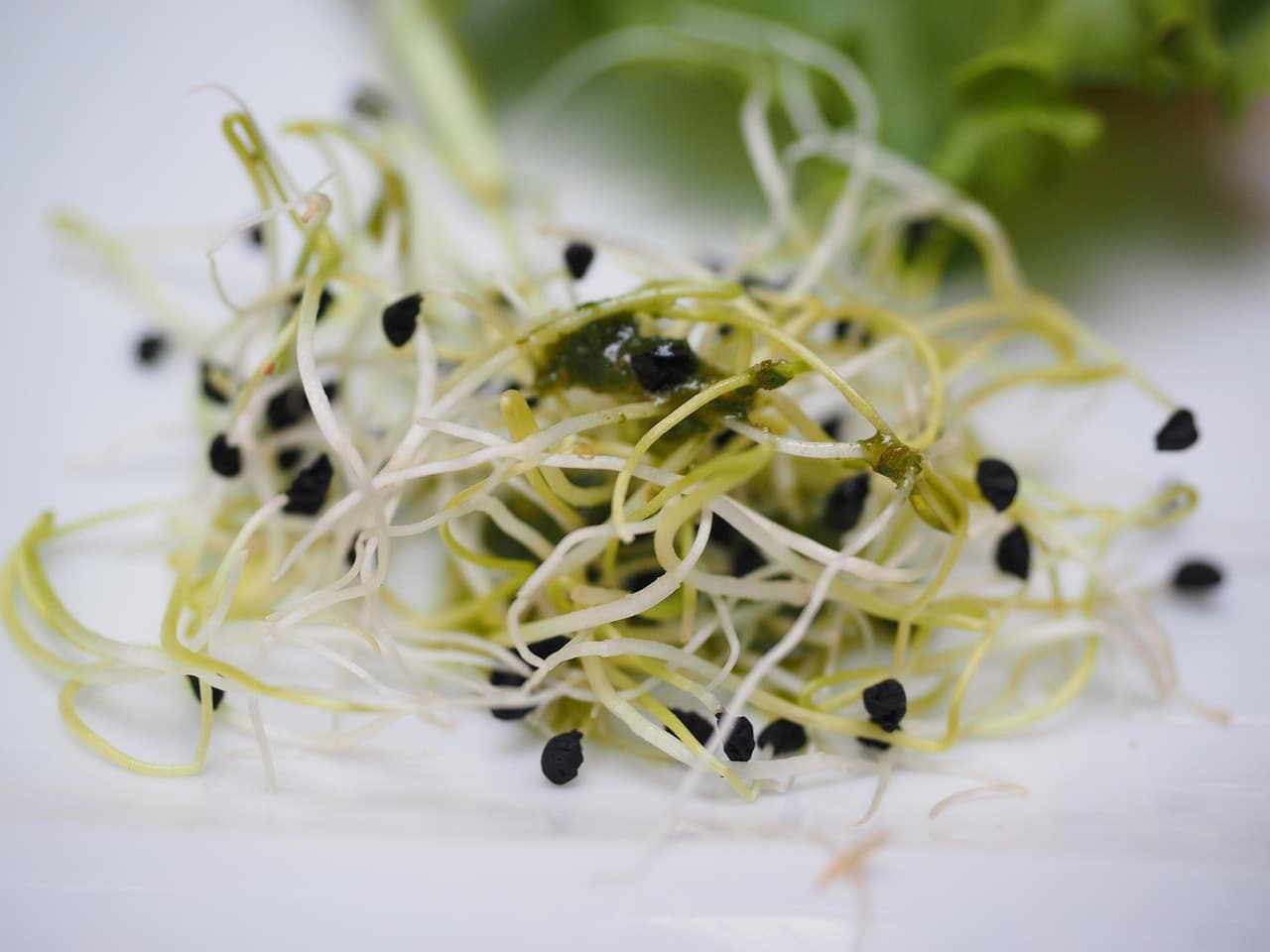
Microgreens vs sprouts vs baby leaves: the eternal question, finally answered. How they differ in how they grow, how you eat them, and what it means for food safety.
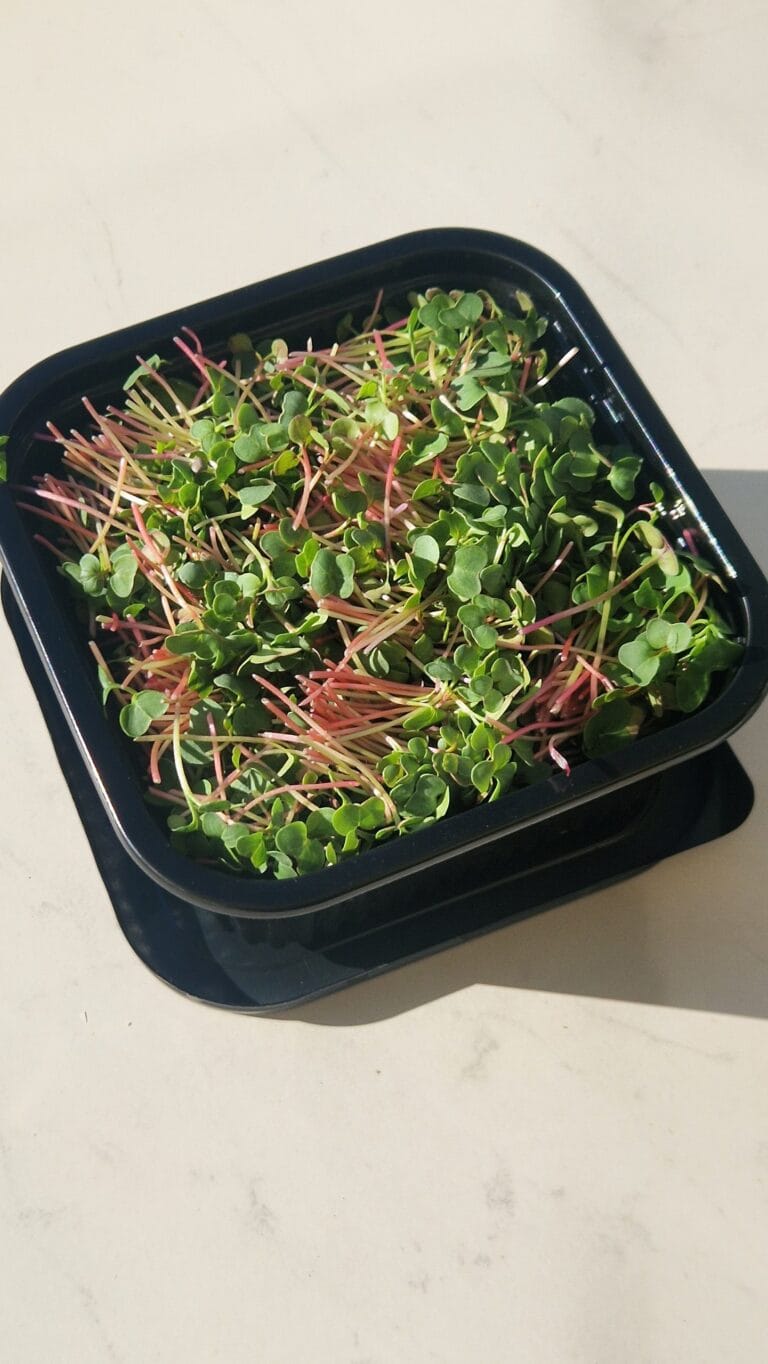
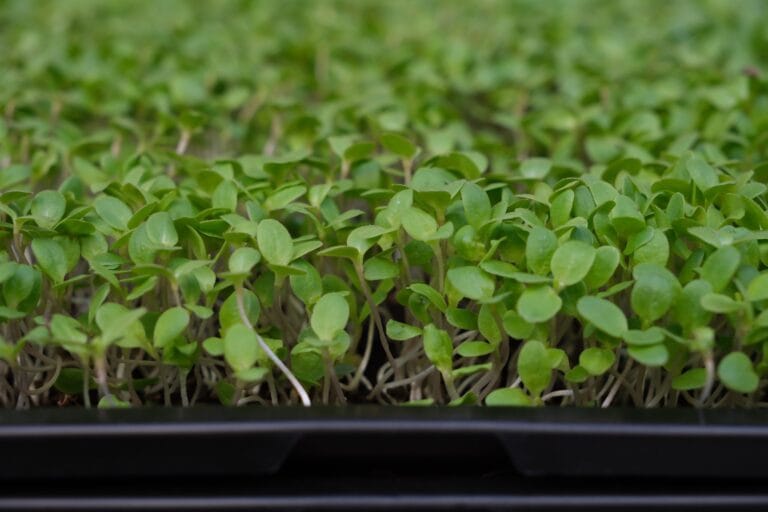
In today’s article, we’re clearing up a very common confusion: microgreens, sprouts, and baby leaves. And yes, they are not the same, even though all three are eaten in similar ways and mostly consumed raw.
The difference isn’t just aesthetic. Their growth stage, production method, microbiological risks, and shelf life all vary.
So let’s break it down, ready? Let’s go.
An easy way to understand it is to think about “how much the plant has grown” and which part you’re eating.
Sprouts are germinated seeds that are consumed very early, usually within just a few days.
We’ll explain them, although by now we’re already experts, right?
Each one serves a different purpose in the kitchen.
This is the sensitive point. All three are often eaten raw, so, as we’ve discussed in previous articles, hygiene and production processes matter. However, sprouts have been particularly highlighted by health authorities.
The European Food Safety Authority has explained that outbreaks linked to sprouted seeds are frequently associated with Salmonella and pathogenic E. coli (including STEC). Even very low levels of contamination in seeds intended for sprouting can trigger outbreaks.
This is not meant to alarm, but to explain why the conversation around sprouts focuses heavily on:
That’s why specific hygiene guidelines exist, such as those from the European Sprouted Seeds Association, which focus on the safe production of sprouts and seeds intended for sprouting.
No. But the risk profile is different because:
So while sprouts require especially strict controls due to their history and production method, microgreens are managed under good practices similar to other fresh ready to eat produce.
A) Time and production system
B) Sales format (and packaging)
Are we selling trays to restaurants or packaged products to consumers? It’s not the same.
At this point, we can conclude that:
Overall:
And you, did you already know the differences between microgreens, sprouts, and baby leaves? Have you tried them all? Would you still choose our friends the microgreens despite the price difference?
We’d love to hear your opinion, don’t forget to follow us on social media.
See you next time!
Carlota
Sources
Co Produce Safety Partnership. (2020, August 31). Sprouts, microgreens and leafy greens: Characteristics of sprouts, microgreens and leafy greens. https://coproducesafety.org/wp-content/uploads/2022/01/Sprouts-Microgreens-and-Leafy-Greens.pdf
Cornell Cooperative Extension Monroe County. (2026, February 23). Sprouts and microgreens. https://monroe.cce.cornell.edu/agriculture/seasonal-produce-highlights/sprouts-and-microgreens
Di Gioia, F. (2024). The ABCs of microgreens. Penn State Extension. https://extension.psu.edu/the-abcs-of-microgreens
European Commission. (2017). Guidance on food safety: Sprouts and sedes. https://food.ec.europa.eu/system/files/2017-12/biosafety_fh_guidance_essa_sprouts-and-seeds_en.pdf
European Food Safety Authority. (2011, November 15). EFSA assesses the public health risk of seeds and sprouted seeds. https://www.efsa.europa.eu/en/press/news/111115
Food Standards Agency. Sprouts and seeds intended for sprouting: Q&A guidance on the package of EU regulations for food business operators and local authorities. https://www.food.gov.uk/sites/default/files/media/document/sprouts-and-seeds-sprouting-guidance.pdf.pdf
Morton, D., & Stretch, C. (2018). Commercial microgreens: Production and best practices (Agdex 268/18-1). Alberta Agriculture and Forestry. https://www1.agric.gov.ab.ca/%24department/deptdocs.nsf/all/agdex15965/%24file/268_18-1.pdf
Wiedenfeld, D., & Aulakh, J. Microgreens [PDF]. University of Arizona Cooperative Extension. https://extension.arizona.edu/sites/extension.arizona.edu/files/attachment/Microgreens.pdf
This article is part of the free knowledge portal of EVEC Microgreens. Wherever you are on your microgreens journey, there is a path for you:
Co-funded by the European Union.
This portal presents the microgreens methodology; the organisation behind it is EVEC Athens — the European Voluntary and Educational Center (evec.org.gr). Views and opinions expressed are those of the author(s) only and do not necessarily reflect those of the European Union or the European Commission. Neither the European Union nor the granting authority can be held responsible for them.


[…] your final product is sprouts, the seed is the number one critical control point. The European Food Safety Authority has […]