Get in touch
Questions about growing, workshops, the cooperative or partnerships? Send us a message and we will reply by email.
Prefer email? Write to erasmus@evec.org.gr
EVEC Microgreens
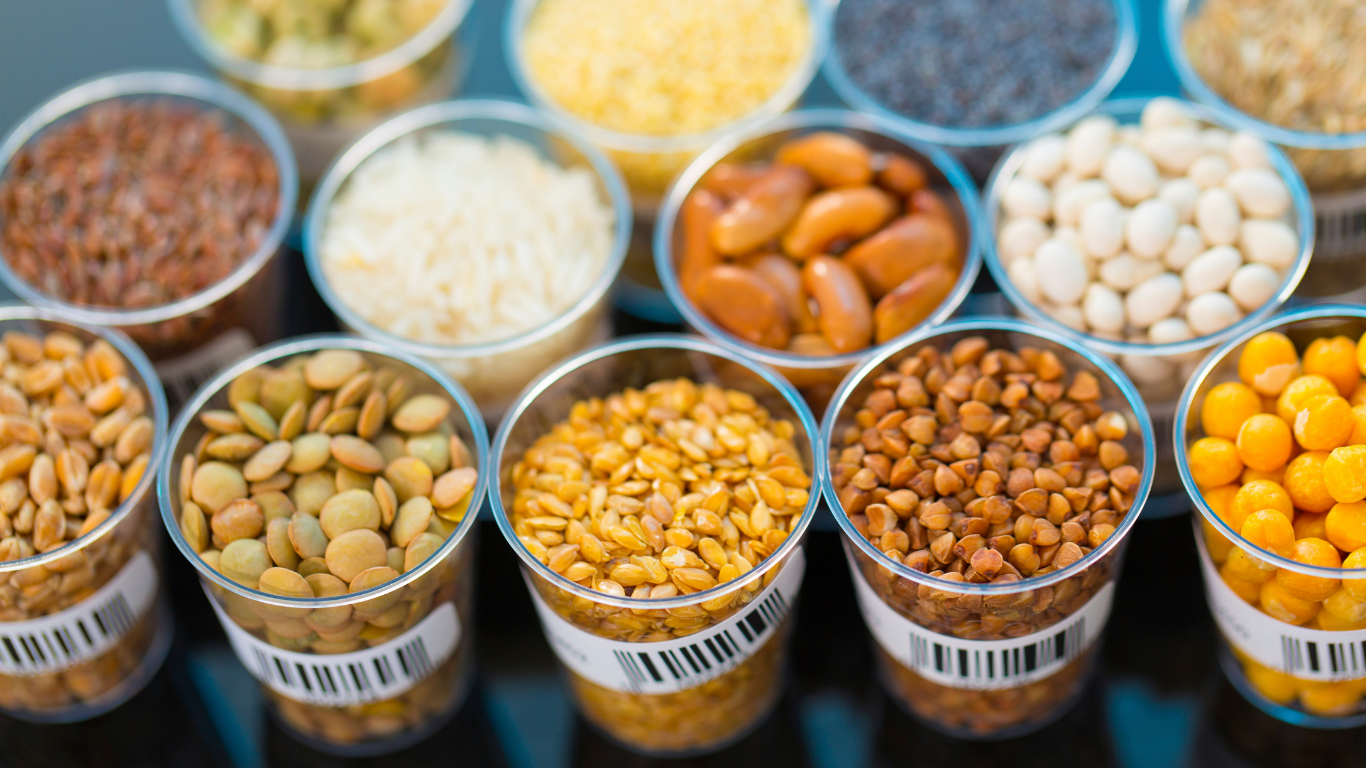
How to choose microgreens seeds and not fail: seed quality, quantity, treated vs untreated, and which varieties are safe. The decision that makes or breaks a tray.
When it comes to microgreens, seeds are not “just another detail.” They determine flavor, uniformity, yield, and if you sell your product, they also determine food safety.
In Europe, and especially in Greece, this is particularly important because you’re often marketing a product that customers eat raw or nearly raw.
This article is a practical guide to choosing seeds wisely: what to look for, what to avoid, and what to ask your supplier.
If your final product is sprouts, the seed is the number one critical control point. The European Food Safety Authority has explained that sprout-related disease outbreaks are frequently associated with Salmonella and pathogenic E. coli (including STEC), and that even very low contamination levels in seeds intended for sprouting can be enough to cause problems.
For this reason, specific hygiene guidelines and measures exist in Europe for sprouts and sprouting seeds, such as those developed by the European Sprouted Seeds Association and published by the European Commission.
The risk doesn’t disappear, it changes.
Microgreens are harvested later, grown with light, and usually on a substrate. Critical points shift to:
Contamination can occur “from seed to harvest,” so control points must exist throughout the entire process.
Practical translation: even if you’re not growing sprouts, choose your seeds like a professional (because if you sell, you are one).
There’s no “opinion debate” here.
If you buy seed intended for agricultural planting or gardening, it is often treated (with protective products applied before sowing). That can make it incompatible with food use.
In Europe, final users must be clearly informed about the risks and handling of treated seeds, including standardized safety phrases and labeling. Industry groups such as Euroseeds have also published labeling recommendations that complement legal requirements.
National authorities often state this very clearly: “Do not use treated seed for human or animal consumption.”
What to check on the bag or technical sheet:
Quick rule: If you cannot clearly confirm the seed is suitable for producing raw food (microgreens/sprouts), change suppliers.
Not all seeds are equal in purpose.
In microgreens production, money is lost in two places:
If a seed germinates irregularly, your tray becomes patchy, the product looks worse, and yields drop.
Before sowing 10 trays, test 50–100 seeds on moist paper and observe:
This simple test can help you detect poor lots before losing an entire week of production.
If you want to sell as “organic” in the EU, the seed issue becomes more demanding.
EU regulations include rules for organic production, labeling, and controls, and these also apply to seeds and plant reproductive material.
Therefore, if you plan to use the organic claim, it’s not enough to grow “without chemicals.” You’ll want your seed sourcing and supply chain aligned with the regulatory framework and inspection system.
Greece follows the EU regulatory framework, but in practice, day-to-day operations are shaped by national authorities and inspection requirements.
For food businesses, EFET (Hellenic Food Authority) publishes sector materials and guidance that are useful for understanding requirements and best practices.
There’s also a climate factor: during warmer months, any tray that comes out irregular or weak due to mediocre seed quality becomes more noticeable, poorer growth, higher stress, faster quality loss.
In Greece, this translates into a healthy obsession: don’t improvise with seed quality.
Before buying
Before scaling up
If you sell in Greece
Seed choice is the one input that cannot be corrected later in the cycle. Two checks stand between you and a bad lot: confirm from the bag or technical sheet that the seed is not treated and carries lot traceability, and germinate 50 to 100 seeds on moist paper before you sow ten trays of it.
That’s it for now, friends.
We hope you found this article useful.
See you next time.
Carlota
Council of the European Union. (2026). Proposal for a regulation on the production and marketing of plant reproductive material (ST 5598/26 INIT). https://data.consilium.europa.eu/doc/document/ST-5598-2026-INIT/en/pdf
EFET (Hellenic Food Authority). Publications for food businesses. Hellenic Food Authority. https://www.efet.gr/index.php/el/food-industry/ekdoseis-gia-tis-epixeiriseis?print=1&tmpl=component&
European Commission. (2017). Guidance on food safety: Sprouts and seeds. https://food.ec.europa.eu/system/files/2017-12/biosafety_fh_guidance_essa_sprouts-and-seeds_en.pdf
European Food Safety Authority (EFSA). (2011, November 15). EFSA assesses the public health risk of seeds and sprouted seeds. https://www.efsa.europa.eu/en/press/news/111115
European Union. Specific rules on organic production, labelling and control. EUR-Lex. https://eur-lex.europa.eu/EN/legal-content/summary/specific-rules-on-organic-production-labelling-and-control.html
Euroseeds. Euroseeds labelling recommendations. https://euroseeds.eu/esta-the-european-seed-treatment-assurance-industry-scheme/euroseeds-labelling-recommendations/
Federal Public Service Health, Food Chain Safety and Environment (Belgium). Treated sowing seeds. Fytoweb. https://fytoweb.be/en/plant-protection-products/specific-products/treated-sowing-seeds
Food and Agriculture Organization of the United Nations (FAO). Good agricultural practices for seed production [PDF]. https://openknowledge.fao.org/server/api/core/bitstreams/6a86b603-312e-4390-bf3e-695c7b26ea27/content
International Seed Testing Association (ISTA). (2024). International rules for seed testing 2024, Chapter 2: Sampling. https://www.seedtest.org/api/rm/9356SQF24TUK454/ista-rules-2024-02-sampling-final.pdf
Organisation for Economic Cooperation and Development (OECD). Rules and regulations in the seed sector. https://www.oecd.org/content/dam/oecd/en/topics/policy-sub-issues/seeds/rules-and-regulation-eng.pdf
Riggio, G. M., Wang, Q., Kniel, K. E., & Gibson, K. E. (2019). Microgreens. A review of food safety considerations along the farm to fork continuum. Food Microbiology, 82, 136–148. https://www.sciencedirect.com/science/article/abs/pii/S0168160518307323
U.S. Food and Drug Administration (FDA). Guidance for industry: Reducing microbial food safety hazards for sprouted seeds. https://www.fda.gov/regulatory-information/search-fda-guidance-documents/guidance-industry-reducing-microbial-food-safety-hazards-production-seed-sprouting?
This article is part of the free knowledge portal of EVEC Microgreens. Wherever you are on your microgreens journey, there is a path for you:
Co-funded by the European Union.
This portal presents the microgreens methodology; the organisation behind it is EVEC Athens — the European Voluntary and Educational Center (evec.org.gr). Views and opinions expressed are those of the author(s) only and do not necessarily reflect those of the European Union or the European Commission. Neither the European Union nor the granting authority can be held responsible for them.
Open licence. Except where stated otherwise, the educational materials on this portal are licensed under CC BY 4.0 — free to use, adapt and share, including commercially, with credit. See the licence terms.
Accessibility. We aim for WCAG 2.1 AA and publish what does and does not yet meet it — see the accessibility statement. If anything here blocks you, tell us and we will send the material in a format that works for you.

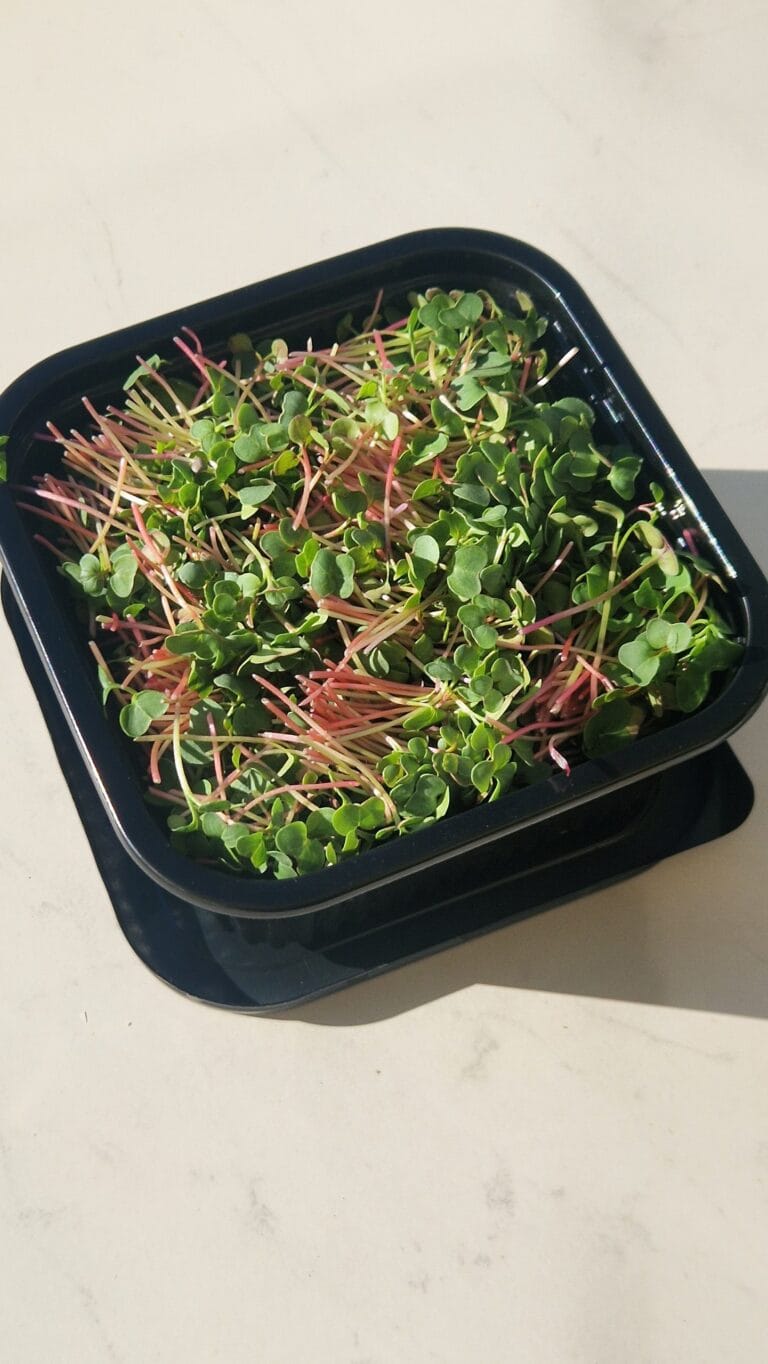
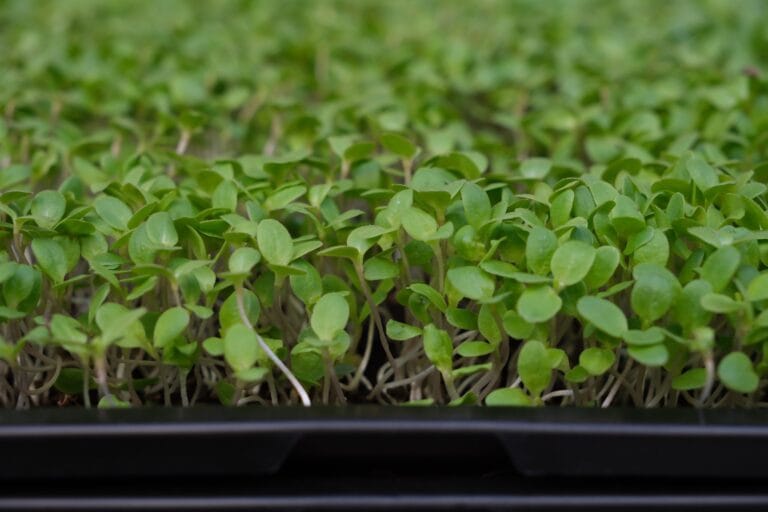
[…] untreated, food-grade seed rather than garden seed that may be coated with fungicide; our guide on choosing microgreens seeds explains what to look […]
[…] which you must never eat, so buy seed labelled for sprouting or microgreens. Our guide to choosing microgreens seeds explains what to look […]
[…] toxic plant, and avoid fungicide-treated garden seed or bird and animal feed. Our notes on choosing seeds and on which microgreens are not safe to eat explain why this […]
[…] Start with untreated, food-grade beet seed. Beet sold for field planting is often dyed and coated with fungicide, which must never go anywhere near food — if you are unsure what you have, read our guide to choosing microgreens seeds. […]