Get in touch
Questions about growing, workshops, the cooperative or partnerships? Send us a message and we will reply by email.
Prefer email? Write to erasmus@evec.org.gr
EVEC Microgreens
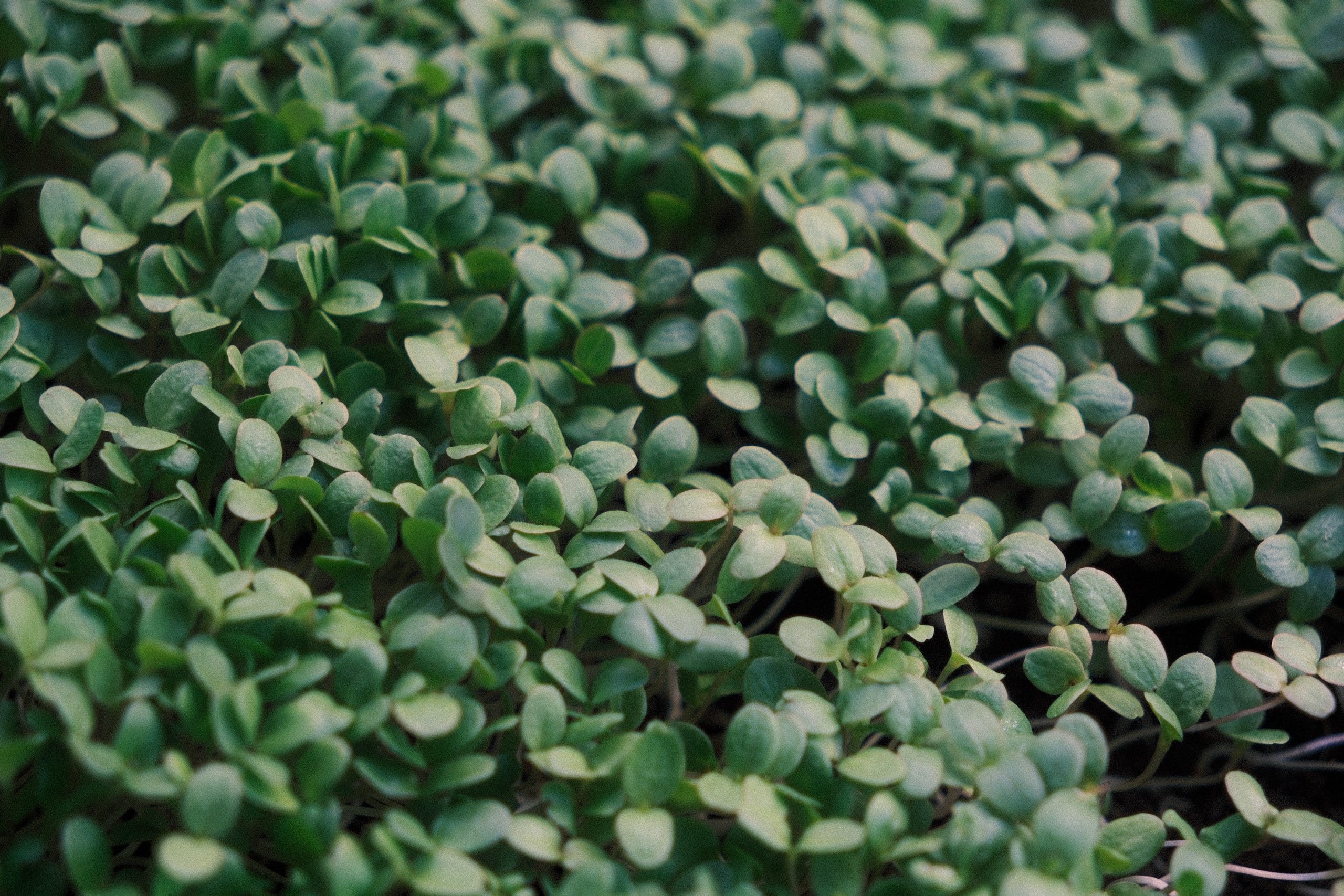
Nasturtium microgreens combine an intense, peppery flavour with a striking look. A microgreen with real gastronomic potential — its profile, uses and how to grow it.
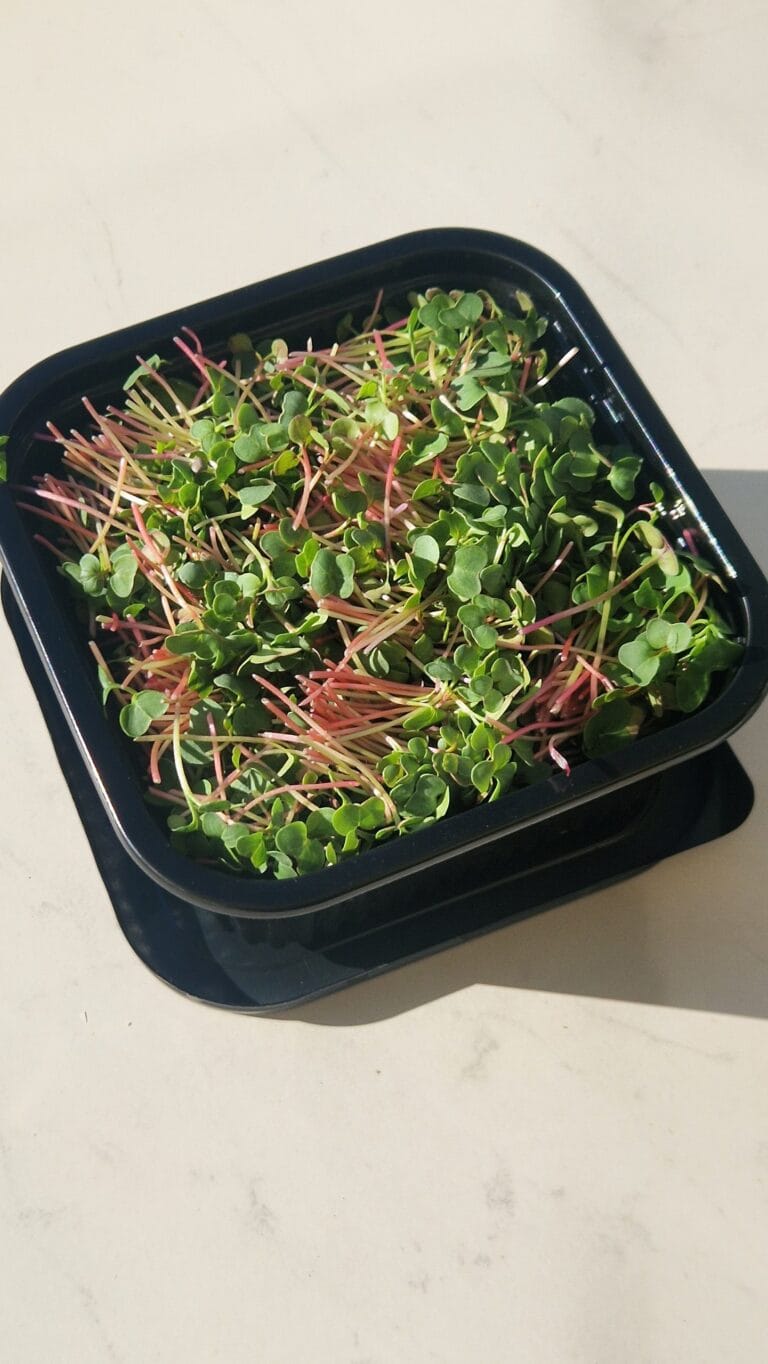
Nasturtium microgreens are among the lesser-known yet most interesting species from a gastronomic perspective. These sprouts combine an intense flavor with a very distinctive aesthetic. Although nasturtium is mainly known for its edible flowers, its microgreens offer a remarkable culinary and nutritional profile that deserves greater attention within the world of microgreens.
Nasturtium belongs to the species Tropaeolum majus, a plant native to South America that was introduced to Europe in the 16th century. Since then, it has been cultivated both as an ornamental plant and for its culinary value.
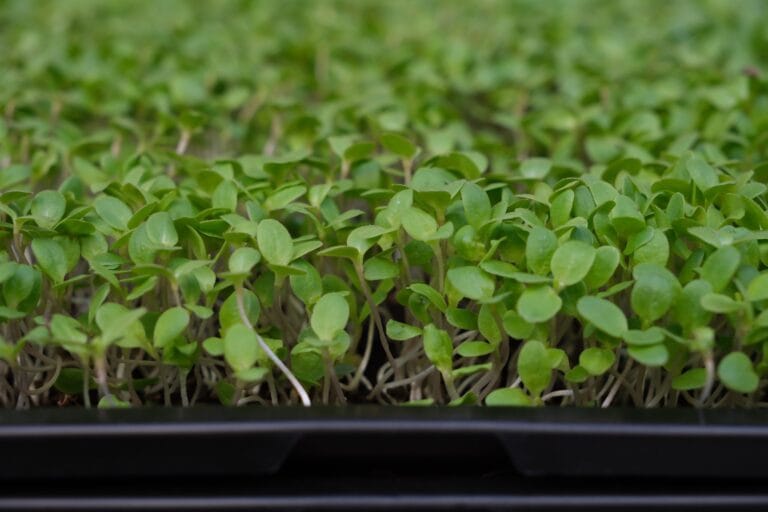
One of the most interesting characteristics of this species is that almost the entire plant is edible. The leaves, flowers, and even the seeds have traditionally been used in cooking. The leaves have a very distinctive rounded shape with visible veins and a peppery flavor reminiscent of watercress or mild mustard.
When grown as a microgreen, the plant retains this aromatic character but in a more concentrated and delicate form, making it a very attractive ingredient for chefs and creative cooks.
One of the most notable aspects of nasturtium microgreens is their sensory profile. Unlike many milder microgreens, these sprouts offer a clearly defined flavor.
The taste is often described as peppery and slightly spicy, with similarities to watercress, radish, or certain mustard varieties. However, nasturtium also brings a fresh vegetal note that balances this spiciness.
This profile makes them a very versatile ingredient in the kitchen. They can be used in salads, wraps, sandwiches, egg dishes such as omelets, pasta, or as garnishes for fish or meat dishes.
Some chefs also use these sprouts to prepare infused oils, pestos, or vinaigrettes, where their peppery flavor adds personality without completely dominating the dish.
Although the mature plant is relatively easy to grow in a garden, producing it as a microgreen has some particularities that differentiate it from more common species.
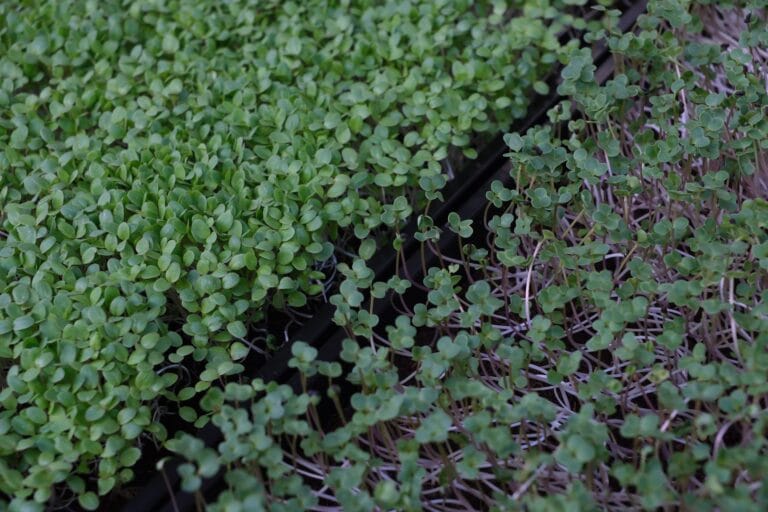
Nasturtium seeds are larger than those of many microgreens, which often requires a pre soaking step to improve germination. Once sown, the sprouts need good lighting, moderate watering, and a well draining substrate.
Under proper conditions, the microgreens are usually ready to harvest when they develop two to four true leaves, the stage at which the flavor is most intense and balanced.
Another interesting advantage is that, if cut carefully, the plant may sometimes produce new growth, allowing more than one harvest from the same crop.
As with many microgreens, nasturtium sprouts concentrate a large number of beneficial compounds in the early stages of plant development.
A caveat belongs here, because we could not find a published composition analysis of nasturtium microgreens specifically. Nasturtium leaves are a recognised source of vitamin C, and the plant’s peppery bite comes from glucosinolates — the compound family that also gives watercress and mustard their heat. The general roles of the nutrients usually listed for it — vitamin C in immune function and collagen synthesis, vitamin K in blood clotting, calcium and manganese as dietary minerals — are textbook nutrition. What has not been measured, as far as we can establish, is how much of any of them a tray of nasturtium microgreens actually delivers.
So read this section as background on the plant rather than as a nutritional analysis of the crop. That is also why the source list below is what it is: nasturtium is a niche microgreen, and the practical knowledge about growing it sits with growers rather than in the literature.
Despite their culinary and nutritional qualities, nasturtium microgreens are still not as common on the market as other varieties such as radish, lettuce, or sunflower, which we have already discussed in previous articles.
However, their distinctive flavor, attractive appearance, and gastronomic versatility suggest that they could gain greater presence in restaurants in the coming years.
For microgreen producers looking to differentiate their offerings, or for cooks interested in discovering new ingredients, nasturtium represents an exciting option for culinary innovation.
Edible Switzerland. Nasturtiums: Flower for edible landscapes. https://edibleswitzerland.com/nasturtiums-flower-for-edible-landscapes/
Foodscross. Nasturtium leaves cappuccino bio 25g. https://foodscross.com/en/product/nasturtium-leaves-cappuccino-bio-25gr/
Home Microgreens. Nasturtium microgreens. https://homemicrogreens.com/nasturtium-microgreens/
MP Seeds. Everything about nasturtium microgreens. https://mpseeds.eu/everything-about-nasturtium-microgreens
React Greens. How do you grow nasturtium microgreens: Everything you need to know. https://reactgreens.com/how-do-you-grow-nasturtium-microgreens-everything-you-need-to-know/
The Micro Gardener. 20 reasons to grow this amazing herb. https://themicrogardener.com/20-reasons-to-grow-this-amazing-herb/
True Leaf Market. Nasturtium microgreens organic. https://trueleafmarket.com/products/nasturtium-microgreens-organic
GBIF Secretariat. Tropaeolum majus L. — GBIF Backbone Taxonomy, family Tropaeolaceae, accepted. gbif.org/species/2889934
In July 2026 we removed three entries from this list: one Healthline article and two Wikipedia pages, the latter cited for the plant’s botany. We have replaced the botanical reference with the GBIF Backbone Taxonomy record. The remaining sources are grower and seed-supplier pages — appropriate for practical growing information, which is what this guide is, and not used here to support nutritional claims. See our editorial standards.
Studies from our Science Library that concern nasturtium microgreens, in plain language with links to the original research. This list updates automatically as new studies are added.
No plain-language write-up for this crop yet — the peer-reviewed studies are listed further down this page, or browse the full Science Library.
Recipes and kitchen ideas from our cookbook team that use nasturtium microgreens.
No recipes for this crop yet — the cookbook has plenty to start with.
Growing a different crop next? Every variety has a guide like this one in the Varieties database.
Our research archive holds 3 peer-reviewed studies on nasturtium microgreens. They are free to read and download, and each one credits its original authors.
This article is part of the free knowledge portal of EVEC Microgreens. Wherever you are on your microgreens journey, there is a path for you:
Co-funded by the European Union.
This portal presents the microgreens methodology; the organisation behind it is EVEC Athens — the European Voluntary and Educational Center (evec.org.gr). Views and opinions expressed are those of the author(s) only and do not necessarily reflect those of the European Union or the European Commission. Neither the European Union nor the granting authority can be held responsible for them.
Open licence. Except where stated otherwise, the educational materials on this portal are licensed under CC BY 4.0 — free to use, adapt and share, including commercially, with credit. See the licence terms.
Accessibility. We aim for WCAG 2.1 AA and publish what does and does not yet meet it — see the accessibility statement. If anything here blocks you, tell us and we will send the material in a format that works for you.