Get in touch
Questions about growing, workshops, the cooperative or partnerships? Send us a message and we will reply by email.
Prefer email? Write to erasmus@evec.org.gr
EVEC Microgreens
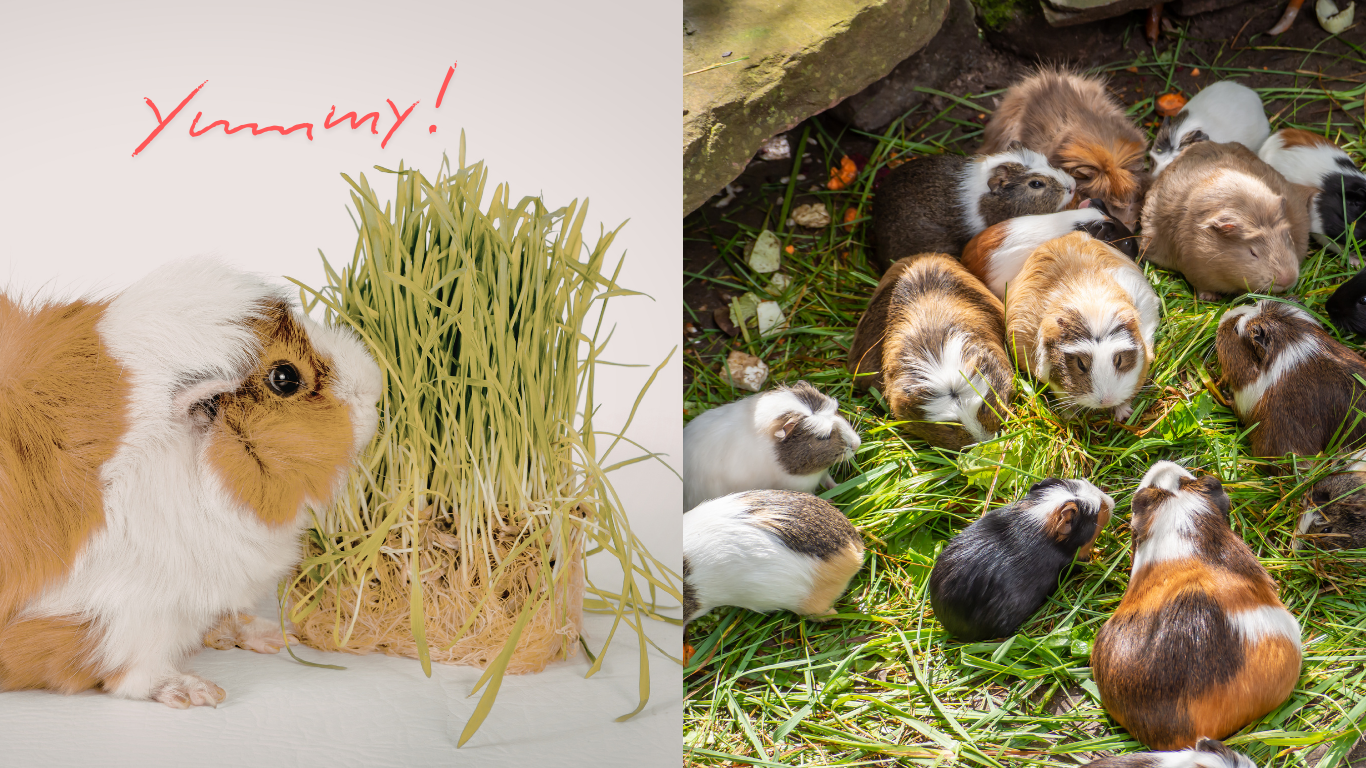
Guinea pigs are herbivores. Their diet consists of plants like fresh hay, leafy vegetables and fruits. They can eat quite a wide variety of foodstuffs, and microgreens can quickly become an unexpected favorite of your pet.
Feeding your guinea fresh hay and leafy vegetables is a great way to keep them healthy. Microgreens such as lettuce, broccoli, kale, cilantro and cauliflower are a good way to start.
A moderate amount of fruits high in Vitamin C and low in sugar are suitable for guinea pigs to prevent scurvy. And avoid those high in sugar because they can cause stomach imbalance.
Microgreens are packed with nutrients. Research indicates that microgreens are more nutritious than their grown counterparts. They contain a bunch of vitamins that are beneficial to your guinea pig such as vitamin A, C, D, oxalate acid, phosphorus and iron. These nutrients help your guinea pig promote an overall healthy growth, bone growth and better digestion. Vitamin C content in specific, aids in preventing scurvy which is a common problem for guinea pigs.
Microgreens are also low in sugar, which means that eating microgreens can help control their blood sugar and avoid diabetes. And although microgreens offer a range of benefits, it is important to note that you should not give your guinea pig large quantities of microgreens as it can cause upset stomach or flatulence problems.
A list made by Green Experiment Corner summarises some of the best microgreens for your pet including the type, difficulty, care and time it takes to harvest:
| Microgreen | Maximum Feeding Frequency | Growing Difficulty | Presoak Seeds? | Preferred Growing Medium | Harvest Time |
| Basil | Weekly | Difficult | No | Hydroponics | 12-16 days |
| Beet | 1-2 times per month | Easy | Yes | Soil | 10-12 days |
| Broccoli | 2 times per week | Easy | No | Hydroponics | 7-14 days |
| Carrot | 1-2 times per week | Intermediate | No | Soil | 14-28 days |
| Cilantro | 3-4 times per week | Difficult | No | Soil | 21-28 days |
| Collard Greens | Weekly | Easy | No | Hydroponics | 10-12 days |
| Dandelion Greens | 2 times per week | Easy | No | Soil | 12-25 days |
| Endive | 3-4 times per week | Intermediate | No | Soil | 8-15 days |
| Kale | Weekly | Easy | Yes | Soil or Hydroponics | 8-12 days |
| Parsley | 2 times per week | Intermediate | Yes | Soil | 21-30 days |
| Radish | 1-2 times per month | Easy | No | Soil or Hydroponics | 6-12 days |
| Watercress | Weekly | Difficult | No | Hydroponics | 8-12 days |
Guinea Pigs should avoid consuming too much calcium as an excess can cause bladder stones. Because microgreens contain several times more nutrients than their mature versions, it is recommended to only feed small quantities of microgreens to your guinea pig.
Kale, broccoli, red cabbage, amaranth or sunflower microgreens are known to be good sources of calcium, so regulating their quantity is advised. And that’s all for now, if you are interested in growing microgreens don’t forget to check out our website.
Summer Gardening for Guinea Pigs
https://www.guineadad.com/blogs/news/summer-gardening-for-guinea-pigs
Hamama Pets: Our Furry, Feathered, & Scaly Friends
https://www.hamama.com/blogs/hamama-blog/hamama-pets-birds-reptiles-rabbits-guinea-pigs
Growing Microgreens For Guinea Pigs
https://greenexperimentcompany.com/growing-microgreens-for-guinea-pigs
This article is part of the free knowledge portal of EVEC Microgreens. Wherever you are on your microgreens journey, there is a path for you:
Co-funded by the European Union.
This portal presents the microgreens methodology; the organisation behind it is EVEC Athens — the European Voluntary and Educational Center (evec.org.gr). Views and opinions expressed are those of the author(s) only and do not necessarily reflect those of the European Union or the European Commission. Neither the European Union nor the granting authority can be held responsible for them.