Get in touch
Questions about growing, workshops, the cooperative or partnerships? Send us a message and we will reply by email.
Prefer email? Write to erasmus@evec.org.gr
EVEC Microgreens
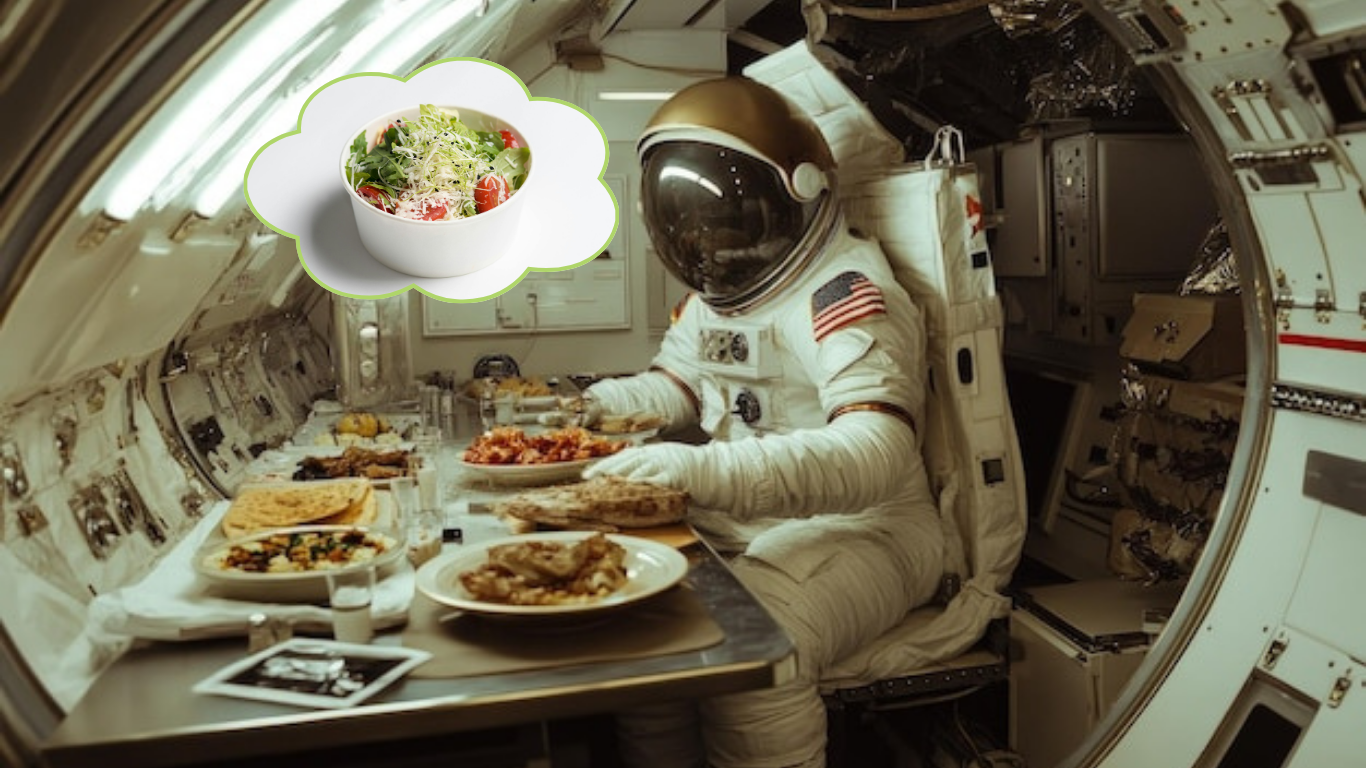
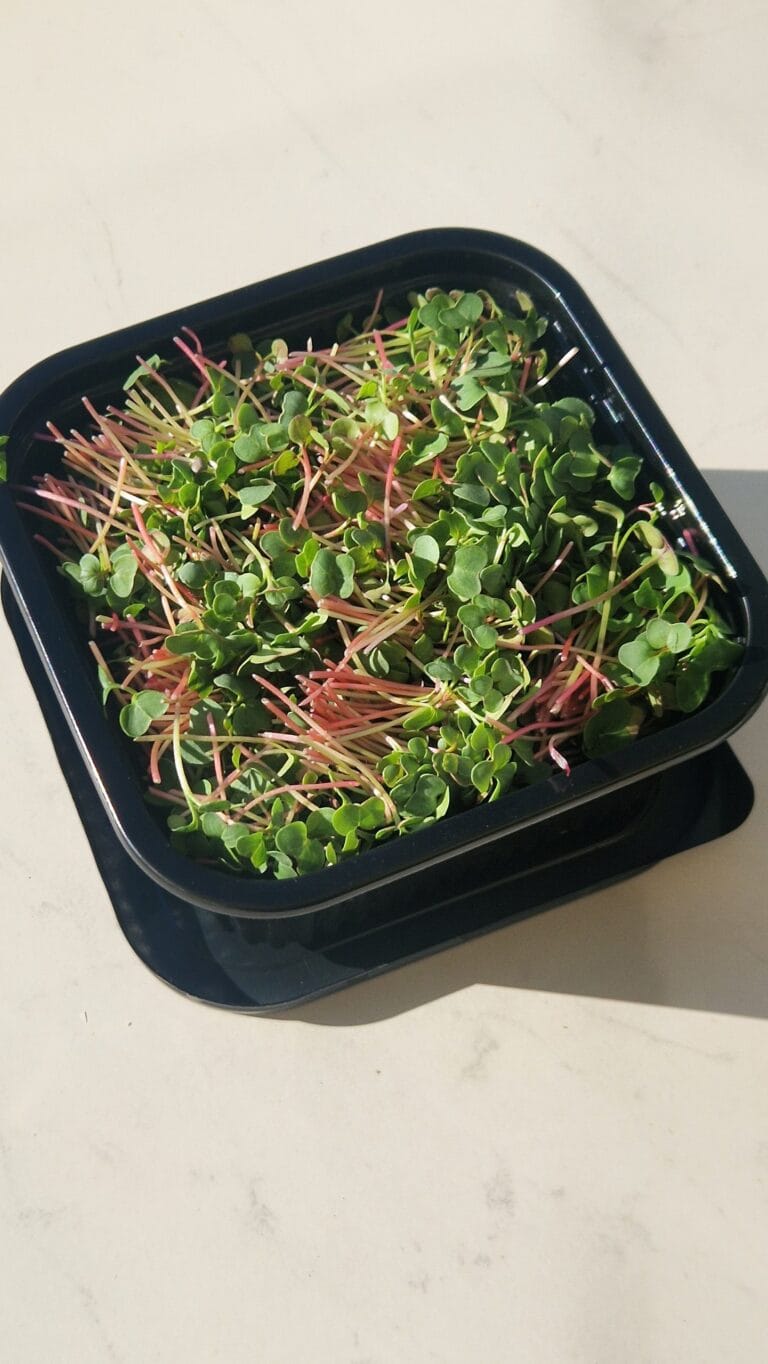
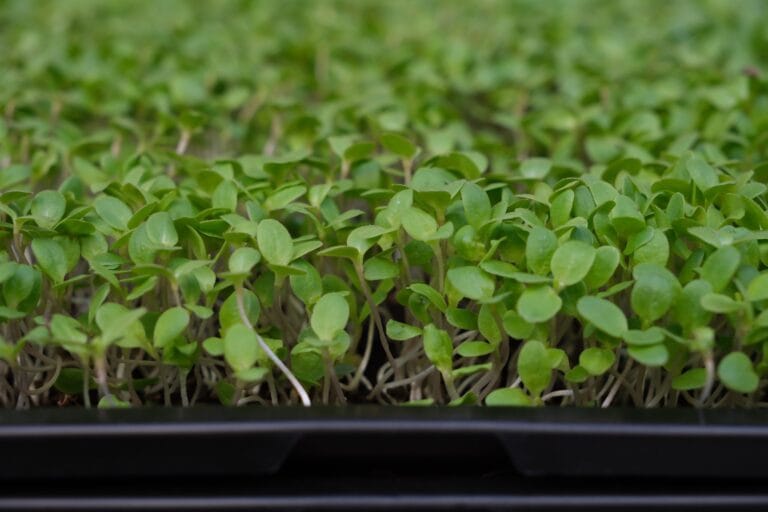
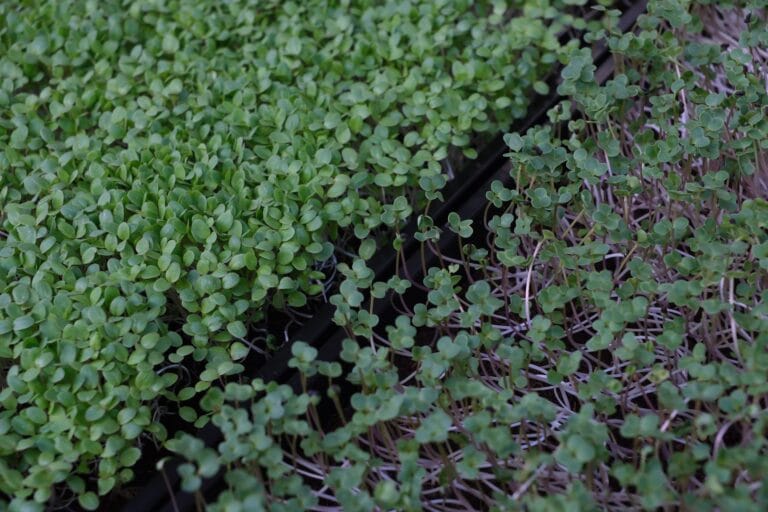
Microgreens have not yet been grown in orbit, but plant scientists argue they suit a spacecraft well. What the research actually says about space crops, hydroponics and taste in microgravity.
Microgreens have not been grown aboard a spacecraft as a food crop. What follows is a proposal that plant scientists have made seriously in the peer-reviewed literature — that these are unusually well-matched to the constraints of a space life-support system — and the reasoning behind it is worth understanding whether or not you ever leave the ground. NASA’s Veggie facility has grown lettuce, mizuna and radish on the International Space Station; microgreens are the next argument, not the current practice. The peer-reviewed proposals this article draws on are summarised in our Science Library.
When astronauts are going on a space mission it’s important for them to take care of their mental and physical health. They experience physiological changes, like muscle wasting, loss of bone density, and weakened immune function due to prolonged exposure to microgravity. Proper nutrition is essential to mitigate these effects, providing the necessary macro- and micronutrients needed to maintain overall health.
Moreover, well-prepared, tasty, and nutritionally balanced meals contribute to astronauts’ mental well-being, increasing their concentration and productivity during missions. This is where microgreens enter the discussion — not as a “superfood”, a marketing word with no scientific or regulatory meaning, but as a crop whose particular combination of properties fits an unusually demanding set of constraints.
First, to answer that question, it is crucial to understand the challenges of developing space food, primarily related to storage, safety, and nutrient stability. Because space missions have limited payload capacity, food must be lightweight, compact, and energy-dense. Regarding microgreens, research into hydroponic farming systems for growing fresh food in space is crucial. This soilless, resource-saving method is gaining importance as a sustainable source of functional food.
It is worth being precise about why hydroponics is the method of choice here, because it is easy to state this the wrong way round. The reason is engineering, not nutrition: no soil mass to launch, a closed and recyclable water loop, no loose particulate matter drifting through a cabin in microgravity, and complete control over what the plants receive.
Hydroponically grown microgreens are not reliably richer in antioxidants or minerals than soil-grown ones. The comparative studies point in different directions depending on the species, the substrate and the nutrient solution used, and mineral content in particular reflects what the grower supplies — an inert mat with plain water cannot deliver minerals that are not there, whereas a compost-based medium can. Light, species and harvest stage influence the phytochemical profile far more than the choice between soil and solution. Hydroponics earns its place in a spacecraft on mass, water and containment; the nutritional case has to be made crop by crop.
Crops for space missions must be nutrient-dense, require minimal resources, have short growth cycles, and be resistant to stress conditions. Leafy greens, legumes, and biofortified cereals are ideal candidates. Microgreens meet these requirements as they are compact, fast-growing and nutrient-dense.
Ensuring optimal health and performance for astronauts in space requires a strategic approach to nutrition, in which functional foods play a key role. Space missions pose unique physiological and environmental challenges, including microgravity-induced bone and muscle loss, immune suppression, radiation-induced oxidative stress, and disruption of gut microbiota. In our article, we focus only on hydroponically grown microgreens, but functional foods that are the future for space food also include probiotics, biofortified crops, antioxidant-rich foods. Each of these is being investigated as a countermeasure; none of them is a settled solution, and the evidence base for eating one’s way out of radiation-induced oxidative stress is a good deal thinner than the enthusiasm around it.
One further point, and it is less trivial than it sounds. Astronauts have long reported that food tastes blander in orbit — the usual explanation is the headward fluid shift of microgravity, which congests the nasal passages much as a heavy cold does — and they tend to reach for stronger, spicier flavours as a result. Sensory research in spaceflight is still a young field and the effect is not fully characterised. But if it holds, a crop that delivers concentrated, assertive flavour in a very small mass is answering a real problem rather than a hypothetical one.
The honest summary is that microgreens are a well-argued candidate for space life-support systems, backed by species-selection modelling and by the general case for fresh food on long missions — and that they remain a candidate. The same qualities that make the argument work off Earth, though, are exactly the ones that make them useful in a classroom, a community garden or a small kitchen: fast, compact, undemanding of space, and grown to harvest in a fortnight.
This article is part of the free knowledge portal of EVEC Microgreens. Wherever you are on your microgreens journey, there is a path for you:
Co-funded by the European Union.
This portal presents the microgreens methodology; the organisation behind it is EVEC Athens — the European Voluntary and Educational Center (evec.org.gr). Views and opinions expressed are those of the author(s) only and do not necessarily reflect those of the European Union or the European Commission. Neither the European Union nor the granting authority can be held responsible for them.
Open licence. Except where stated otherwise, the educational materials on this portal are licensed under CC BY 4.0 — free to use, adapt and share, including commercially, with credit. See the licence terms.
Accessibility. We aim for WCAG 2.1 AA and publish what does and does not yet meet it — see the accessibility statement. If anything here blocks you, tell us and we will send the material in a format that works for you.