Today’s article is aimed at an essential part of our society: education. More than important, it’s fundamental, because classrooms are where habits and values are formed, values that will stay with children for life. That’s why we’ve put together a series of guidelines teachers can use in preschool and primary school.
Our goal is to show teachers how to bring microgreens into everyday school life, combining science, nutrition, and sustainability in a fun, educational, and accessible way for the little ones.
Why microgreens in school?
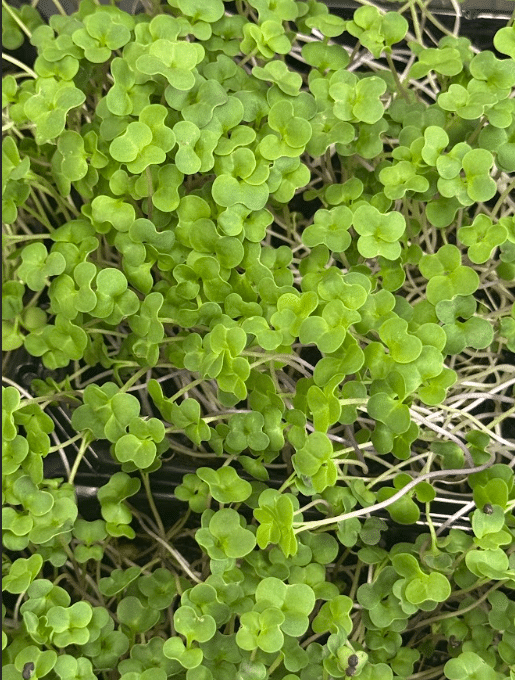
- Easy to grow: Children can see the results of their efforts in just 7 to 14 days.
- Small space needed: A tray and some soil are enough.
- Cross curricular learning: Microgreens allow you to explore natural sciences, math, art, environmental values, and even healthy eating habits.
- Connection to sustainability: They teach the value of producing food efficiently, using minimal water and energy.
Ideas to bring microgreens into the classroom
Mini classroom garden
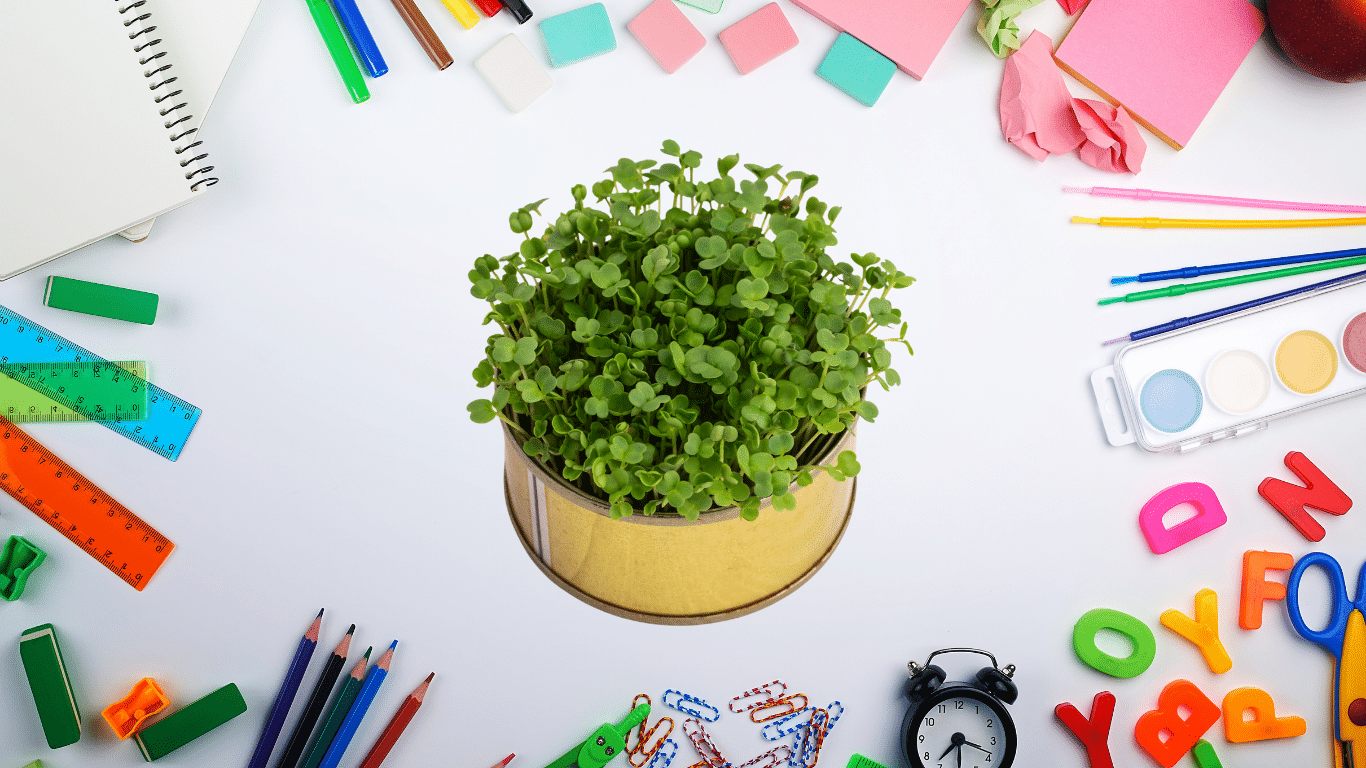
Set up a corner of the classroom to grow microgreen trays. Students can take turns watering them, observing growth, and recording their observations in a field journal.
Science experiments
Compare growth under different conditions: with and without light, using different seeds (radish, broccoli, sunflower, etc.), or measuring the amount of water used. This encourages curiosity and experimentation.
Nutrition education
Organize a tasting session with the microgreens harvested in class.
Art and creativity
Use the sprouts in art projects: draw the plants at different stages, create murals about “the life of a seed,” or even invent illustrated recipes for the school cafeteria. For more ideas, check out one of our articles on using microgreens in art.
Interdisciplinary projects
- Math: Measure heights, create growth charts, or calculate averages.
- Language arts: Write stories or journals about “an adventurous microgreen.”
- Environmental education: Discuss sustainable farming and responsible consumption.
Practical tips for teachers
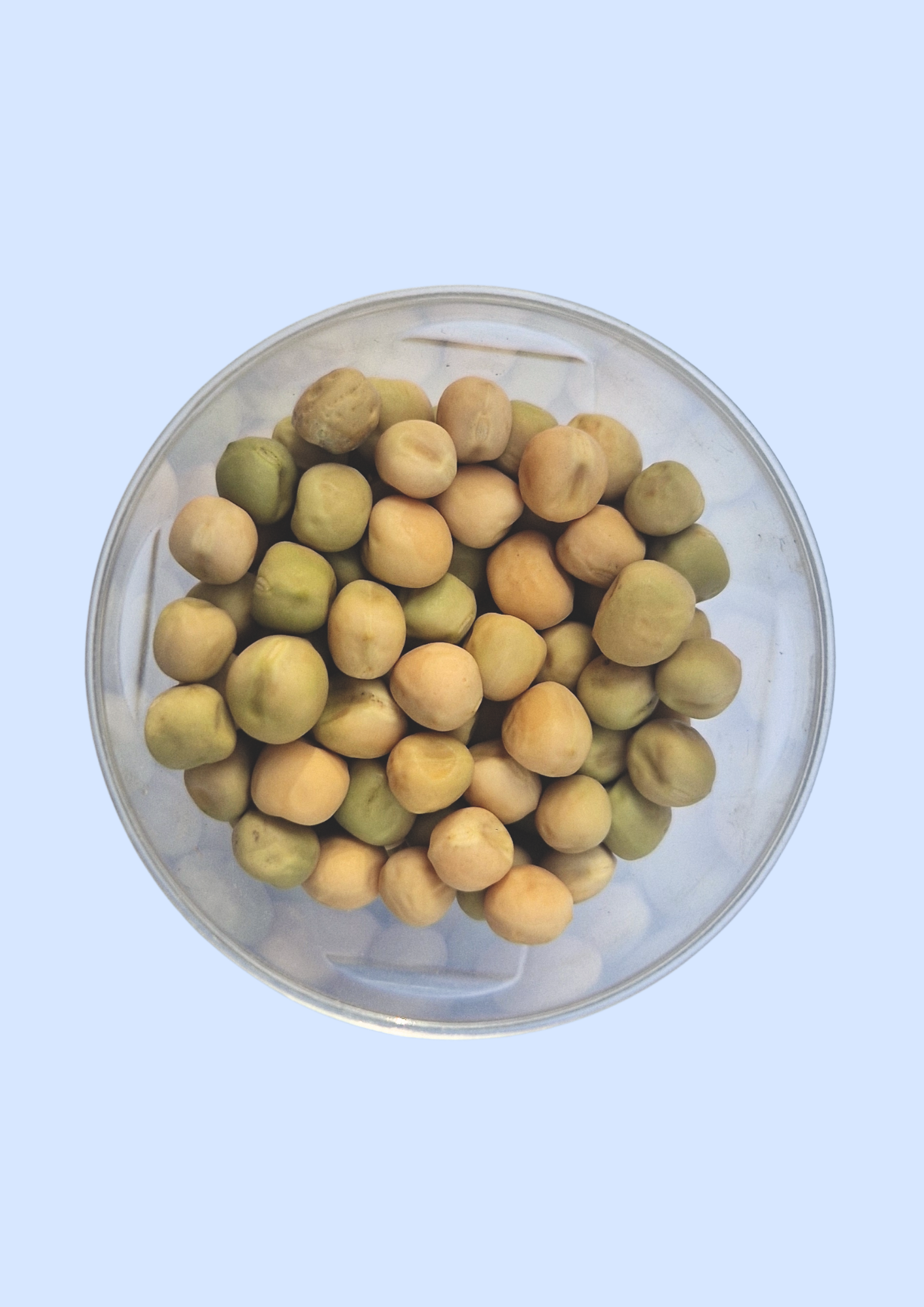
Start with easy seeds: Sunflower, radish, peas, or lentils grow quickly and keep kids motivated.
Involve families: Send home small microgreen kits so children can continue the experience at home.
Connect with the community: Display the results or even host a small school microgreen market to highlight the project’s importance.
Use digital resources: Educational apps and websites offer simple guides and videos to complement classroom activities.
In conclusion, bringing microgreens into education isn’t just a fun activity, it’s a bridge to practical, healthy, and mindful learning. Children discover they can grow their own food, develop care for the environment, and build habits that will stay with them for life.
Microgreens may be small, but in school, they become powerful learning tools.
Carlota



[…] have enabled families with little space to produce part of their own fresh and healthy food. In schools and community centers, they have become educational tools for teaching biology, nutrition, and […]
[…] nutritional benefits. A few weeks ago, we shared articles about how these tiny sprouts can help children in their development and older adults in maintaining their cognitive and motor […]