Get in touch
Questions about growing, workshops, the cooperative or partnerships? Send us a message and we will reply by email.
Prefer email? Write to erasmus@evec.org.gr
EVEC Microgreens
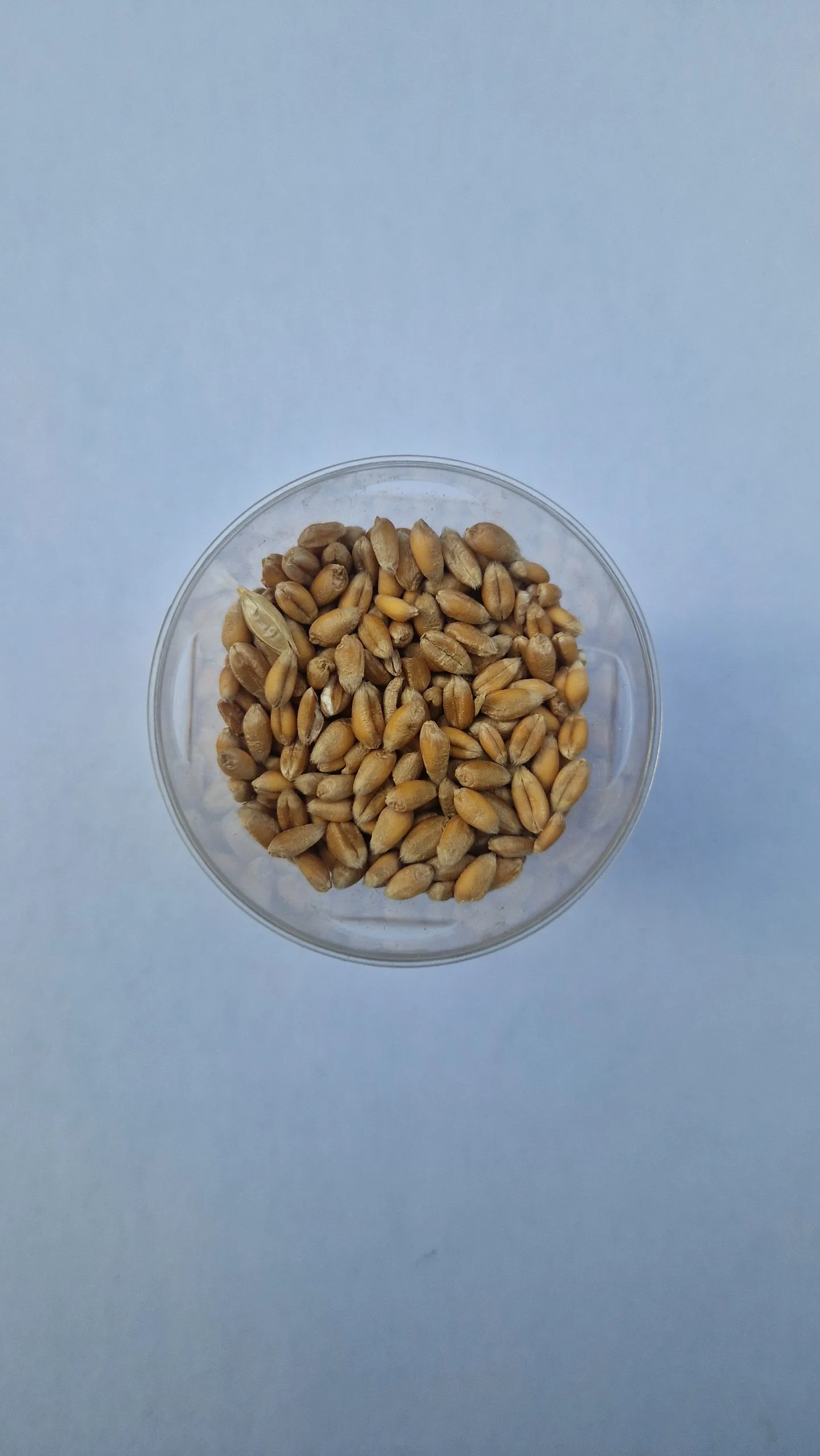
Barley microgreens: an easy-to-grow, lesser-known cereal crop that is not the same thing as barley grass. How to grow them, what the studies actually measured, and how they are used.
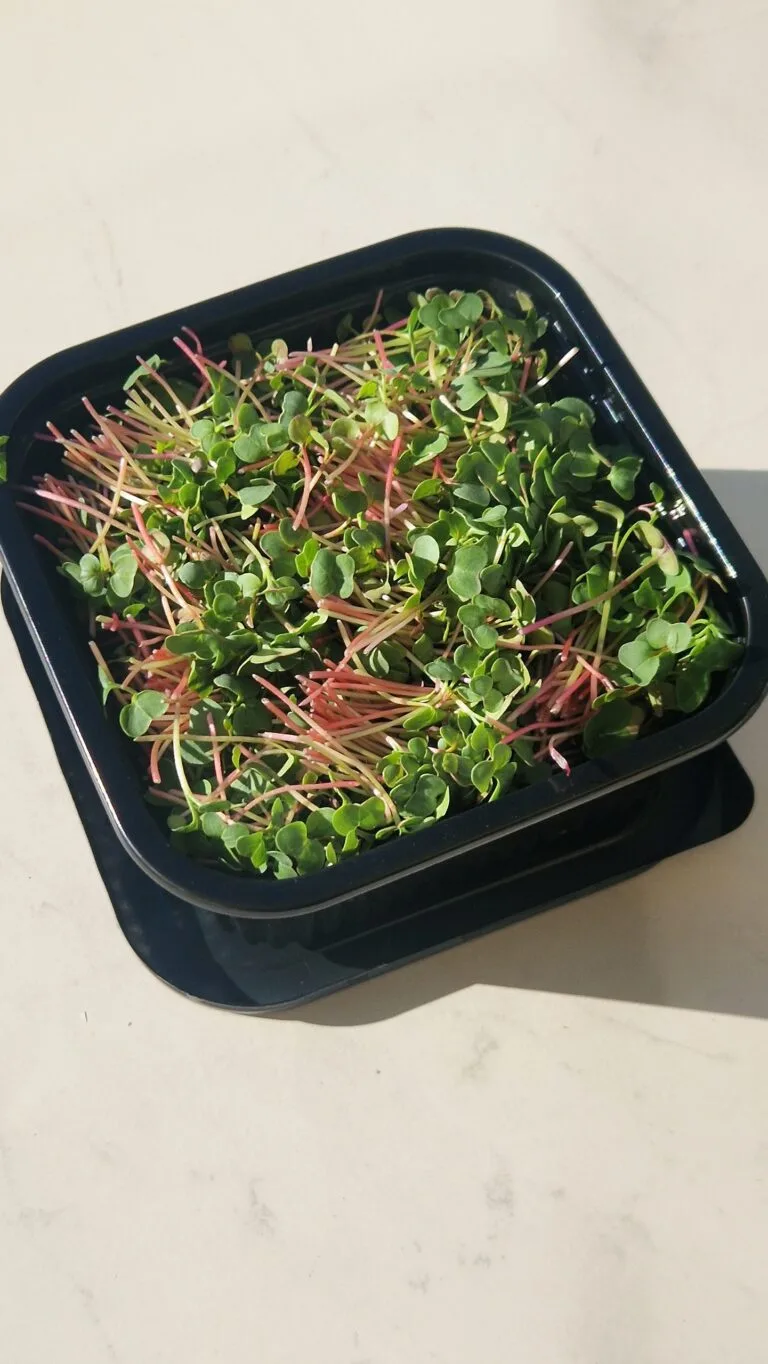
Barley microgreens are the young shoot of Hordeum vulgare, cut roughly 7 to 14 days after germination — and they are not barley grass, which is the same plant grown on longer and usually juiced or dried into powder. The distinction matters more for barley than for almost any other crop, because nearly all the published health research on barley leaf was carried out on the grass, not on the shoot cut at microgreen size.
Where barley microgreens have been compared directly with other cereals, they came out at the bottom. A 2024 study in Cogent Food & Agriculture grew two barley, two wheat and three oat varieties side by side in a controlled climate room and measured barley lowest of the three cereals for total phenolic content, total antioxidant activity and total flavonoid content, and lowest again for chlorophyll and carotenoids; wheat measured highest. That is one study rather than a settled answer, but it is the most direct comparison in our Science Library. What barley reliably offers is inexpensive seed, fast germination and an unusually simple harvest — which is what the rest of this guide covers.
Barley is one of the oldest cereals cultivated by humans and has been used for thousands of years as a staple food. In its young sprout stage the plant contains nutrients and bioactive compounds that studies have measured, in amounts that vary with variety, growing method and harvest age.
Barley belongs to the species Hordeum vulgare, a cereal that has been cultivated for more than 10,000 years. It is one of the most important crops in the world and is mainly used for human consumption, malt production for beer, and animal feed.
However, in the early stages of growth, the plant produces young leaves that can be consumed as sprouts or microgreens. These leaves contain a range of nutrients and plant compounds.
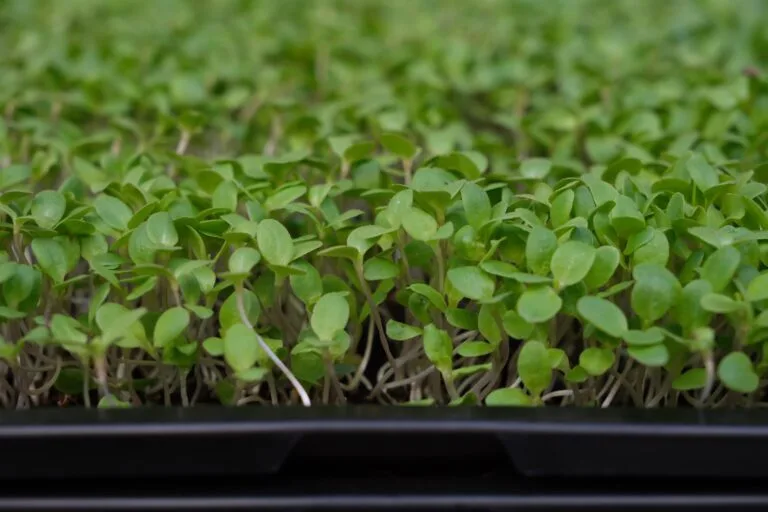
Barley microgreens are young sprouts usually harvested between 7 and 14 days after germination, when the leaves have begun to develop but the plant is still very small. At this stage the shoot is still tender, and its pigment and phenolic content is what most of the research on this crop has measured.
Although they are often consumed in the form of barley grass to prepare juices or green smoothies, they can also be used fresh in various culinary preparations.
Barley grass is not the same thing as barley microgreens, and most of the research is on the grass. Barley is unusual among microgreen crops in that it is also grown on to a taller “grass” stage and juiced or dried into powder. Nearly all the published health research — including the review cited at the foot of this article — measures barley grass, harvested later and usually consumed as juice or powder, not the young shoot cut at the microgreen stage. The two are the same plant at different ages, and it is reasonable to expect some overlap, but the figures below should be read as indicative rather than as measurements of what is in your tray.
Studies on barley grass report a range of essential nutrients in the young leaf.
Among the most notable components are:
Barley grass also contains enzymes and compounds whose antioxidant activity has been measured in laboratory assays.
What has actually been measured in barley leaf material is its composition: antioxidant capacity, total phenolic content, total flavonoid content, chlorophyll and carotenoids. These are laboratory measurements of the plant. They describe how an extract behaves in an assay, and they do not establish what eating barley microgreens does in a person.
Where research has gone beyond composition, it has mostly used barley grass rather than the microgreen, and mostly in animals or in the test tube. One paper in our Science Library tested a barley microgreen preparation in male rats. An animal experiment does not establish an effect in people, and no health outcome is claimed for this crop here.
One of the advantages of barley as a microgreen is its ease of cultivation. It is a fast-germinating cereal that can grow well in different production systems.
The basic process includes:
Unlike some small-leaf microgreens, barley sprouts produce long, thin grass-like leaves, which makes harvesting easier by simply cutting the shoots.
Although barley microgreens are not as common in the kitchen as other varieties, they have several interesting applications. The most common include:
One of the most popular ways to consume barley grass is in green juices, where it is combined with fruits and other vegetables.
Barley sprouts can be blended with ingredients such as apple, cucumber, spinach, and ginger to create nutritious drinks.
In some cases, barley grass is dehydrated and ground into powder, which can be added to beverages or foods as a nutritional supplement.
Although barley microgreens are not yet as popular on the market as other species, they offer several advantages for both producers and consumers, including:
As demand for healthy and sustainable products continues to rise, this type of sprout could become an interesting alternative within the microgreens market.
Carlota
Zeng, Y., Pu, X., Yang, J., Du, J., Yang, X., Li, X., Li, L., Zhou, Y., & Yang, T. (2018). “Preventive and Therapeutic Role of Functional Ingredients of Barley Grass for Chronic Diseases in Human Beings”. Oxidative Medicine and Cellular Longevity, 2018, 3232080. This paper concerns barley grass, not barley microgreens — see the note above. The wording of the title is the authors’ own; we cite the paper for its composition data and do not endorse its disease claims. Open the study ↗
Żur, I., Kopeć, P., Surówka, E., & Dubas, E. (2021). Barley and triticale. Antioxidants, 10 (8), 1217. https://www.mdpi.com/2076-3921/10/8/1217
In July 2026 we removed one entry from this list: a Healthline article on barley grass. It is not a primary source, and we do not use consumer health publishers to support nutritional claims. See our editorial standards.
Studies from our Science Library that concern barley microgreens, in plain language with links to the original research. This list updates automatically as new studies are added.
No plain-language write-up for this crop yet — the peer-reviewed studies are listed further down this page, or browse the full Science Library.
Recipes and kitchen ideas from our cookbook team that use barley microgreens.
No recipes for this crop yet — the cookbook has plenty to start with.
Growing a different crop next? Every variety has a guide like this one in the Varieties database.
Our research archive holds 5 peer-reviewed studies on barley microgreens. They are free to read and download, and each one credits its original authors.
This article is part of the free knowledge portal of EVEC Microgreens. Wherever you are on your microgreens journey, there is a path for you:
Co-funded by the European Union.
This portal presents the microgreens methodology; the organisation behind it is EVEC Athens — the European Voluntary and Educational Center (evec.org.gr). Views and opinions expressed are those of the author(s) only and do not necessarily reflect those of the European Union or the European Commission. Neither the European Union nor the granting authority can be held responsible for them.
Open licence. Except where stated otherwise, the educational materials on this portal are licensed under CC BY 4.0 — free to use, adapt and share, including commercially, with credit. See the licence terms.
Accessibility. We aim for WCAG 2.1 AA and publish what does and does not yet meet it — see the accessibility statement. If anything here blocks you, tell us and we will send the material in a format that works for you.