Get in touch
Questions about growing, workshops, the cooperative or partnerships? Send us a message and we will reply by email.
Prefer email? Write to erasmus@evec.org.gr
EVEC Microgreens
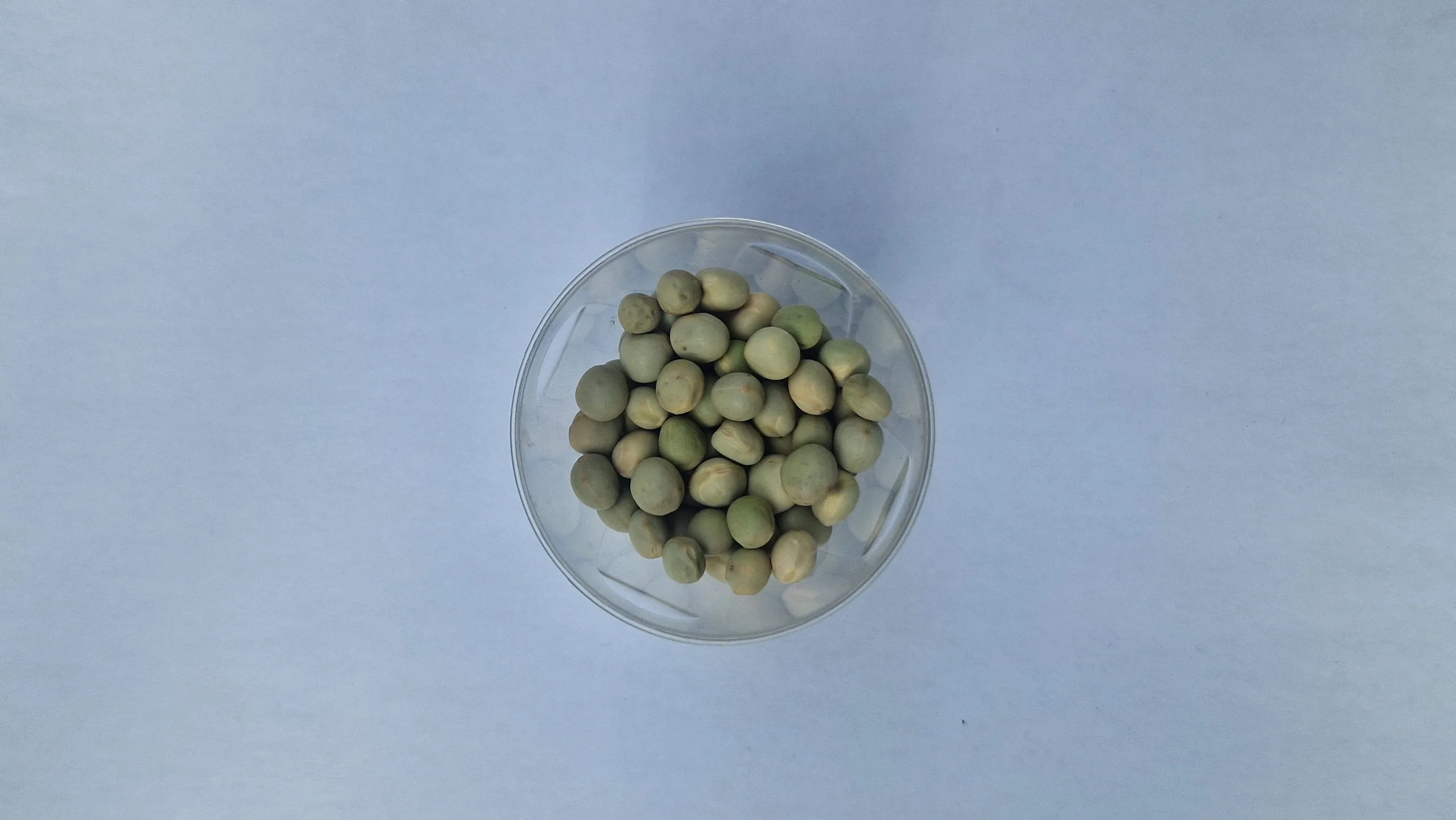
Pea, lentil, chickpea and sunflower microgreens as a protein source — with the measured numbers, and an honest note on where the data are simply missing.
Pea comes out on top in the closest thing to a measured protein ranking of microgreens that we could find: a 2025 study in Scientific Reports put pea microgreens at 200 mg of phenylalanine per 100 g — phenylalanine tracks protein — ahead of garden cress at 150 mg, sunflower at 140 mg and radish at 100 mg.
Lentil microgreens have no published protein measurement that we could locate at all, and in a 2023 four-crop comparison the highest protein content was in bathua at 3.40%, not in the chickpea microgreens grown alongside it. What follows is what has actually been measured for these four protein rich microgreens — pea, lentil, chickpea and sunflower — and where the numbers run out.
Among the most notable are the young sprouts of pea, lentil, chickpea, and sunflower, varieties that mainly belong to the legume family or come from seeds naturally rich in protein. These microgreens can add extra nutritional value to salads, plant based dishes, and healthy preparations.
Proteins are essential macronutrients for the human body, as they play a key role in the formation of tissues, enzymes, and hormones. While vegetables generally contain moderate amounts of protein, certain seeds and legumes have significantly higher levels.
When these seeds germinate and develop into microgreens, they retain part of this protein content along with vitamins, minerals, and antioxidant compounds. Germination also tends to make legume protein easier to digest: a 2023 review in Molecules describes how germinating legume seeds lower their protease-inhibitor levels, activate proteases and break down storage proteins, so that the net effect is usually improved digestibility — though the review is explicit that the size of that improvement is species- and strain-dependent, and it concerns germinating seeds rather than microgreens specifically.
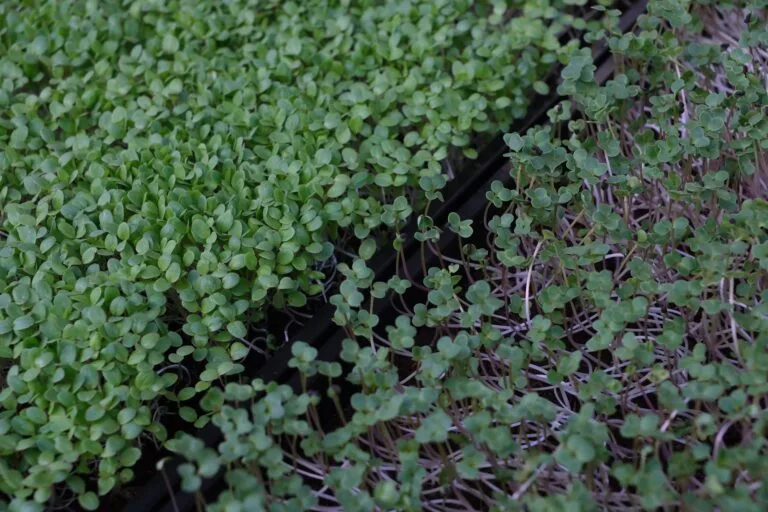
Pea shoots are among the most popular microgreens for both home growers and commercial producers.
They come from the species Pisum sativum, a legume widely cultivated around the world. Their sprouts have tender stems and delicate leaves with a mild flavor reminiscent of fresh peas.
Pea microgreens are valued for a good content of plant based protein, the presence of fiber and vitamins and a sweet and pleasant flavor.
Thanks to their crunchy texture, they are often used in salads, grain bowls, stir fries, or as garnishes for fish and meat dishes.
Growing notes are in our pea microgreens guide.

The lentil, belonging to the species Lens culinaris, is well known for its high protein content among legumes.
When grown as a microgreen, lentils produce small and tender sprouts with a mild, slightly vegetal flavor. These sprouts retain part of the legume’s characteristic nutritional profile, including protein, iron, and minerals — though we found no published protein measurement for lentil microgreens specifically, so that describes the seed rather than the seedling.
Lentil microgreens can be incorporated into fresh salads, wraps, sandwiches and mixed sprout blends.
Their cultivation is also typically fast and simple, making them an attractive option for microgreen producers.
Chickpeas are another legume highly valued for their protein content and their role in the traditional diets of many cultures. They belong to the species Cicer arietinum.
Their microgreens produce sturdy stems and small leaves with a mild flavor that slightly resembles fresh chickpeas.
Among their main characteristics are plant based protein content, fiber and mineral content and a firm texture.
Although they are less common in the market than other microgreens, chickpea sprouts represent an interesting option for diversifying crop offerings.
Growing notes are in our chickpea microgreens guide.
Sunflower microgreens come from the plant Helianthus annuus, well known for its nutritious seeds.
These sprouts are especially appreciated for their high nutritional value and crunchy texture. They have a mild flavor with subtle nutty notes.
Their key characteristics include a good protein content, the presence of healthy fats, vitamins and minerals.
Sunflower microgreens are widely used in salads, sandwiches, vegan dishes, and vegetable or grain bowls.
Growing notes are in our sunflower microgreens guide.
This is the part most articles about protein rich microgreens skip, so here it is with the numbers we could actually find.
The most directly useful dataset comes from an unexpected place: a 2025 study in Scientific Reports that profiled 28 foods for people on a phenylalanine restricted diet for phenylketonuria. Because phenylalanine tracks protein, its per species figures are the closest thing to a measured ranking of microgreens by protein that we have found. Pea microgreens came out highest at 200 mg phenylalanine per 100 g, ahead of garden cress at 150 mg and sunflower at 140 mg, with radish at 100 mg and broccoli at 97 mg. Pea and sunflower, two of the four crops in this article, do sit at the upper end.
Two caveats, and they matter. First, we found no published measurement of protein in lentil microgreens specifically, so the lentil section above rests on what is known about the seed, not the seedling. Second, being a legume is not what puts a microgreen at the top of the table. A 2023 study in ACS Omega comparing four microgreens found the highest protein content in bathua (Chenopodium album) at 3.40%, not in the Bengal gram (chickpea) microgreens grown alongside it. And a 2025 profile of Brassicaceae microgreens in our Science Library reported 40 to 44% protein in kale and Sango radish, but on a dry matter basis, which cannot be set beside a fresh weight figure without doing the arithmetic first.
The practical conclusion is smaller than the headline. These four crops are a reasonable choice if protein is what you are after; a garnish sized portion will not move your daily intake much; and the idea that legume microgreens are the protein rich ones is not what the published measurements say.
Incorporating microgreens from legumes or protein-rich seeds into the diet can provide several benefits, such as increasing the nutritional density of dishes, providing additional plant based protein, adding variety in flavors and textures and being easy to include in vegetarian or vegan diets.
Their cultivation is also usually fast and productive, making them attractive for producers.
Interest in plant-based proteins is increasing worldwide, driven by changes in eating habits and the search for more sustainable diets. In this context, protein rich microgreens offer a fresh and nutritious alternative that can complement other plant protein sources.
As research on microgreens continues to advance and consumers discover new varieties, it is likely that pea, lentil, chickpea, and sunflower microgreens will gain greater prominence both in home cooking and in professional gastronomy.
Carlota
Bera, I., O’Sullivan, M., Flynn, D., & Shields, D. C. (2023). Relationship between protein digestibility and the proteolysis of legume proteins during seed germination. Molecules, 28(7), 3204. https://doi.org/10.3390/molecules28073204
Sanyukta, Brar, D. S., Pant, K., Kaur, S., Nanda, V., Nayik, G. A., Ramniwas, S., Rasane, P., & Ercisli, S. (2023). Comprehensive analysis of physicochemical, functional, thermal, and morphological properties of microgreens from different botanical sources. ACS Omega, 8(32), 29558–29567. https://doi.org/10.1021/acsomega.3c03429
Vučetić, A., Šovljanski, O., Pezo, L., Gligorijević, N., Kostić, S., Vulić, J., & Čanadanović-Brunet, J. (2025). A comprehensive antioxidant and nutritional profiling of Brassicaceae microgreens. Antioxidants, 14(2), 191. https://doi.org/10.3390/antiox14020191
Lubina, O., Daly, A., Auzenbaha, M., Gailite, L., Laktina, S., & Macdonald, A. (2025). Nutritional profiling of foods for Phenylketonuria. Scientific Reports, 15, 22538. https://doi.org/10.1038/s41598-025-06633-2
In July 2026 we removed three entries from this list: a Healthline article, a WebMD article, and an auto-generated ScienceDirect topic page. None of them is a primary source, and we do not use consumer health publishers to support nutritional claims. See our editorial standards.
Growing notes for pea, chickpea and sunflower are in their own crop guides — pea microgreens, chickpea microgreens and sunflower microgreens — and every crop covered on this site has a guide like them in the Varieties database. The papers behind the figures on this page are indexed in the Science Library, and there are ways to serve them in the cookbook.
This article is part of the free knowledge portal of EVEC Microgreens. Wherever you are on your microgreens journey, there is a path for you:
Co-funded by the European Union.
This portal presents the microgreens methodology; the organisation behind it is EVEC Athens — the European Voluntary and Educational Center (evec.org.gr). Views and opinions expressed are those of the author(s) only and do not necessarily reflect those of the European Union or the European Commission. Neither the European Union nor the granting authority can be held responsible for them.
Open licence. Except where stated otherwise, the educational materials on this portal are licensed under CC BY 4.0 — free to use, adapt and share, including commercially, with credit. See the licence terms.
Accessibility. We aim for WCAG 2.1 AA and publish what does and does not yet meet it — see the accessibility statement. If anything here blocks you, tell us and we will send the material in a format that works for you.

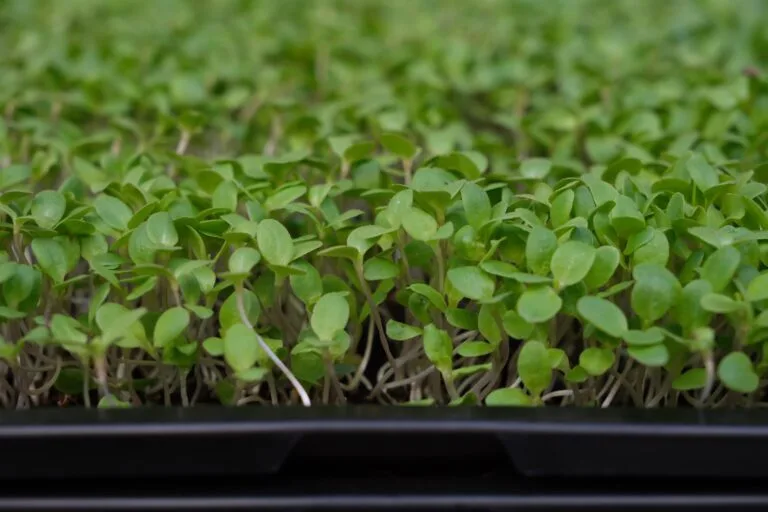

[…] sit alongside sunflower, lentil and chickpea as the filling, satisfying protein-rich microgreens rather than the delicate garnish types. The one honest caveat is that a densely sown pea tray holds […]