Get in touch
Questions about growing, workshops, the cooperative or partnerships? Send us a message and we will reply by email.
Prefer email? Write to erasmus@evec.org.gr
EVEC Microgreens
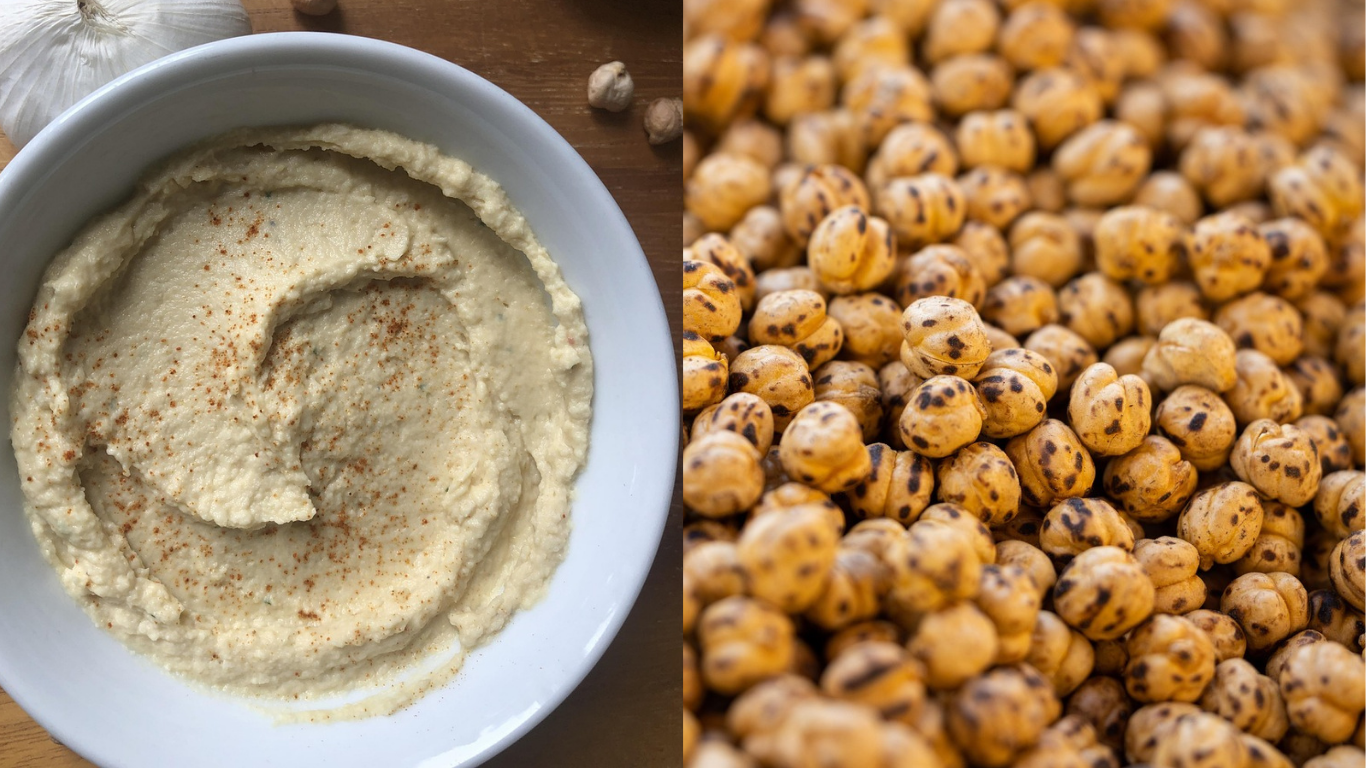
Pea, radish, cilantro or sunflower microgreens blended into a 400 g chickpea hummus with tahini, lemon and garlic — sweet, peppery, citrusy or nutty results.
Hummus is one of the most representative dishes of Middle Eastern and Mediterranean cuisine. Traditionally made from blended chickpeas, tahini, olive oil, lemon, and garlic, this dip has become popular around the world thanks to its flavor, nutritional value, and versatility.
In recent years, modern cuisine has begun incorporating microgreens into this classic recipe, creating new versions that add freshness, color, and nutrients. Using microgreens in hummus allows interesting aromatic nuances to be added without altering the essence of the dish.
The main ingredient in hummus is the chickpea, from the species Cicer arietinum, a legume cultivated for thousands of years in the Mediterranean and the Middle East.
Traditional hummus is prepared by blending cooked chickpeas with tahini (sesame paste), lemon juice, garlic, olive oil, and salt.
The result is a smooth and nutritious cream that is usually served with bread, vegetables, or as a side dish for other meals.
Thanks to its plant based ingredients and its good content of protein and fiber, hummus has also become a very popular food in vegetarian and vegan diets.
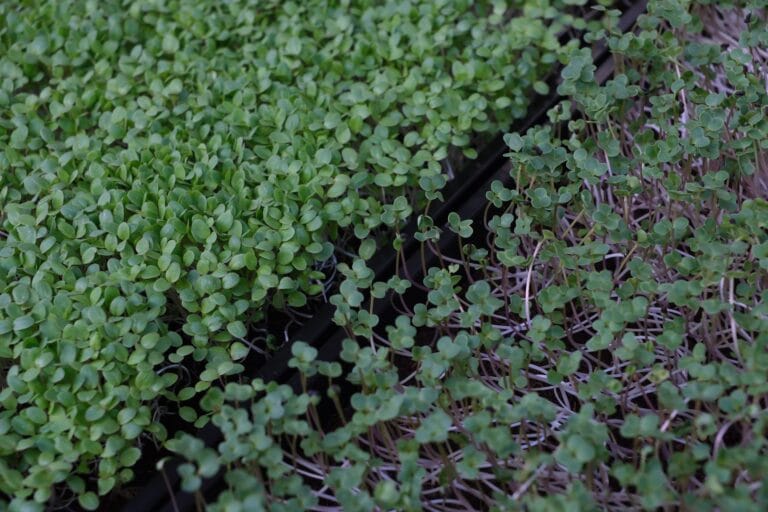
Microgreens, young seedlings of vegetables and herbs harvested just a few days after germination, contain concentrated flavors and valuable nutrients at this early stage of growth.
Adding them to hummus offers several advantages…
Not all microgreens produce the same result in this recipe. Some varieties work particularly well due to their flavor and texture.
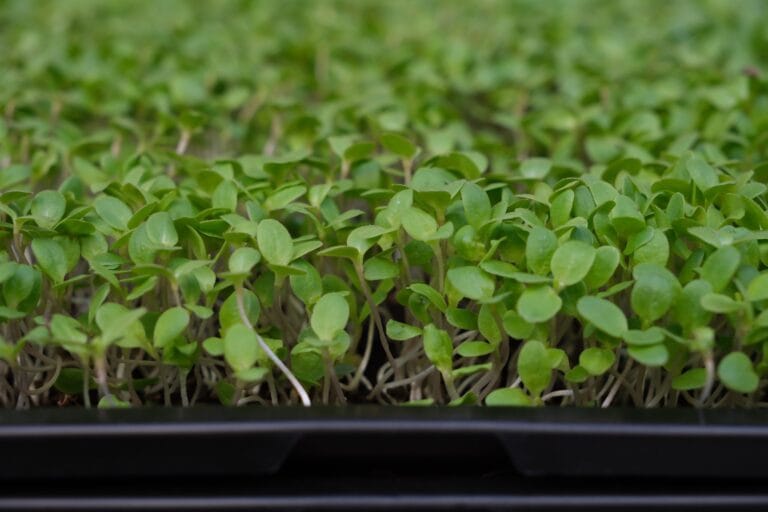
Derived from Pisum sativum, they have a sweet and fresh flavor that pairs perfectly with chickpeas. They also add a mild vegetal note that makes the hummus lighter and fresher.
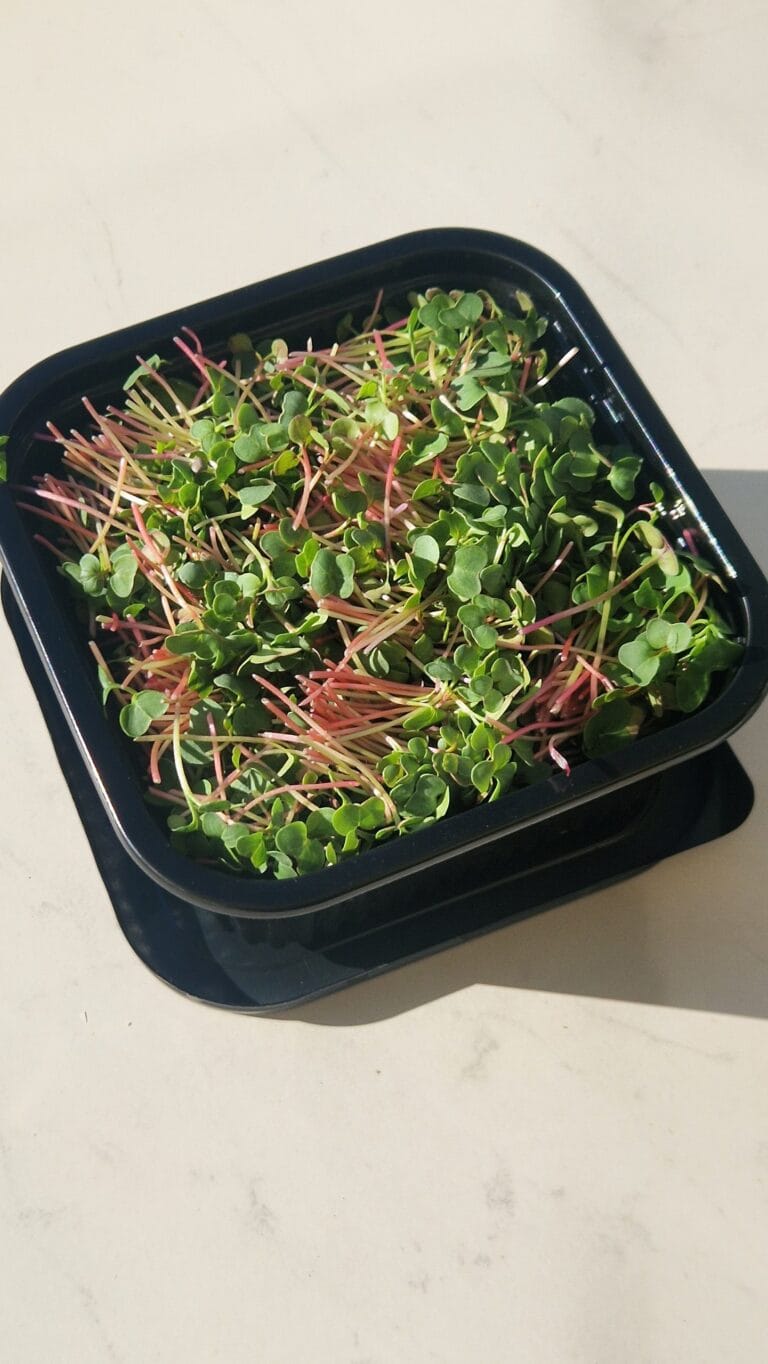
Radish microgreens have a slightly spicy flavor. When added to hummus, they create a version with more character and a subtle peppery touch. They are ideal for those looking for a more intense version of the dish.
Cilantro microgreens bring a fresh, slightly citrusy aroma that recalls some preparations from Middle Eastern cuisine. This variation works especially well when a bit more lemon is added to the hummus.
Derived from Helianthus annuus, these sprouts have a mild flavor with light nutty notes. They pair very well with tahini and create a pleasant texture.
Ingredients
Preparation
The hummus can be served with an extra drizzle of olive oil and a few fresh microgreens on top.
One of the advantages of hummus with microgreens is that it allows many variations. Some interesting combinations include green hummus with pea microgreens and spinach, spicy hummus with radish microgreens and paprika, herbal hummus with cilantro microgreens and parsley and mild hummus with sunflower microgreens.
These variations allow the dish to be adapted to different culinary styles and personal preferences.
Incorporating microgreens into hummus is a simple way to transform a classic recipe into a preparation that is fresher, more nutritious, and visually appealing.
For chefs, this combination offers an interesting opportunity to experiment with new flavors and present innovative dishes while still maintaining the foundations of traditional cuisine.
Carlota
BBC Good Food. Hummus recipe. https://www.bbcgoodfood.com/recipes/hummus
Sanyukta, Brar, D. S., Pant, K., Kaur, S., Nanda, V., Nayik, G. A., Ramniwas, S., Rasane, P., & Ercisli, S. (2023). Comprehensive analysis of physicochemical, functional, thermal, and morphological properties of microgreens from different botanical sources. ACS Omega, 8(32), 29558–29567. https://doi.org/10.1021/acsomega.3c03429
The Mediterranean Dish. How to make hummus. https://www.themediterraneandish.com/how-to-make-hummus/
In July 2026 we removed three entries from this list: a Healthline article, a WebMD article, and an auto-generated ScienceDirect topic page. None of them is a primary source, and we do not use consumer health publishers to support nutritional claims. The two recipe references are kept, because they are the provenance of the base recipe rather than support for a health claim. See our editorial standards.
Vučetić, A., Šovljanski, O., Pezo, L., Gligorijević, N., Kostić, S., Vulić, J., & Čanadanović-Brunet, J. (2025). A comprehensive antioxidant and nutritional profiling of Brassicaceae microgreens. Antioxidants, 14(2), 191. https://doi.org/10.3390/antiox14020191
This article is part of the free knowledge portal of EVEC Microgreens. Wherever you are on your microgreens journey, there is a path for you:
Co-funded by the European Union.
This portal presents the microgreens methodology; the organisation behind it is EVEC Athens — the European Voluntary and Educational Center (evec.org.gr). Views and opinions expressed are those of the author(s) only and do not necessarily reflect those of the European Union or the European Commission. Neither the European Union nor the granting authority can be held responsible for them.
Open licence. Except where stated otherwise, the educational materials on this portal are licensed under CC BY 4.0 — free to use, adapt and share, including commercially, with credit. See the licence terms.
Accessibility. We aim for WCAG 2.1 AA and publish what does and does not yet meet it — see the accessibility statement. If anything here blocks you, tell us and we will send the material in a format that works for you.