Get in touch
Questions about growing, workshops, the cooperative or partnerships? Send us a message and we will reply by email.
Prefer email? Write to erasmus@evec.org.gr
EVEC Microgreens
Microgreens as visual material, not food: botanical photography, kitchen pots and living wall art at home, and fashion sketches using them as living textiles.
Microgreens are grown for what they contain, but they are also unusually good to look at, and that has turned out to matter commercially and creatively. This article covers the second side: microgreens as visual material rather than food.
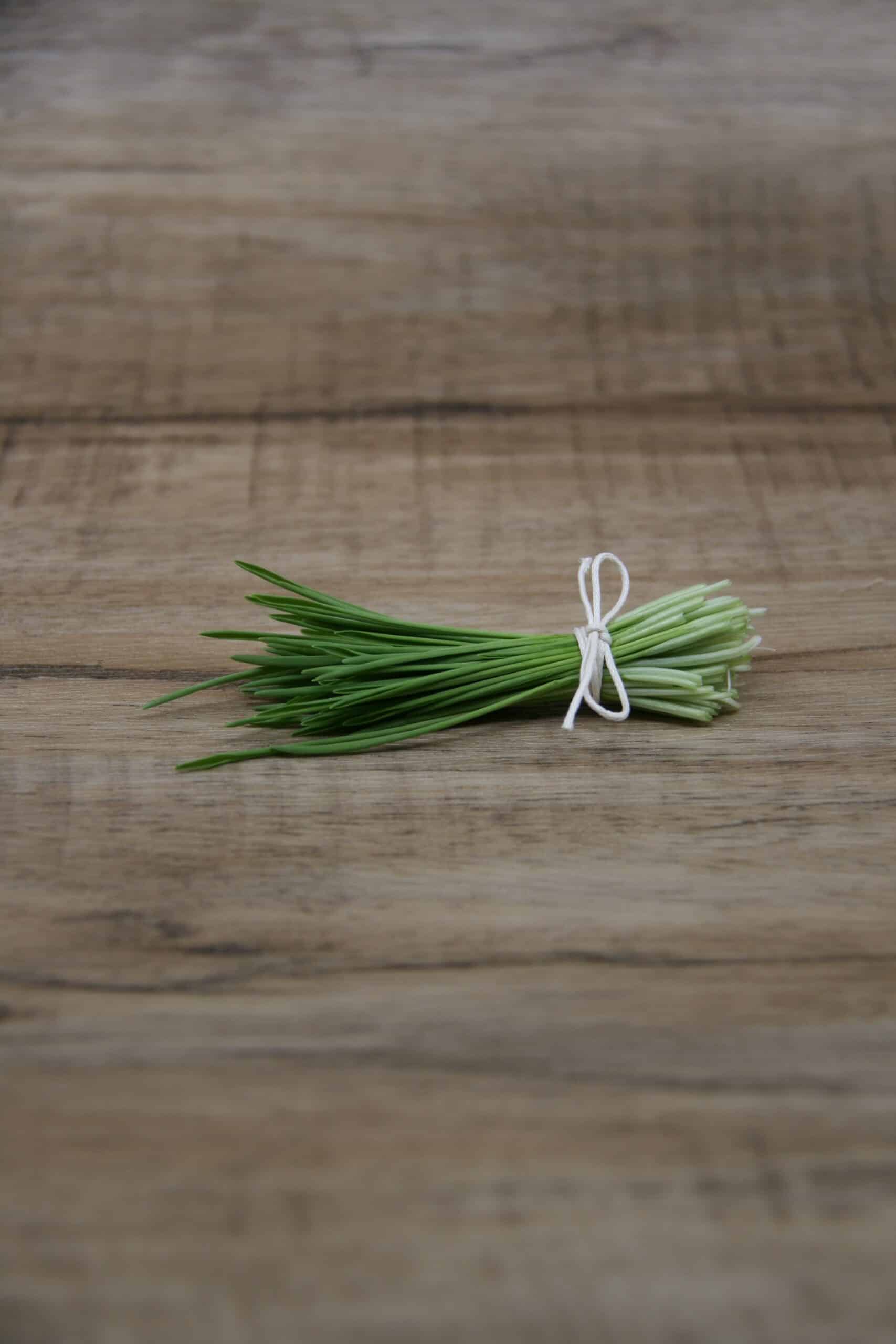
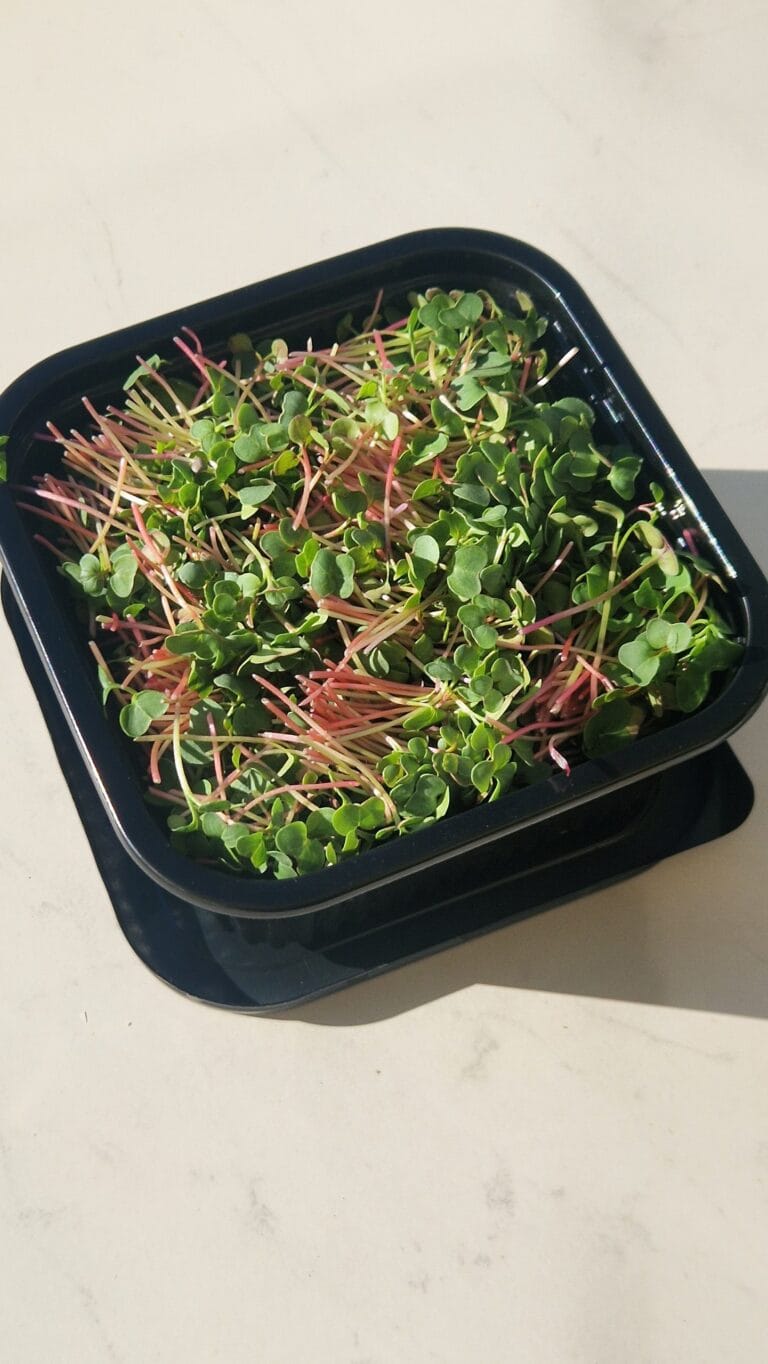
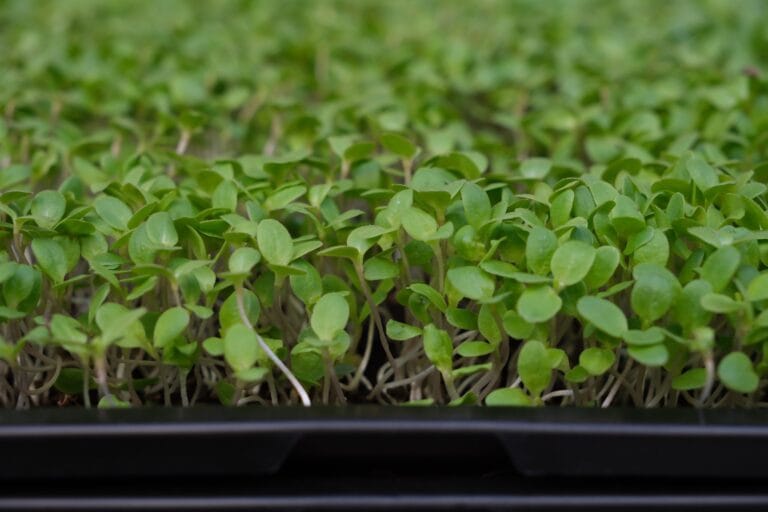
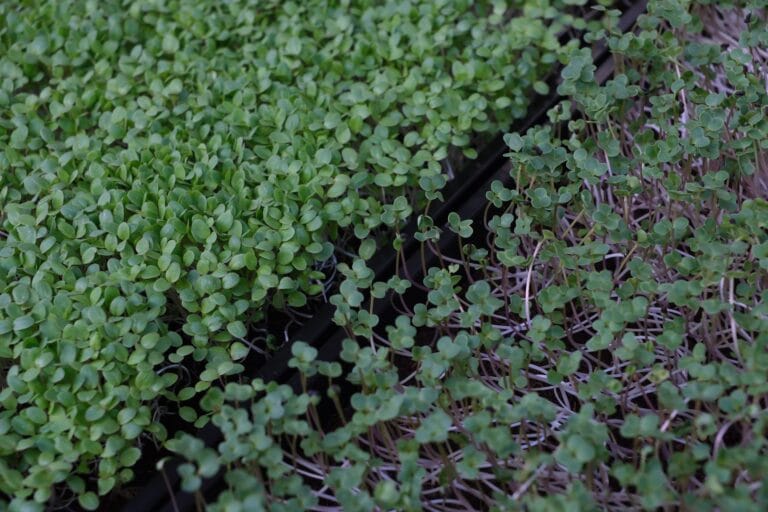
The appeal is structural. A tray holds dozens of near-identical stems at the same height, each topped with a small leaf, in colours that range from pale green through pink to deep purple — radish is the striking one, with a dark stem and leaves that are large by microgreen standards. Uniformity at that density is hard to achieve with any other living material, which is precisely what makes it photograph and display well.
Microgreens are established in restaurant plating as edible decoration. Less obviously, the same qualities suit them to botanical photography — a discipline that sets out to record both the appearance and the structure of a plant. Microgreens are convenient subjects: they reach a photogenic stage in one to two weeks, several species can be grown side by side to the same schedule, and the scale suits macro work. A single composition can hold half a dozen species and their full colour range under natural light.
In the home, they occupy a category few plants do: something both decorative and edible, on a windowsill, as a table centrepiece, or planted into a living wall panel. The tray is the display and the harvest at the same time. That dual use is the practical argument for growing them somewhere visible rather than tucked away.
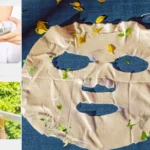
Microgreens also appear in speculative fashion illustration — mannequins dressed in living greenery, botanical headpieces, sprouts treated as textile. We should be precise about what that is: these are concept illustrations circulating on design and mood-board platforms, not documented garments or runway collections we can point you to. We have not found a designer working with living microgreens as a material, and we are not claiming one exists.
The idea is worth noting anyway, because it is the direction the material naturally suggests: a crop that is dense, uniform, fast and alive is an obvious candidate for anyone thinking about living surfaces. Whether it survives contact with the practical problems — weight, water, a lifespan measured in days — is a different question, and nobody appears to have answered it yet.
From a plate to a wall, a camera to a sketchbook, the same properties keep doing the work: small scale, dense uniformity, strong colour, and a growing cycle short enough to treat the plant as a renewable material rather than a fixed object.
So what about you? How would you incorporate microgreens into your artistic life?
Carlota
On sources. This article is an observational piece about appearance and use, not a research summary, and it cites no studies because none are needed for the claims it makes. Where it describes something we have not verified — the fashion illustrations — it says so. For the nutritional and food-safety material on this portal, which is sourced, see the Science Library.
This article is part of the free knowledge portal of EVEC Microgreens. Wherever you are on your microgreens journey, there is a path for you:
Co-funded by the European Union.
This portal presents the microgreens methodology; the organisation behind it is EVEC Athens — the European Voluntary and Educational Center (evec.org.gr). Views and opinions expressed are those of the author(s) only and do not necessarily reflect those of the European Union or the European Commission. Neither the European Union nor the granting authority can be held responsible for them.
Open licence. Except where stated otherwise, the educational materials on this portal are licensed under CC BY 4.0 — free to use, adapt and share, including commercially, with credit. See the licence terms.
Accessibility. We aim for WCAG 2.1 AA and publish what does and does not yet meet it — see the accessibility statement. If anything here blocks you, tell us and we will send the material in a format that works for you.

[…] Art and creativityUse the sprouts in art projects: draw the plants at different stages, create murals about “the life of a seed,” or even invent illustrated recipes for the school cafeteria. For more ideas, check out one of our articles on using microgreens in art. […]