Get in touch
Questions about growing, workshops, the cooperative or partnerships? Send us a message and we will reply by email.
Prefer email? Write to erasmus@evec.org.gr

EVEC Microgreens
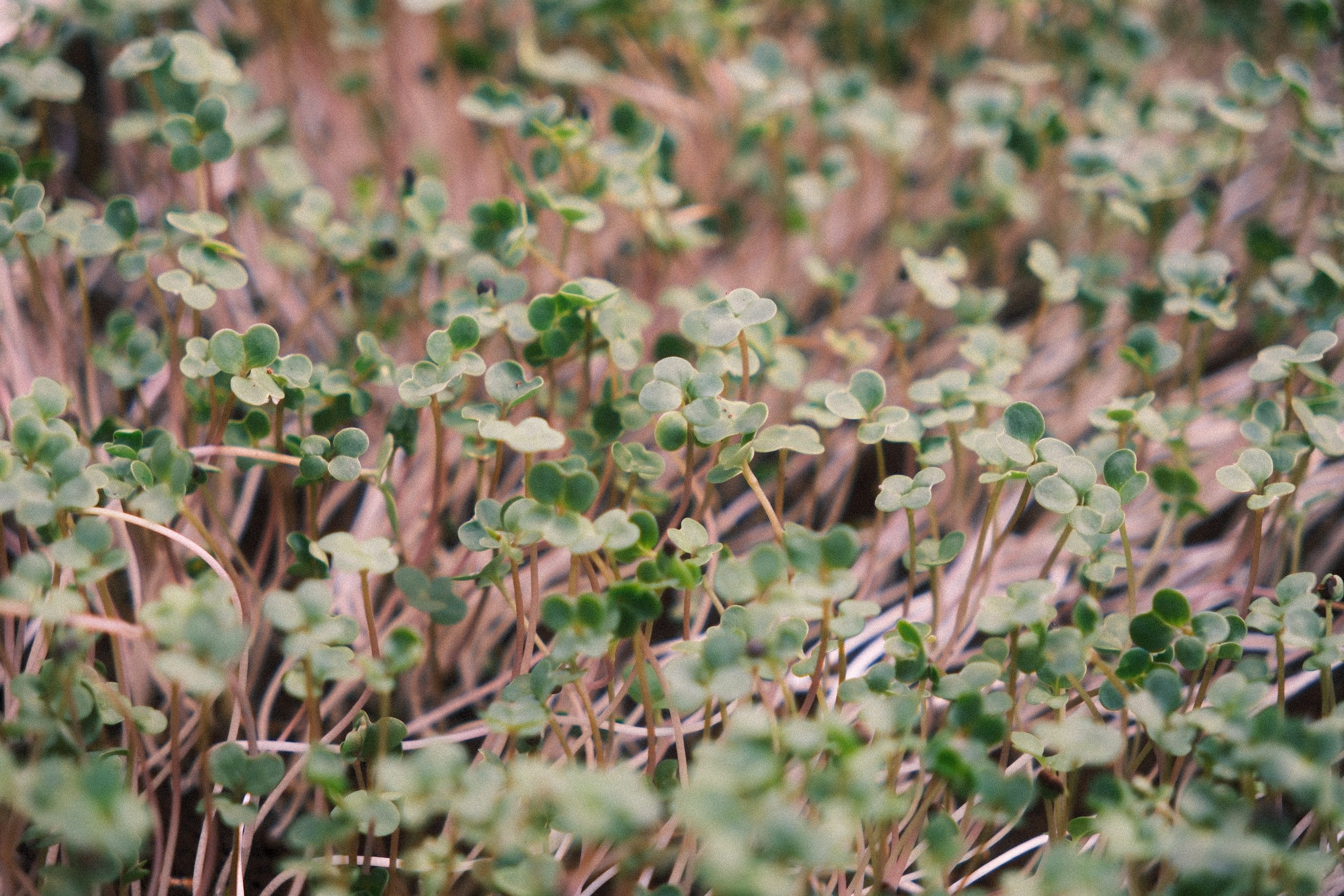
The most exotic microgreens: shiso, mizuna and tatsoi. Their unique flavours, culinary uses and how to grow these premium, less common varieties at home.
Hello friends!
During this journey we’ve talked to you about microgreens such as lettuce, radish, broccoli, sunflower, and many others… But in today’s article we wanted to explore more exotic species that stand out for their unique flavors and culinary uses. So today we’ll be talking about varieties like shiso, mizuna, and tatsoi.
Ready to get to know them? Let’s go!
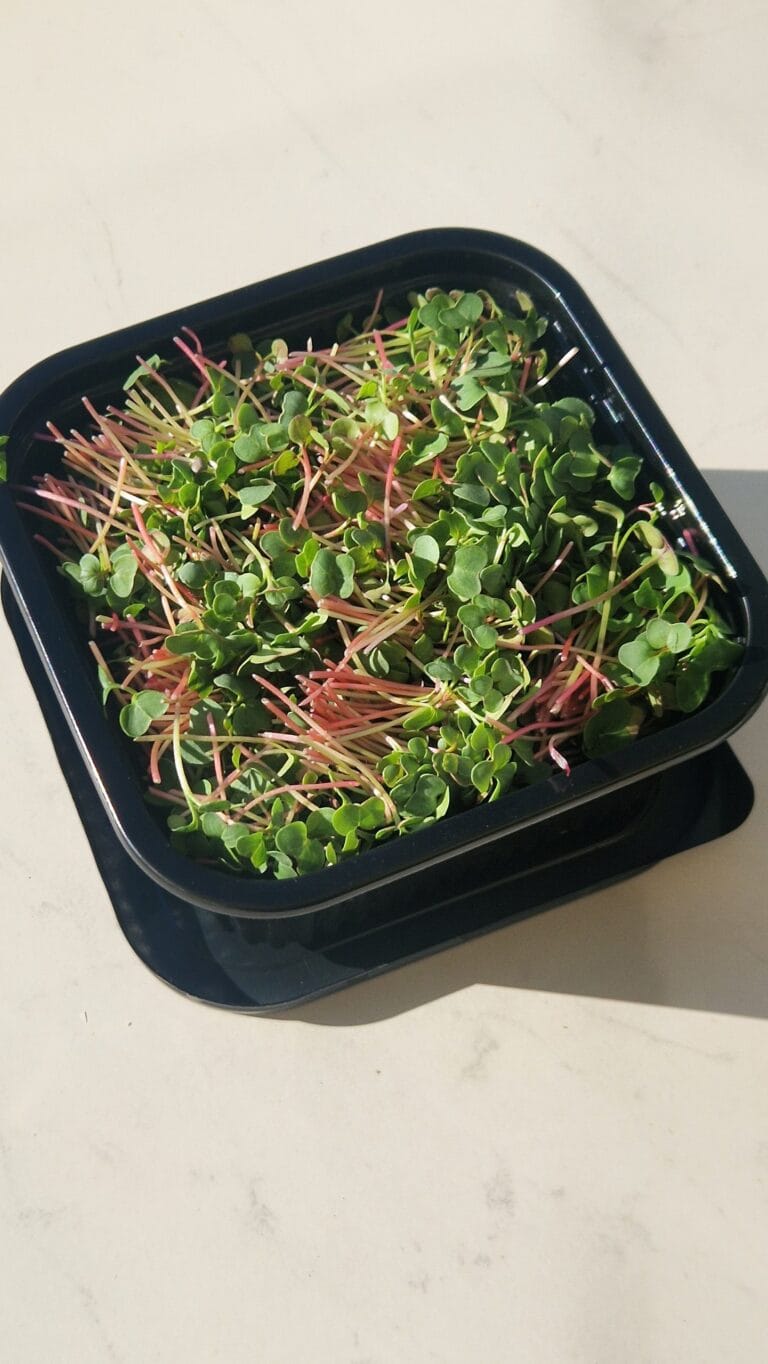
Red shiso is a highly popular microgreen in Asian cuisine thanks to its citrusy, floral, and slightly minty aroma. Its use has spread internationally due to its versatility in salads, bowls, sushi, and gourmet dishes. In addition, this microgreen contains antioxidant phytocompounds.
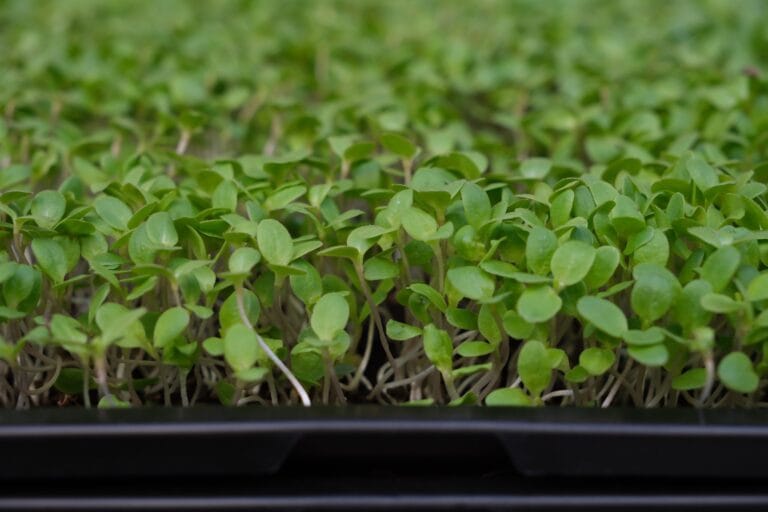
Among the Asian microgreens with a long history, mizuna and tatsoi also stand out. Both are valued for their mild, slightly peppery flavor, as well as for their high micronutrient content. In specialized rankings they appear as some of the most popular seeds for both home and commercial cultivation, reflecting their growing demand.
There are also yield data and mineral profiles showing that they provide essential minerals, antioxidants, and compounds that help improve overall nutrition when included in a daily diet.
Beyond each specific species, various studies, which we’ve mentioned many times, have shown that microgreens concentrate vitamins (A, C, E, K), minerals, and antioxidant compounds in quantities higher than their mature versions.
These exotic microgreens follow that same pattern: high nutritional density per unit of weight.
Exotic microgreens are rapidly entering the world of high end international cuisine, both for their flavor and presentation. Their uses range from sophisticated dressings, creative plate garnishes, and aromatic toppings to functional components for bowls, fusion salads, sandwiches, and gourmet cooking.
Ingredients:
Preparation:
A fresh, elegant bowl where shiso is the star.
Ingredients:
Preparation:
Tatsoi brings a fresh, mild, and slightly sweet touch that pairs perfectly with the acidity of the apple and lime.
Ingredients:
Preparation:
Perfect as a light main dish or a side.
As you can see, exotic microgreens like shiso, mizuna, and tatsoi offer interesting and functional alternatives for those who seek not only to decorate their dishes but also to enhance sensory diversity and culinary creativity.
Their growing presence in modern cuisine and in trendy restaurants in the world’s most cosmopolitan cities consolidates their position as “new generation microgreens”: exotic and visually striking.
Carlota
Sources
About Microgreens. (2025, November 7). Microgreens and Nutrition: Tiny Greens, Big Benefits. https://www.aboutmicrogreens.com/microgreens-and-nutrition-tiny-greens-big-benefits/
Di Gioia, F. (2023). Yield performance, mineral profile, and nitrate content in a selection of seventeen microgreen species. PMC. https://pmc.ncbi.nlm.nih.gov/articles/PMC10399459/
Idaho State University. Nutritional Profile of a few types of Microgreens. https://www.isu.edu/media/libraries/rural-health/microgreens/Microgreen-Nutritional-Profile.pdf
La Torre Agrícola. (2022, January 10). ¿Cuáles son las semillas más populares para cultivar los microgreens (microplantas / microverdes)? https://www.latorreagricola.com/es/2022/01/10/cuales-son-las-semillas-mas-populares-para-cultivar-los-microgreens-microplantas-microverdes/
Verdes Zagros. Microgreen de Shiso Red. https://verdeszagros.es/tienda/microgreens/microgreen-de-shiso-red/
Studies from our Science Library that concern shiso, mizuna and tatsoi microgreens, in plain language with links to the original research. This list updates automatically as new studies are added.
No studies specific to this crop yet — browse the full Science Library.
Recipes and kitchen ideas from our cookbook team that use shiso, mizuna and tatsoi microgreens.
No recipes for this crop yet — the cookbook has plenty to start with.
Growing a different crop next? Every variety has a guide like this one in the Varieties database.
This article is part of the free knowledge portal of EVEC Microgreens. Wherever you are on your microgreens journey, there is a path for you:
Co-funded by the European Union.
This portal presents the microgreens methodology; the organisation behind it is EVEC Athens — the European Voluntary and Educational Center (evec.org.gr). Views and opinions expressed are those of the author(s) only and do not necessarily reflect those of the European Union or the European Commission. Neither the European Union nor the granting authority can be held responsible for them.