As we have mentioned in previous articles, microgreens are not only part of gastronomy, nor do they simply offer nutritional benefits. A few weeks ago, we shared articles about how these tiny sprouts can help children in their development and older adults in maintaining their cognitive and motor abilities.
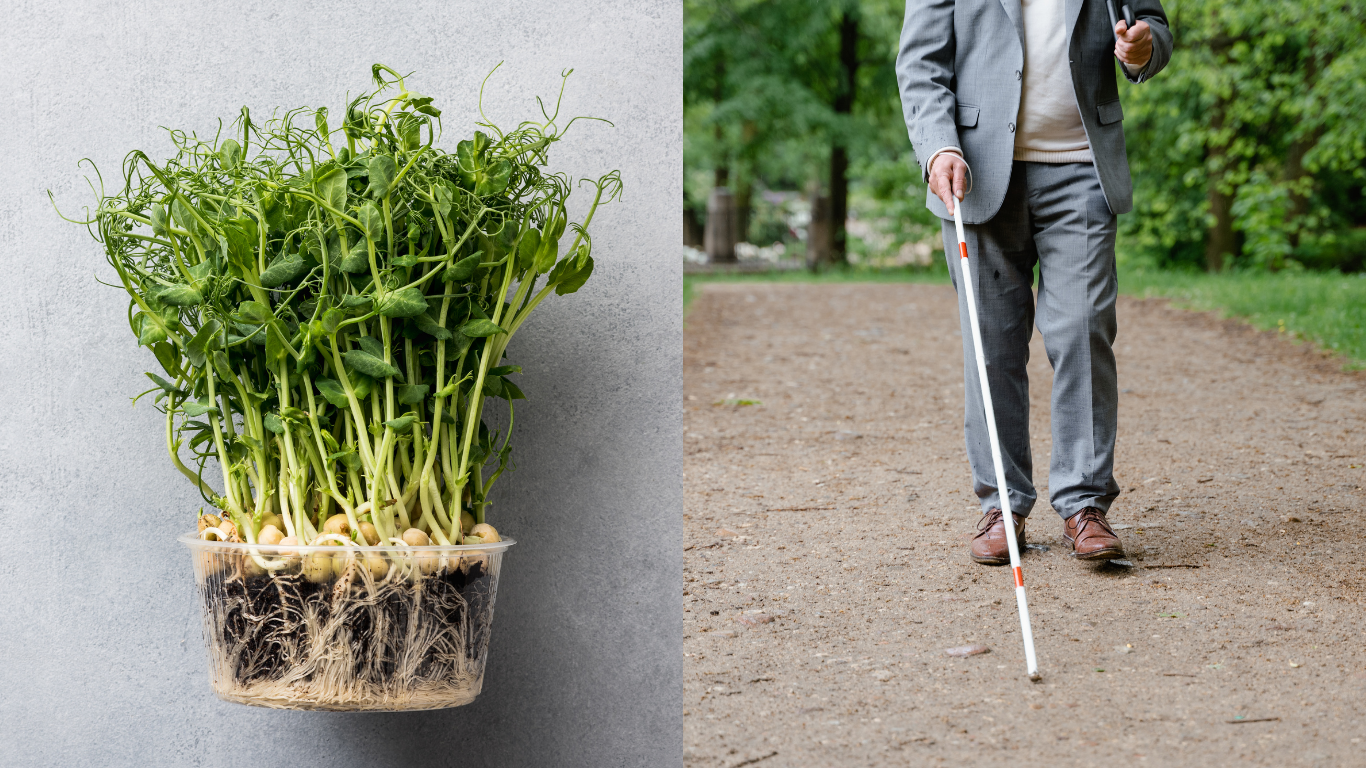
This time, we remain in the world of rehabilitation and inclusion, because occupational therapy is constantly seeking activities that strengthen autonomy and connection with the environment. Growing microgreens can become an innovative tool for working with blind or visually impaired individuals, as it offers a multisensory experience that stimulates touch, smell, and fine motor skills.
Stay with us as we explain in detail!
Growing microgreens as a tactile experience
Sowing microgreens is an activity that does not require vision to be meaningful:
• Preparing the substrate allows you to feel the texture of the soil or growing mats.
• Spreading the seeds is a hand finger coordination exercise that can be practiced with guided movements.
• Controlled watering with a spray bottle or small watering can provides tactile and auditory feedback (the sound of water).
Aromas of microgreens
Each variety of microgreen has a distinctive aroma:
• Radish and mustard have a spicy smell.
• Sunflower smells fresh and slightly nutty.
• Cilantro, basil, or dill are intensely herbal.
Inviting the person to recognize and differentiate smells develops olfactory memory, sensory association, and cognitive stimulation.
Development of motor skills and autonomy
• Sowing and daily care encourage routines and habits of responsibility.
• Harvesting, cutting with scissors or by hand, improves precision and control.
• Food preparation, adding microgreens to salads or sándwiches, connects the growing experience with healthy eating.
These tasks help strengthen motor skills, coordination, and activity planning.
Emotional and social benefits
Direct contact with something alive and growing has proven therapeutic effects:
• Stress reduction, taking care of plants promotes calm and mindfulness.
• Sense of achievement, seeing (or in this case, feeling and smelling) the result of one’s effort boosts self esteem.
• Group activity, growing in workshops encourages social interaction, cooperation, and communication.
Advice for better accessibility!
• Braille or embossed labels to differentiate varieties.
• Growing trays with high edges to prevent substrate spills.
• Tactile guides to help sow evenly.
• Ergonomic tools (adapted scissors, easy grip spray bottles).
In conclusion, as we have already mentioned in previous articles, microgreens are much more than a gourmet, nutrient packed ingredient. They can support children’s development, help maintain memory and motor skills in older adults, and even be incorporated into occupational therapy programs for blind individuals, creating a sensory space that stimulates touch, smell, and coordination, while promoting autonomy and emotional well being.
Bringing this activity into rehabilitation centers, schools, or even the home can transform the simple act of growing into a true bridge toward a better quality of life.
That’s all for today. We hope this article has helped you discover a new power hidden in these little greens. See you next time!
Carlota




[…] has therapeutic effects. For example, we explored how microgreen cultivation can be included in occupational therapy for people who are blind. Moreover, in mental health and rehabilitation programs, caring for sprouts is used as a tool for […]