The title of the article sounds cosmic to you? Let’s dive with us into space where we share all the fascinating facts about how microgreens are poised to become the future of space food.
Challenges for astronauts in the space
When astronauts are going on a space mission it’s important for them to take care of their mental and physical health. They experience physiological changes, like muscle wasting, loss of bone density, and weakened immune function due to prolonged exposure to microgravity.Proper nutrition is essential to mitigate these effects, providing the necessary macro- and micronutrients needed to maintain overall health.
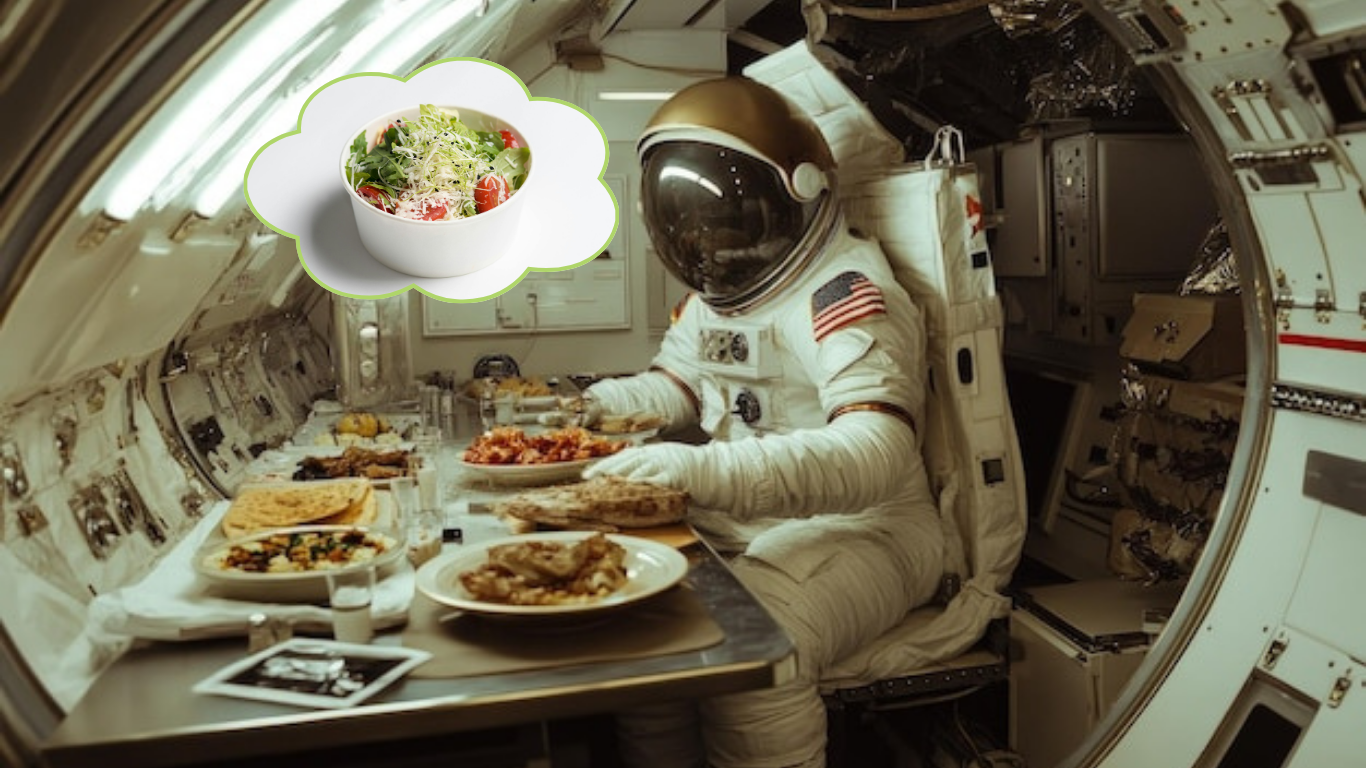
Moreover, well-prepared, tasty, and nutritionally balanced meals contribute to astronauts’ mental well-being, increasing their concentration and productivity during missions. In that case microgreens as a super food are the promising future space food which will support astronauts on their mission.
Now you can ask, but what kind of environment in space will allow microgreens to thrive?
First, to answer that question, it is crucial to understand the challenges of developing space food, primarily related to storage, safety, and nutrient stability. Because space missions have limited payload capacity, food must be lightweight, compact, and energy-dense. Regarding microgreens, research into hydroponic farming systems for growing fresh food in space is crucial. This soilless, resource-saving method is gaining importance as a sustainable source of functional food.
Hydroponic cultivation enhances microgreens growth, nutrient content, and bioactive compound production. Furthermore, research supports hydroponics by showing that these microgreens often contain elevated levels of antioxidants and essential micronutrients compared to those grown in soil.
Functional food in the space
Crops for space missions must be nutrient-dense, require minimal resources, have short growth cycles, and be resistant to stress conditions. Leafy greens, legumes, and biofortified cereals are ideal candidates. Microgreens meet these requirements as they are compact, fast-growing and nutrient-dense.
Ensuring optimal health and performance for astronauts in space requires a strategic approach to nutrition, in which functional foods play a key role. Space missions pose unique physiological and environmental challenges, including microgravity-induced bone and muscle loss, immune suppression, radiation-induced oxidative stress, and disruption of gut microbiota. In our article, we focus only on hydroponically grown microgreens, but functional foods that are the future for space food also include probiotics, biofortified crops, antioxidant-rich foods.They can all address these issues, boosting the astronauts immunity and overall well-being.
Fun fact. In microgravitations perception of taste changes, which often leads astronauts to prefer spicier or more flavorful foods, and here also microgreens are the answer to their needs.
Stay tuned for another article, in which we will discover the world of microgreens together! 🙂
Sources:
L. Sonali, M.P. Drisya Raj, R. Pavithra, N.V. Kanimozhi, Chinta Suneetha, B. Roopa Shri, M. Sukumar, Functional foods for astronauts: Enhancing health and performance in microgravity and extreme environments.
Karolina