It’s the beginning of December, a month full of magic and that’s the perfect moment to introduce miraculous benefits of wheatgrass microgreens. In this article, we are going to focus on details about the nutritional composition and pharmacological properties of this microgreen.
Benefits of wheatgrass microgreens
It’s worth noticing from the outset that despite the widespread use of wheatgrass, much information on its medicinal benefits is lacking, and therefore further scientific research is needed to investigate its pharmacological potential.
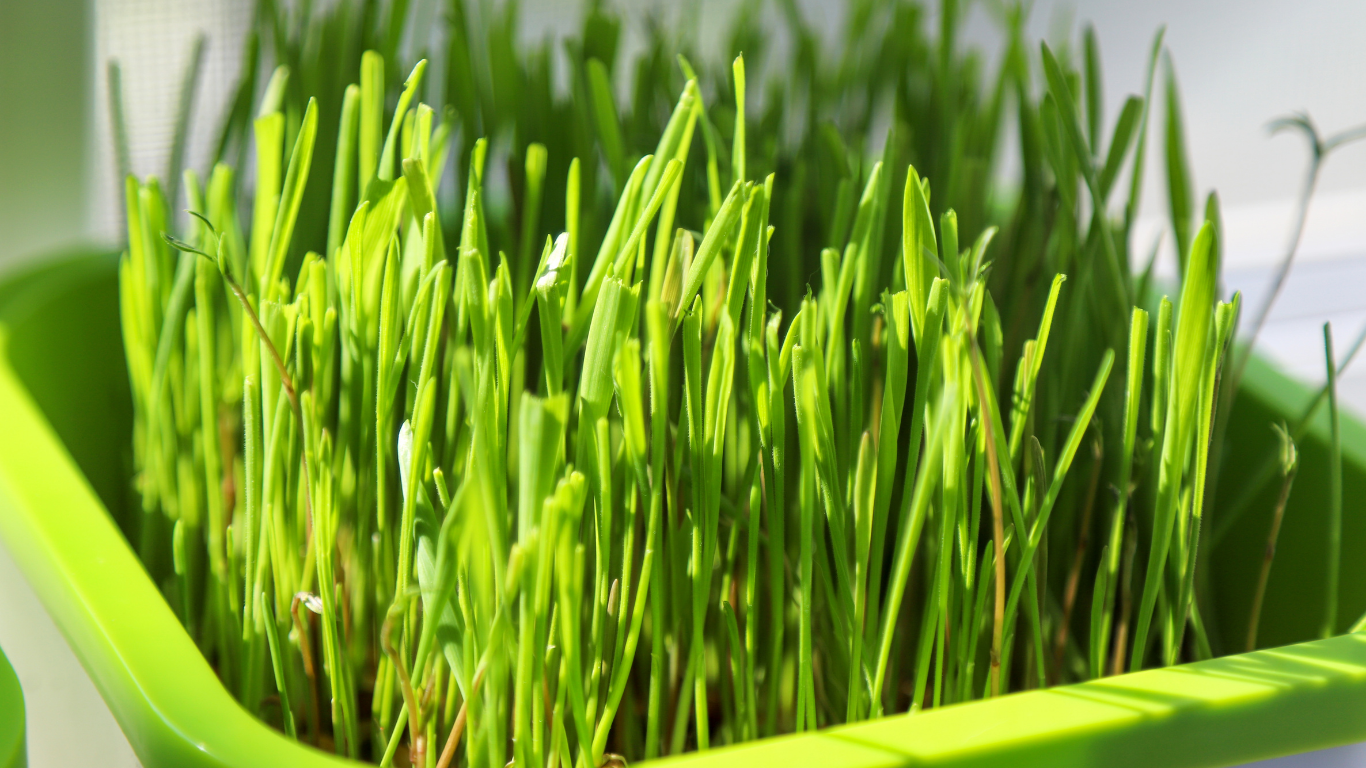
Wheatgrass is the immature shoots of the wheat plant Triticum aestivum, which are harvested when they are less than 15 days old.
Let’s dive into some fascinating facts about wheatgrass:
- They are consumed as a nutrient-dense functional food or as a nutraceutical in the form of a shake or powder.
- They are a healthy food due to their high vitamin content, including vitamins A, C, and E.
- They are rich in minerals such as iron, magnesium, and calcium,
as well as antioxidants and several bioactive compounds.
- They have potential health benefits, such as: anti-inflammatory, anti-cancer, anti-diabetic, immunomodulatory, cardiovascular protective, and supporting good digestive health.
Therapeutic properties of wheatgrass
The great potential of wheatgrass, due to its functional components and high nutritional value, is also recognized in its therapeutic properties, which make it a “miraculous microgreen.”
Let’s take a closer look at what makes this so. Chlorophyll, referred to as “green blood” or “living blood,” which fresh wheatgrass is composed of, possesses antioxidant and anti-cancer properties. Chlorophyllin, a chlorophyll derivative, has demonstrated the ability to protect mitochondria from oxidative damage. Apigenin, a flavonoid component, exhibits antioxidant and anti-inflammatory activity. Other well-known bioactive compounds in wheatgrass include rutin and quercetin, which have antioxidant, anti-diabetic, anti-inflammatory properties, and numerous other pharmacological. It is worth noting that the pH level and chlorophyll concentration (constituents of wheatgrass) are used in the treatment of genetic blood disorders (anemia, low RBC production, reduced hemoglobin count).
The anti-ulcer potential of wheatgrass
Wheatgrass, in the form of a natural herbal tonic, is used in the treatment of ulcers. It was demonstrated, in studies that were carried out on rats, that wheatgrass juice contains various water-soluble biomolecules, proteins, and bioactive compounds that have anti-ulcer potential. Additionally, in another clinical study, wheatgrass extract was used as a complementary therapy in the treatment of rectal bleeding. Studies, whose aim was the evaluation of the anti-ulcer potential of chlorophyll (the main water-soluble bioactive compound in wheatgrass), proved various therapeutic properties in the treatment of olfactory loss associated with infected wounds, drying action in the case of skin lesions, sinuses, abscesses and superficial rashes, and promotion of tissue regeneration.
In the second part of this article, we will explore more aspects of the potential of wheatgrass, such as its probiotic, dermatological, anti-arthritic, detoxifying effects, and more. Our dear readers stay tuned!
Sources:
Neetu Mishra, Renu Tripathi, Dhananjay Pandey, Kamal Shah, Nagendra Singh Chauhan, Wheatgrass (Triticum aestivum): a miraculous microgreen: an overview.
Karolina