Get in touch
Questions about growing, workshops, the cooperative or partnerships? Send us a message and we will reply by email.
Prefer email? Write to erasmus@evec.org.gr
EVEC Microgreens
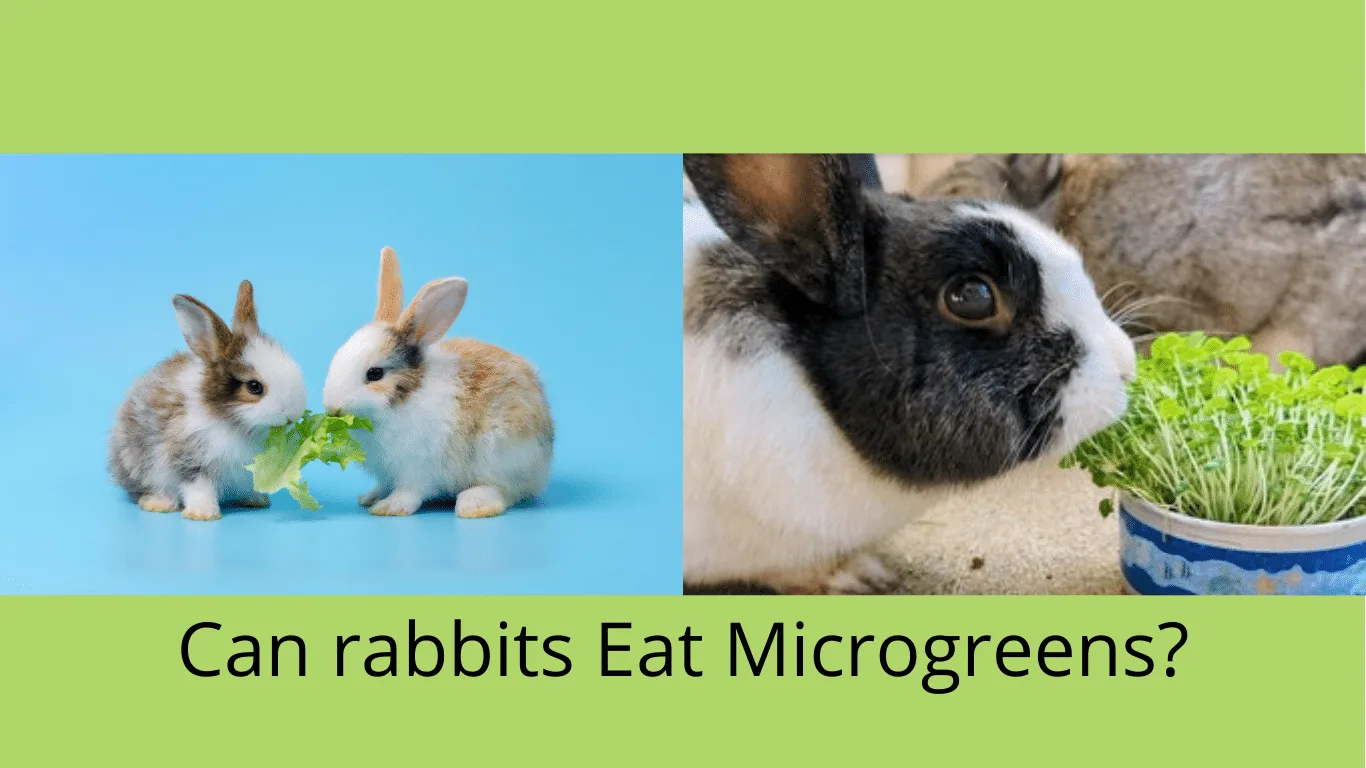
Lettuce, pea shoots, broccoli, herb and sunflower microgreens for rabbits — inside the limited vegetable allowance around unlimited hay. Nightshade seedlings excluded on precaution.
As a rabbit owner, you will know the munching sound your rabbit makes when it gets its greens. Ears perk up at the rustle, and among all the leafy options microgreens have become a popular extra in many hutches.
Microgreens are tiny greens harvested just after sprouting. They are fresh, they add variety, and they are a pleasant way to break up a routine. What they are not is the foundation of a rabbit’s diet.
Start here, because it is the part with a source behind it. Hay is the diet; greens are the garnish. The MSD Veterinary Manual’s chapter on Nutrition of Rabbits states that “a rabbit should always have an unlimited supply of hay, because they frequently need to nibble on it to keep peristalsis active”, and that roughly 15% crude fiber is needed to promote intestinal motility and minimise intestinal disease. The Manual’s chapter on Nutrition in Rodents and Lagomorphs describes rabbits as maintained on pellets, hay and “a limited amount of assorted vegetables”. Microgreens sit inside that limited vegetable allowance — they do not expand it.
These are the varieties rabbit owners offer most often. Palatability is an observation anyone can make; we are not attaching health claims to any of them.
Lettuce
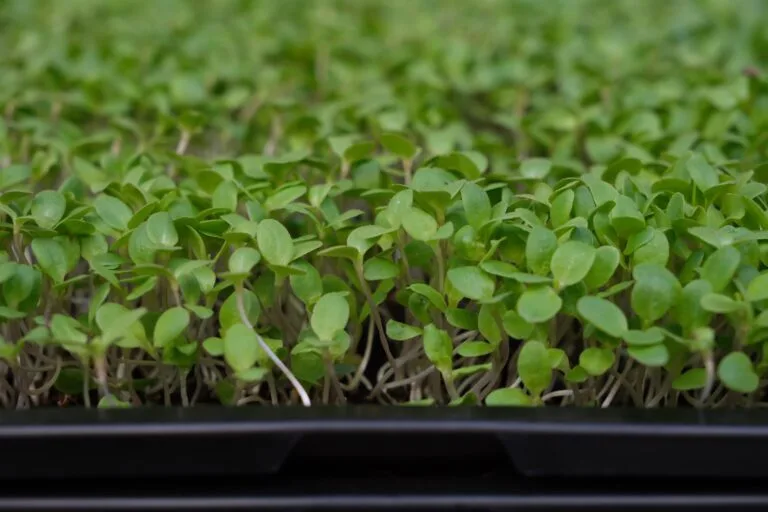
Lettuce microgreens such as romaine, green leaf or oakleaf are mild and high in water. Easy for most rabbits to accept.
Pea Shoots
Soft and slightly sweet, and often a favorite. Keep the portion small — the sweetness is the reason.
Broccoli and Other Brassicas
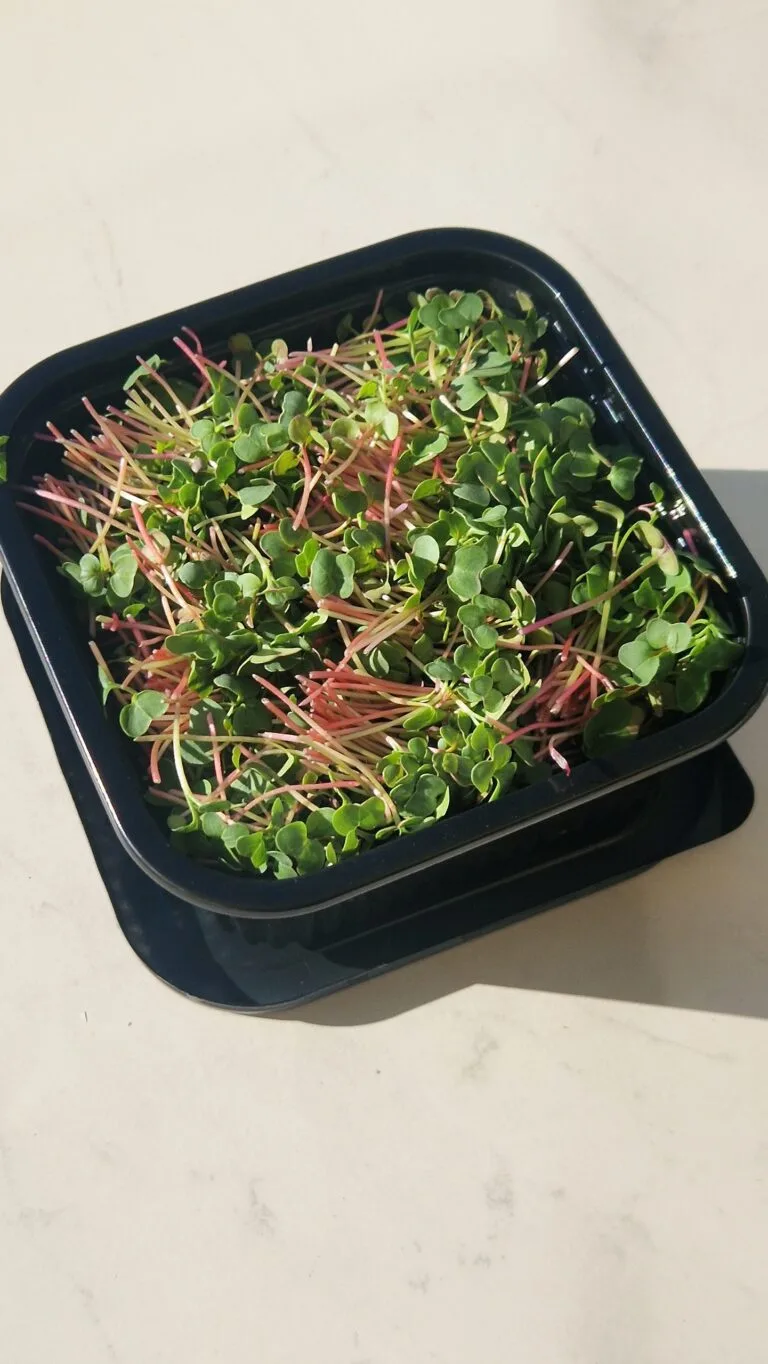
Broccoli, radish tops and cabbage microgreens are widely offered and usually well accepted. Introduce any of them slowly; a sudden change of plant food is the standard cause of digestive upset in rabbits.
Herb Microgreens: Basil, Cilantro, Dill
Aromatic and interesting to a rabbit. Offered in the small quantities appropriate to a herb, their contribution is variety rather than nutrition.
Sunflower and Wheatgrass
Grassy options such as wheatgrass are closest in character to the hay and fresh grass a rabbit should mostly be eating anyway. Sunflower microgreens are richer, so serve them sparingly.
Nightshade seedlings: keep them away from your rabbit. We want to be straight about the strength of this one. The ASPCA’s entry for the tomato plant (Lycopersicon spp., Solanaceae) records solanine as the toxic principle and lists the plant as toxic to dogs, cats and horses — the three species the ASPCA’s Toxic and Non-Toxic Plants database covers. It does not cover rabbits, and we could not find a rabbit-specific authoritative source. So the honest position is: the toxic compound is documented in the plant, there is no reason a rabbit needs tomato, potato or pepper seedlings, and we treat them as off-limits on precaution rather than on a rabbit study. An earlier version of this article stated flatly that “nightshade family plants are forbidden” with no source at all.
The oxalate warning we withdrew. This article used to advise limiting spinach, kale, beet greens and chard because of oxalates. We could not source that specific claim for rabbits, and it is not accurate as written in any case — kale is not a high-oxalate green. What we can source is adjacent and more useful: the MSD Veterinary Manual notes that “feeding a large amount of alfalfa and pellets containing high levels of calcium is not advised, because it can lead to urolithiasis in some rodent and lagomorph species”, and that high amounts of alfalfa caused urinary problems in pet rabbits and guinea pigs. The practical guidance that follows from a source, rather than from repetition, is: keep total greens to a limited part of the diet, keep grass hay rather than alfalfa as the staple for adult rabbits, and raise any history of urinary problems with your vet before changing what you feed.
Rabbit owners do grow microgreens for their animals, and they talk about it. Owner-to-owner reports are genuinely useful for one thing — knowing what rabbits will actually eat — and useless for another, which is health outcomes.
So: individual rabbits clearly have preferences. Some go straight for sunflower microgreens and ignore the wheatgrass; others do the reverse. A little careful trial and error within the safe varieties above is how you find out what yours likes.
What this article previously did, and no longer does, is present owner posts as evidence. It carried a section headed “Real Bunny Experiences” reporting “improvements in digestion, energy and overall enthusiasm” attributed to “personal stories found on lifestyle blogs and rabbit forums”, and it listed nine Reddit threads — two of them bare user profiles — under a heading reading “Sources and Links of Interest”. Those were not sources. They have been removed, and the health claims that rested on them have gone with them.
Wash them thoroughly before offering them. Start with a small portion so your rabbit’s gut can adjust, introduce one variety at a time so you know what caused any reaction, and rotate varieties week to week for variety rather than for any claimed benefit.
And the part worth repeating: hay is the diet. Unlimited grass hay, plus the pellets and limited vegetables your vet is happy with, is what keeps a rabbit’s gut moving. Microgreens are the small, pleasant extra on top.
This article is general information for rabbit owners, not veterinary advice. How much of anything to feed your particular rabbit — and any question about its digestion, teeth or urinary health — is a question for your vet.
The previous version of this list contained fourteen external links: nine to Reddit (including two bare user profiles), one to a hobby forum, and four to seed and kit vendors. None of them supported the safety and toxicity claims the article was making. They have all been removed and replaced with the following.
This article is part of the free knowledge portal of EVEC Microgreens. Wherever you are on your microgreens journey, there is a path for you:
Co-funded by the European Union.
This portal presents the microgreens methodology; the organisation behind it is EVEC Athens — the European Voluntary and Educational Center (evec.org.gr). Views and opinions expressed are those of the author(s) only and do not necessarily reflect those of the European Union or the European Commission. Neither the European Union nor the granting authority can be held responsible for them.
Open licence. Except where stated otherwise, the educational materials on this portal are licensed under CC BY 4.0 — free to use, adapt and share, including commercially, with credit. See the licence terms.
Accessibility. We aim for WCAG 2.1 AA and publish what does and does not yet meet it — see the accessibility statement. If anything here blocks you, tell us and we will send the material in a format that works for you.