Still hungry for more? We teach how to grow microgreens in the city, harvest them at home and turn them into healthy, delicious meals. Want to join a workshop or be part of the project as a volunteer?
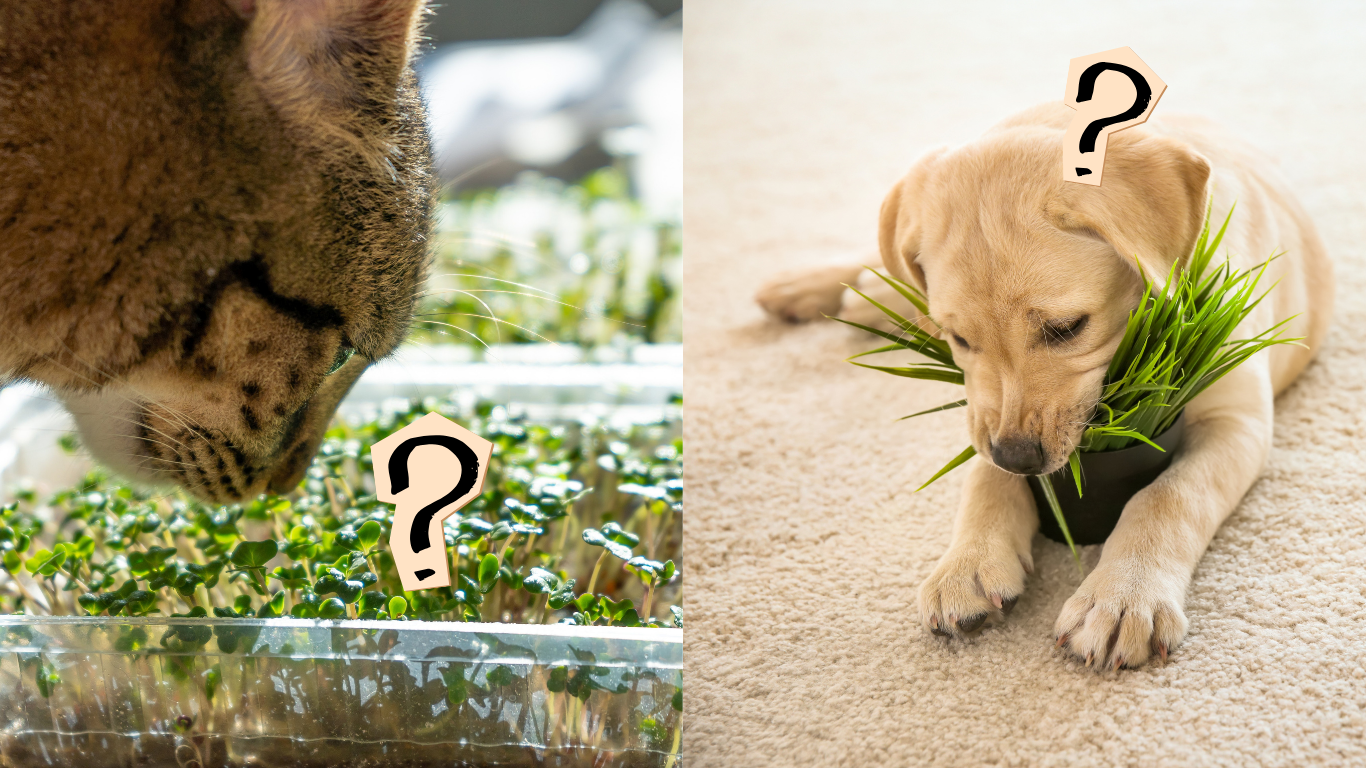
Microgreens are safe for pets, even to cats and dogs. But not all of them are suitable, some types like radish and cabbage can cause bloating and gas on your pet’s stomach, so what microgreens are best for cats and dogs? In this post we will give you some varieties you can feed them to boost their diet and improve their nutrients intake.
Disclaimer: consult your vet if your pet has health issues, especially related to the digestive system or behavior, seek professional advice before introducing new foods.
Barley Grass (or cat’s grass): provides fiber and supports digestion, helps manage furballs and offers vitamins and antioxidants.
Sunflower: nutritious and rich in healthy fats
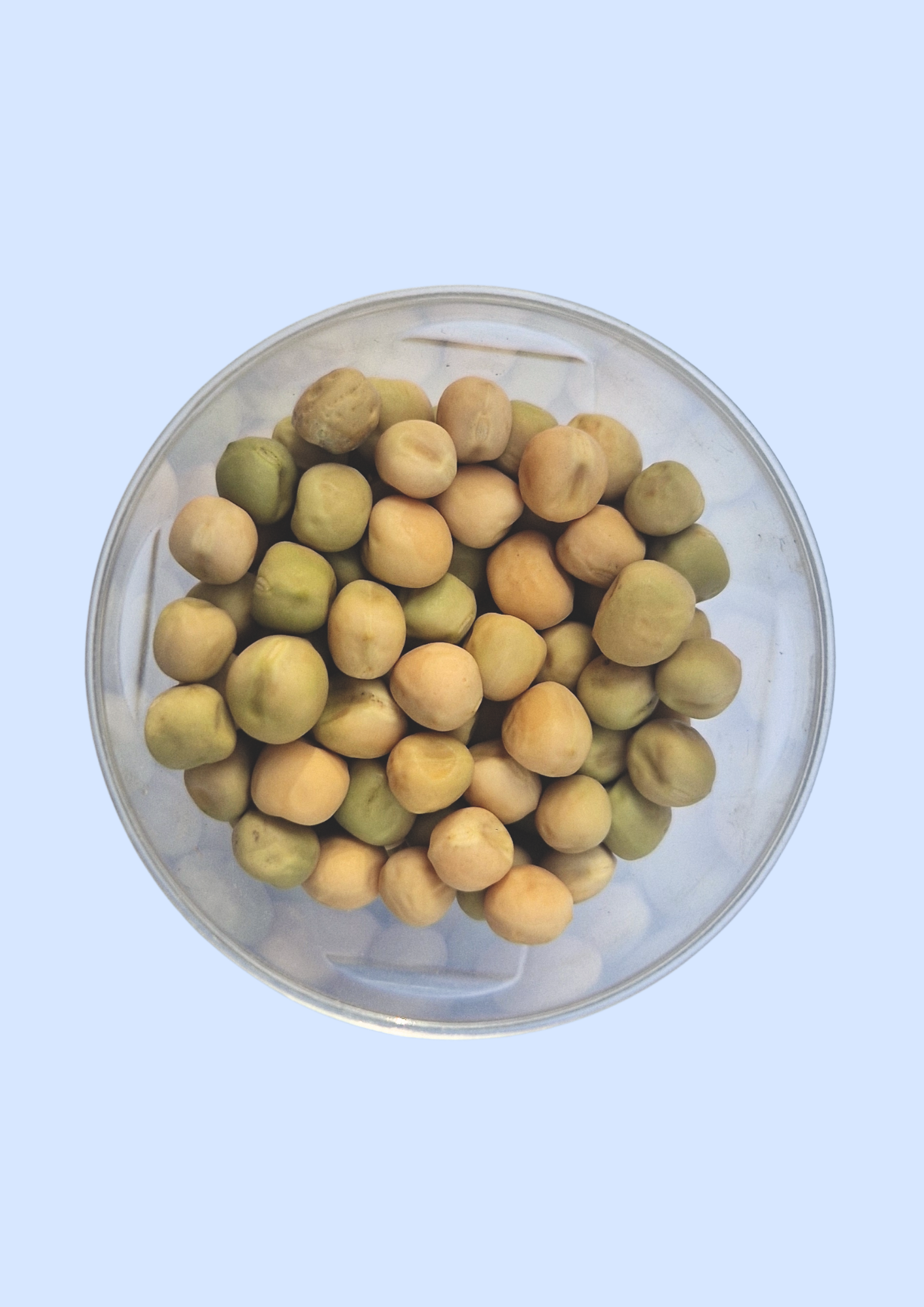
Peas: support digestion, immune health and liver function
Lettuce: can aid digestion and offer a crunchy texture that curious cats may like. They are rich in water, ehich supports hydration. Better avoid iceberg lettuce microgreens as they offer minimal nutritional value.
Catnip Microgreens: compared to mature leaves, catnip microgreens are more potent and appealing as they contain higher concentrations of nepetalactone (compound that triggers “catnip high”). They are rich in nutrients, antioxidants and fiber, aiding digestion and overall wellness. Wait until kittens are at least 3/9 months old before introducing them to catnip microgreens.
There are a bunch of ways you can give Microgreens to your cat.
The recommended amount is in small portions, 1-2 times a week. Microgreens should only take up to 5% of a cat’s diet and avoid overfeeding as it may cause bloating, vomiting or diarrhea.
Microgreens Cats Should Avoid
Never feed cats microgreens that are from the allium family and other plants known to be harmful as it can cause serious issues such as anemia and organ damage. Also avoid bitter or spicy types as it may cause bloating or stomach problems.
Onion family (chives, garlic, leeks…)
Nightshades (tomato, eggplant, potato)
Mustard
Rhubarb microgreens
Avocado microgreens
Brussel sprout microgreens
Cabbage and radish microgreens
Microgreens for Dogs
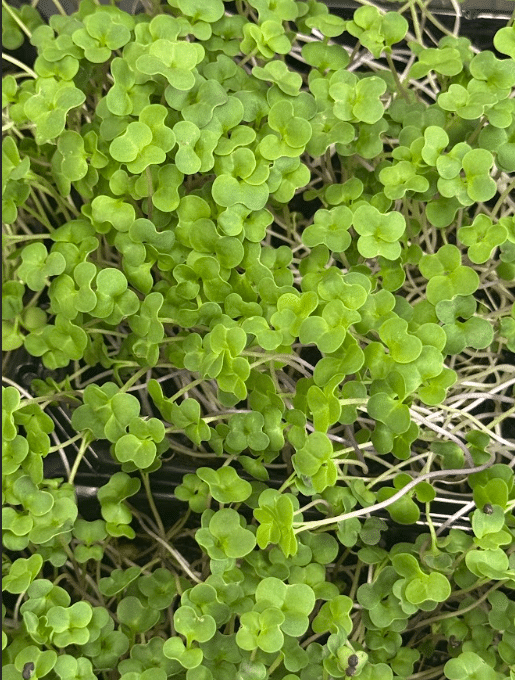
Broccoli: contains sulphorane, a powerful compound with anti-cancer and anti-inflammatory properties.
Red cabbage: improve cardiovascular markers and help manage weight in animals on high-fat diets.
Kale: supports immune function, digestion, bone health and reduces inflammation. They are especially beneficial for dogs with chronic conditions. Precautions to be taken: if fed in excess, it can cause kidney stones in susceptible dogs. Moderation is essential.
Wheatgrass: supports digestion and provides chlorophyll and aminoacids.
Mustard (mild varieties like Southern Giant Curled): offers health benefits but should be fed only occasionally.
Microgreens should represent around 10% of your dog’s diet. This applies whether they are given as a treat or meal supplement. For most dogs, starting with a small pinch or teaspoon a meal is sufficient, especially when introduced for the first time.
Microgreens Dogs Should Avoid
Never feed dogs microgreens that are spicy, bitter, sour (citrus), sweet or tangy such as some mustard varieties, radish or brussel microgreens as they may cause bloating or stomach discomfort. Kale and Broccoli should be avoided on pets that have thyroid problems. Also avoid certain types as they are toxic or lead to heavier problems such as anemia.
Amaranth
Quinoa
Allium family (onion, garlic, leeks, chives, scallions and shallots) microgreens.
Sweet Pea
Tomato
Watercress
Buckwheat
Oregano
Parsley
Sorrel
How to Add Microgreens to Your Pet’s Diet
Start with 1 or 2 teaspoons mixed into food to avoid digestive upset and wash thoroughly to remove dirt. Microgreens should be an occasional supplement, not a meal replacement. Other ways of adding microgreens besides being chopped or blended into their regular food is in a tray, for them to chew on. Dogs and cats chew on grass or other greens instinctively for a variety of reasons to aid digestion, boost nutrition or instinctual behavior. Another fun way is to add microgreens on an enrichment toy for them to sniff and taste.
Some microgreens companies offer microgreens kits for pets, but it is entirely possible (and encouraged) to start by yourself. Microgreens have been scientifically proven to bring a lot of benefits. As a dog owner, healthy pet, happy life.