Get in touch
Questions about growing, workshops, the cooperative or partnerships? Send us a message and we will reply by email.
Prefer email? Write to erasmus@evec.org.gr
EVEC Microgreens
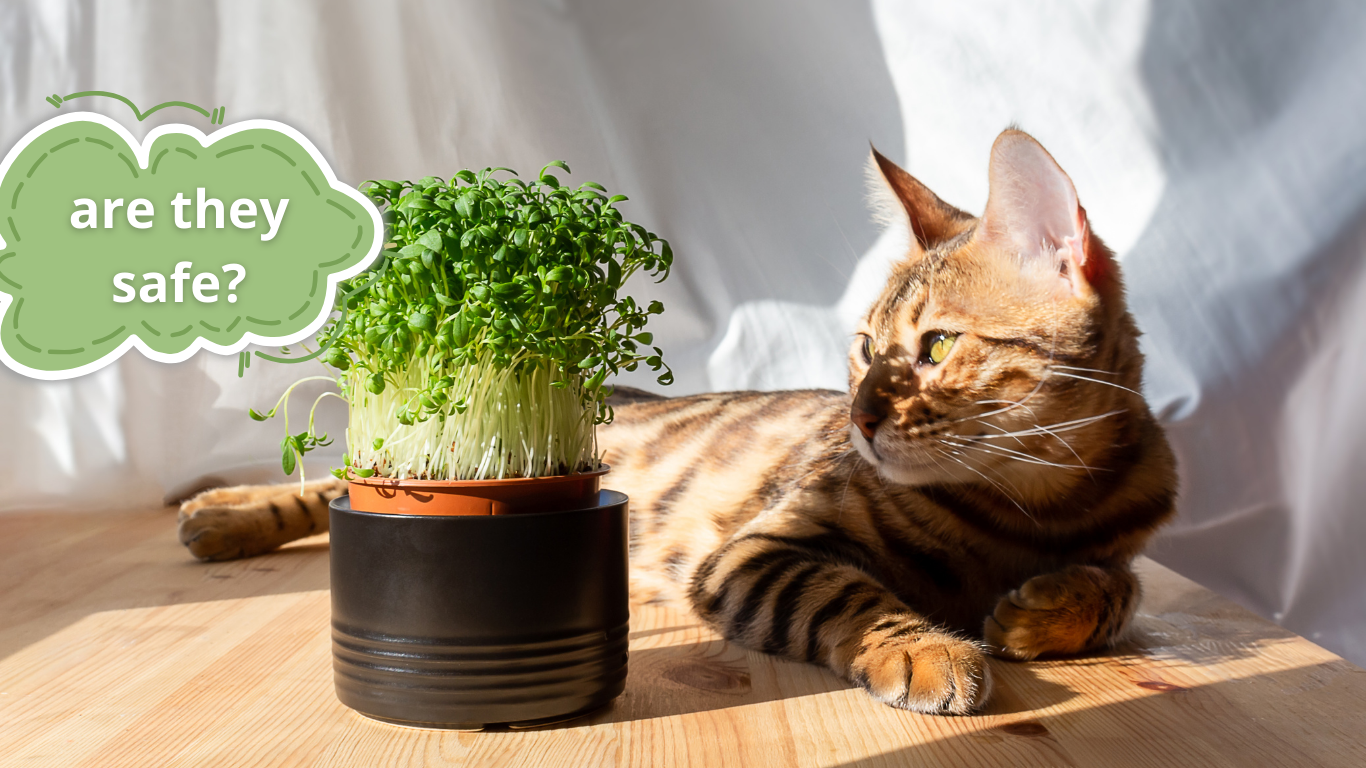
Many microgreens are fine for pets in small amounts — but allium, nightshade and rhubarb seedlings are not. Which are safe, which to avoid, and why to ask your vet first.
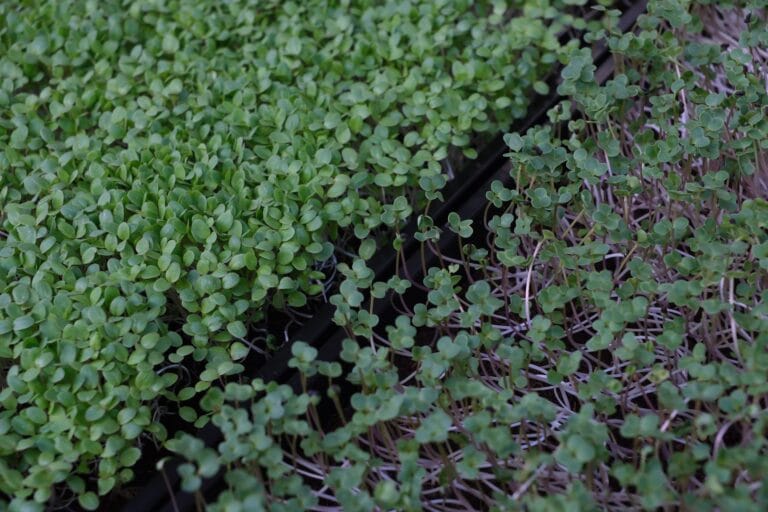
Short answer: many microgreens are fine for many pets — but not all of them, and not for every animal. Popular leafy microgreens such as sunflower, broccoli, radish and wheatgrass are generally well tolerated by cats, dogs, rabbits, guinea pigs and small rodents in small amounts. A few types, though, are genuinely unsafe for pets, so it matters which ones you offer.
Do not feed these to cats or dogs. Some plants are toxic to pets even though they are fine for people. Avoid microgreens and seedlings from the allium family (onion, garlic, leek, chives, shallot), the nightshade family (tomato, potato, pepper, eggplant seedlings), and rhubarb. When in doubt, leave it out — and see our guide to which microgreens are not safe to eat. Allium toxicity in cats and dogs is documented: the Merck Veterinary Manual’s review of Garlic and Onion (Allium spp) Toxicosis in Animals records Heinz body formation and methaemoglobinaemia beginning within 24 hours of ingestion, and states that cats are the most susceptible species, followed by dogs. It is not a matter of dose sensitivity you can judge by eye. The ASPCA maintains a searchable Toxic and Non-Toxic Plants database covering dogs, cats and horses, which is the right place to check any species we have not named here.
Microgreens are rich in vitamins, minerals and fibre. Offered in small amounts as an occasional supplement to a complete, species-appropriate diet, safe varieties may help add micronutrients and variety. Owners often report better digestion and coat condition. That is owner experience, not evidence — we found no veterinary study testing either outcome in pets, so treat it as anecdote rather than something to expect.
Whatever you grow, make sure it is organic and free from pesticides — another good reason to grow your own at home. Visit our growing guides to see what you need to get started.
Introduce any new food slowly and in small quantities, watch for any individual reaction, and keep microgreens as a supplement — never a replacement for your pet’s main balanced diet. Because every animal is different, check with your veterinarian before adding microgreens to your pet’s diet, especially if your pet is young, pregnant, elderly or has a health condition.
For which varieties suit which animal, see the companion guide below on the five microgreens most often given to cats and dogs.
Julia
This article is general information for pet owners, not veterinary advice. Always consult your veterinarian about your individual animal’s diet and before introducing any new food.
This article is part of the free knowledge portal of EVEC Microgreens. Wherever you are on your microgreens journey, there is a path for you:
Co-funded by the European Union.
This portal presents the microgreens methodology; the organisation behind it is EVEC Athens — the European Voluntary and Educational Center (evec.org.gr). Views and opinions expressed are those of the author(s) only and do not necessarily reflect those of the European Union or the European Commission. Neither the European Union nor the granting authority can be held responsible for them.
Open licence. Except where stated otherwise, the educational materials on this portal are licensed under CC BY 4.0 — free to use, adapt and share, including commercially, with credit. See the licence terms.
Accessibility. We aim for WCAG 2.1 AA and publish what does and does not yet meet it — see the accessibility statement. If anything here blocks you, tell us and we will send the material in a format that works for you.



[…] Are Microgreens Safe for Pets? […]