Get in touch
Questions about growing, workshops, the cooperative or partnerships? Send us a message and we will reply by email.
Prefer email? Write to erasmus@evec.org.gr
EVEC Microgreens
Erasmus+ · VET · Cooperation Partnerships KA220 and KA210
A tray of edible seedlings, grown indoors on a shelf. You can cut it from day seven and finish inside two weeks. Your own examiner assesses it, under a priority you can quote by page number.
Six EU arguments, each with the sentence and the page number to quote. Six competences mapped to published descriptors. Twenty-four ready briefs, one per trade, so yours is here. Three worked projects. And if a partnership is not this year’s plan, hosting a group in Athens is at the end.
EVEC comes to a KA220 as a newcomer organisation — new to this Action, not to Erasmus+. The award criteria reward exactly that: “the project involves newcomers and less experienced organisations to the Action” — Erasmus+ Programme Guide 2026, p. 241, under Quality of the partnership and cooperation arrangements; for KA210 Small-scale, p. 249. The Erasmus+ side is not new: EVEC holds an Erasmus+ Youth accreditation and an ESC Quality Label, both valid to 2027 — 2023-1-EL02-KA150-YOU-000188397 · 2023-1-EL02-ESC50-QLA-000195138.
The cycle
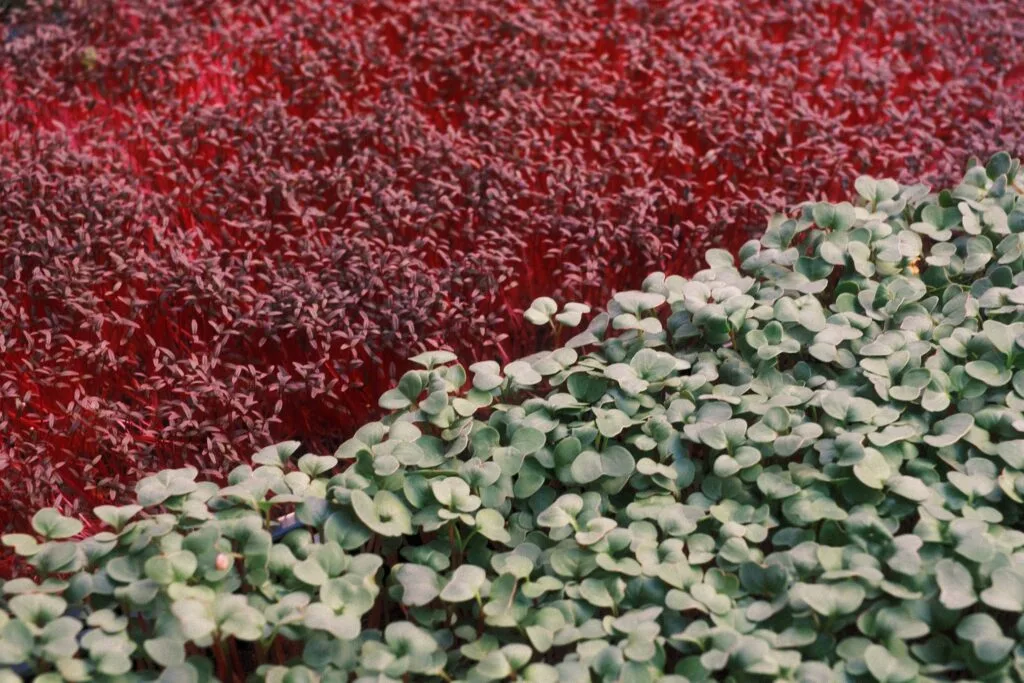
Your workshop already assesses a weld, a costing sheet, a label, a control cabinet. A crop that finishes in ten days can be the object those same assessments are made on.
Blackout is the dark days straight after sowing. The whole process finishes inside a single mobility, or twice in one school term, and every step produces a number the learner can defend. It is short enough that a learner runs it three times and corrects their own method, instead of watching one crop once.
2024-1-EL02-KA151-YOU-000229166The Kanasi cooperation continues and widens now, adding entrepreneurship and digital marketing modules.
The arguments
Open a row for the verbatim quotation, its page, and the condition that makes it land. All quotations are from the Erasmus+ Programme Guide 2026.
Programme Guide 2026, p. 231
This priority supports initiatives that develop flexible and learner-centred VET programmes which can be split into smaller units – modules.
Erasmus+ Programme Guide 2026, p. 231
Programme Guide 2026, p. 231
…provision of new types of services carried out by VET providers such as start-up support or technology transfer support for SMEs.
Erasmus+ Programme Guide 2026, p. 231
Programme Guide 2026, p. 231
This priority supports projects which aim at attracting learners to programmes which are in demand on the labour market, crucial for competitiveness of the EU and the twin transition, with a specific focus to address gender stereotypes in choosing vocational programmes… This priority also supports initiatives focusing on strategic approach to internationalisation of VET which might include mobility of learners and teachers/trainers…
Erasmus+ Programme Guide 2026, p. 231 — both sentences are on that page
Programme Guide 2026, p. 231
This priority supports the development of VET programmes that offer a balanced mix of vocational skills and key competences.
Erasmus+ Programme Guide 2026, p. 231
Programme Guide 2026, p. 9
Priority will be given to projects aimed at developing competences in various green sectors… developing green sectorial skills strategies and methodologies and future-oriented curricula…
Erasmus+ Programme Guide 2026, p. 9
Priority p. 7 · mechanism p. 240 (KA220), p. 248 (KA210)
the proposal is relevant for objectives and priorities of the Action. In addition, the proposal will be considered as highly relevant if: — it addresses the priority “inclusion and diversity”;
Erasmus+ Programme Guide 2026, p. 240, Relevance, Cooperation Partnerships
Competence mapping
Six competence codes from the European Commission’s own GreenComp and EntreComp frameworks, and the activity that evidences each one. The published wording and its page numbers are one click below. Setting the qualification level — EQF, or your own national level — stays with the school.
GreenComp Sustainability competences
EntreComp Entrepreneurship competences
“Hint” is EntreComp’s own column heading; the bullets below it are EntreComp’s descriptors, reproduced as printed.
Bianchi, G., Pisiotis, U., Cabrera Giraldez, M., GreenComp — The European sustainability competence framework, EUR 30955 EN, Publications Office of the European Union, 2022, doi:10.2760/13286, JRC128040. Bacigalupo, M., Kampylis, P., Punie, Y., Van den Brande, G., EntreComp: The Entrepreneurship Competence Framework, EUR 27939 EN, 2016, doi:10.2791/593884, JRC101581. Page numbers are the printed pages inside each report. Also named on this page: Council Recommendation on vocational education and training for sustainable competitiveness, social fairness and resilience, 2020/C 417/01, OJ C 417, 2.12.2020.
Briefs by trade
One crop on one bench, twenty-four ways to assess it. The technical family is open below as a sample. Open your own trade to see the rest.
Greenhouse and nursery production
The Ratio, Three TimesOne variety, three sowing densities, one bench — and grams harvested per gram sown decides which density the class defends.Crop production and agronomy
Seed Lot Against Seed LotCount germination on a hundred seeds from each of two seed lots. Then argue for or against the cheaper lot using the germination count, not the price on the invoice.Agricultural mechanisation
The Bench That DrainsFall, run-off and irrigation across a twelve-tray bench, measured to a target and then re-cut until it holds.Worked example 1 — an assessed growing unit is written for this family.
Electrical installation
Build the Control CabinetOne enclosure, two learners, one drawing. They swap and inspect each other’s ferrules, torque and segregation.Automation and instrumentation
The Instrumented RackTwenty-eight tagged signals, every tag matching the drawing, the terminal and the database column.IT and systems integration
Three Platforms, One SensorThree sensors 40 mm apart, so all three read the same tray, feeding a vendor cloud, a self-hosted stack and an offline PLC, then compared.Maintenance and mechatronics
Fault Injection WeekTeachers introduce faults into the rack overnight, from a written fault catalogue. Learners log time-to-diagnosis against time-to-repair.Electronics
The Lights Make the Sensors LieFrame errors counted at full output, at partial dimming and after shielding — and the driver blamed or cleared on the numbers.Building services and plumbing
The Room That Sets the Dew PointCondensation on a cold wall against transpiration off twelve trays: measure it, then size the drain fall and the vent that stops it.Software and data
Seed Batch to PlateA printed code on every tray that returns its seed lot, shelf, watering history, harvest mass and operator.Product design and CAD
The Tray That Fights the Printer BedThe nursery tray is wider than the printer bed. Tile it, redesign it, or print the tool and not the tray — and decide which parts may touch a crop that is eaten raw.Ceramics
The Clay Tray and Its ShrinkageMeasure your own body’s shrinkage on test bars, size a tray to fit a 400 mm shelf, and choose a glaze fit to meet food.Metal construction and welding
The Rack That Lives in FogPick a deflection limit for a loaded shelf, weld the frame, then measure the real sag with a dial indicator.Precision mechanics and CNC
Two Ways to Meter SeedA hand spreader against a vacuum pick-up plate, graded on misses, doubles and dose variation.Textiles
Greige Mats, Tested WetHemp, jute and flax, tested for capillary rise and wet tensile strength against the synthetic mats sold commercially.Artistic glass
The Root WindowA flat-sided glass cell showing the root mat from the side, with a textile sleeve keeping it dark between looks.Culinary and costing
The Five-Euro PlateRecipes built under a fixed per-portion cost ceiling, re-costed from local receipts in every partner country.Food science and quality
The Shelf-Life DossierEvery jar coded; the shelf life argued from pH, water activity and cold-chain records, and the date mark defended against them.Hospitality management
The Costed MenuA training-restaurant menu built backwards from a target gross profit, every selling price defended in writing.Packaging technology
The Pack That SweatsA board pack for a wet respiring crop, then the stack crush-tested at chilled-cabinet humidity.Graphic design and food law
Label Law LabA compliant label in four languages, where the mandatory text owns most of a 40 mm panel.Worked example 2 — a costed garnish line is written for this family, and worked example 3 — a micro-enterprise unit runs across commerce and retail.
Print media
Green Is the Hardest ColourA printing press, reached from a salad leaf. Soft-proof a saturated leaf green, watch it print grey, then fix it with profiles, stock or a fifth ink.Ceramics
The Unglazed Wicking InsertThe ceramics class owns the irrigation system. An unglazed low-fired insert wicks water up from a reservoir, flow rate set by wall thickness and porosity.Network and OT security
Attack Your Own RackOperational-technology security, taught on something it is safe to break. One group builds the network badly, another takes over the pump on an isolated lab network, then both close it.Twenty-four starting points, and the list stays open. Every brief came from one question: what does your workshop already assess that this crop could be the object of? Send us that answer. Which trade fits which activity is in the FAQ.
Three worked examples
Three examples out of many, chosen because each one starts in a different place: growing, costing, selling. Written so you can copy them into an application form. The shape is the same in each: two schools and one exchange makes a KA210; four partners and a translated toolkit makes a KA220.
The idea. A project builds an assessed unit around one microgreens cycle. Each partner school runs it three times in a single term, then publishes the unit and the measurements it produces. A horticulture learner compares their own records across three repeats, instead of watching one crop once. A cycle finishes in 7 to 14 days, so three repeats fit inside one term.
What the learners make
What would remain after the grant. The unit would sit in each partner school’s module handbook, and the record sheet would become a standard assessment tool there. The yield ratios for each variety, pooled from all the schools, stay published under CC BY 4.0 — free for anyone to translate and reuse. They are added to the variety guides, so the next school starts from measurements taken in ordinary classrooms.
The idea. A project grows the garnish beside the training kitchen. The learners plan it, cost it, and time it to service.
What the learners make
The funded work. One implementation work package produces a hazard analysis for sowing, growing, harvest, storage and service. Each partner writes it against its own national rules, in HACCP form where the national system uses HACCP. The same package produces the staff training a chef-trainer needs to use it. It also funds the paperwork that allows food grown by learners to be served to paying customers. It starts from the published sanitary and hygiene guidance in the Science Library, which is already open and translatable.
What would remain after the grant. The food-safety pack and the costed-menu unit would go into the kitchen’s standard operating documents and its inspection file. Staff would use them every week, as working documents. And the rack would keep producing for a menu already costed around it.
The idea. A crop finishes in 7 to 14 days. That gives business and retail learners a real product, a real cost and a real customer inside a single term. A project turns the growing → costing → selling progression into an enterprise unit a business department assesses.
What the learners make
What would remain after the grant. The Young Entrepreneurs bootcamp toolkit becomes a finished open educational resource under CC BY 4.0 — tested and translated. The short project would then repeat every year in both schools, paid from the department’s own budget. The repeating costs are seed, substrate and punnets.
Inside your work plan
Every partner has a row in the work plan. Here is what EVEC puts in ours, with dates. The method, the materials and the growing space already exist, and they are open. A project pays to move them into your trades, not to invent them. Within ten working days of an agreed concept, EVEC drafts its own work-package text and its own partner-description paragraph in English. You edit text instead of writing it.
Which entity signs, and what the mandate carries, is in the FAQ; the lump sums and pass marks are there too.
Blagoj Ristov creator of the methodology
+30 694 557 2632 · tell us the call and the deadline — one paragraph is enough
One route runs on your own calendar rather than a call deadline: hosting a group or an individual learner in Athens.
KA1 · learning mobility
This route is open to any school that already holds a KA1 grant or an Erasmus accreditation. Your school holds the accreditation or the grant; EVEC holds the growing programme. It runs on your calendar, outside the application process.
Hosting participants from another country: any organisation can become a host for learners or staff coming from a partner organisation abroad. Becoming a hosting organisation is a valuable experience and a good way to learn more about the Programme before applying yourself.
Erasmus+ Programme Guide 2026, p. 83, vocational education and training chapter
A class travels together. Or one learner travels alone — short-term, from 10 days, or ErasmusPro, the long route of 90 to 365 days. Durations, documentation and the grant split are in the hosting questions.
The Guide places group mobility at a hosting VET provider. It also allows a second venue in the same country, if the content and quality of the activity justify it (p. 89). A Greek VET provider partner takes the hosting role, and the growing space is put forward under that rule. Identifying the provider is step one, done with you — the Guide’s own wording is in the FAQ.
Two facts in a message: the trades you teach, and the weeks you are working towards. You visit first and commit afterwards — and the Guide pays for that visit — how a hosting starts.
Blagoj Ristov creator of the methodology
+30 694 557 2632 · or write — the form routes it straight to hosting
Answers before you have to ask
Twelve questions, in four groups. Read them if you want detail. The argument above stands on its own.
| Trade family | KA1 group | KA1 individual / ErasmusPro | KA210 | KA220 |
|---|---|---|---|---|
| Horticulture, agriculture and land-based | One record sheet per tray, grams harvested per gram sown | A grow log across at least two cycles | Two schools compare density trials on the same varieties | An assessed growing unit, tested three times per school, published |
| Technical and digital trades | A tagged, wired and commissioned rack section | A fault catalogue with time-to-diagnosis logged against time-to-repair | Two schools instrument the same rack and compare the data | An open build-and-commissioning pack, translated |
| Making and materials trades | One tray, mat or fixture made and measured against a stated tolerance | A shrinkage or deflection test series | One drawing, two workshops, parts measured on arrival | An open drawing set with measured tolerances, four countries |
| Food, service and commerce trades | Ten dishes re-costed to the cent per portion | A shelf-life record per variety, with the date mark defended | Two kitchens, one costed-menu unit, one exchange | Translated costing sheets and a published recipe collection |
| Three unexpected trades | A colour proof, a wicking insert, or an isolated OT network | One of those carried through to a written result | Two schools swap the artefact and re-test it | The method written up as an open unit others can run |
Every cell names a piece of work your own examiner marks. The crop is the shared object; the assessed work belongs to whichever trade you send.
The list stays open. A brief from a trade that none of the twenty-four covers is worth more to us than a twenty-fifth brief written here in Athens. Send us your answer to that and it gets written up.
Health and social care is the family we ask for first. A crop gives a visible result in ten days, which suits a residential activity programme. And a record of how far each resident took part is the kind of work a care examiner already marks. Green care and horticultural therapy departments are invited to write the brief with us.
Seven to twenty. That is EVEC’s own figure for a microgreens activity group, measured across its own cycles rather than set by the Programme Guide. A class of more than twenty runs as two groups, one after the other in the same week. Each group has its own trays and its own records, so every learner has a record sheet of their own.
A bench, a shelf near a window or under a lamp, a sink, and a set of scales that reads to a gram. Schools that want more instrumentation build it as part of the project, which is what the technical briefs are for. The Athens growing space runs the cycle all year, so a school can test it before installing anything of its own.
KA210 is the smaller of the two: two organisations, a 60 out of 100 pass mark, and a fixed lump sum of EUR 30 000 or EUR 60 000. KA220 needs three organisations, passes at 70 out of 100, and runs at EUR 120 000, EUR 250 000 or EUR 400 000. Below are the maximum points for each award criterion, and the minimum you must also reach on each one separately.
One is enough. “To be considered for funding, Cooperation Partnerships must address: at least one horizontal priority and/or at least one specific priority relevant to the field of education, training, youth and sport that is mostly impacted.” — p. 237; the equivalent rule for Small-scale Partnerships is at p. 245. The green horizontal priority stands on its own.
One for management, plus up to four implementation packages, which is the recommended limit. “Each project must include a dedicated work package for project management and a number of implementation work packages (a maximum of 4 implementation work packages per project are recommended)” — p. 243. Any work-plan sketch on this page counts implementation packages only.
When two applications score the same total, Relevance decides first and Impact second (pp. 242 and 249). The applicant chooses the lump sum from their own estimate of the overall cost of the project, p. 242. Relevance is also where the inclusion mechanism is scored, which is why that argument is worth writing carefully.
EVEC signs. You prepare the mandate with your application number on it; EVEC’s President, Mirlena Charisi, signs it and returns it.
EVEC Athens signs. Legal name and registered seat: About EVEC Athens →
Two VET providers do. Your school and a Greek VET provider design the learning activities together. The Guide’s own words: the peer-learning programme is “designed by the two VET providers” (pp. 88–89, footnote 92). EVEC contributes the growing programme inside that design, and delivers it on site. The hosting provider’s staff lead the activity, as the Guide requires (p. 85).
Group mobility of VET learners must take place at a hosting VET provider. Exceptionally, activities can take place at another venue in the country of the hosting organisation, if justified by the content and quality of the activity. In this case, travel of participants from the hosting organisation to the venue will not be considered as a transnational mobility activity. Additional funds therefore cannot be requested for this purpose.
Erasmus+ Programme Guide 2026, p. 89
This is the arrangement. A Greek VET provider partner would be the hosting organisation, and the growing space is put forward as the exceptional venue the Guide allows in the sentence quoted above. The partnership writes that justification itself, from the content and quality of the activity. On the short-term and ErasmusPro routes, individual learners are hosted in the growing space.
It starts with a call between your school, the Greek VET provider and EVEC, on outcomes before dates. The Guide funds a preparatory visit for up to three staff from the sending organisation (p. 91). So you can come and see the growing space before you commit a class to it.
The hosting VET provider is identified together with you, and you meet them before anything is signed. The programme is then written by the two VET providers, with your examiner’s requirements on the page. Accommodation, meals and local movement in Athens are arranged with the hosting VET provider and costed separately from the learning programme.
Organisational support. Organisational support covers the costs incurred by both sending and hosting organisations (except in the case of staff mobility for courses and training)
, and The division of the received grant will be agreed between the two organisations
— p. 98, for the activity types above.
Everything is published under CC BY 4.0: translate it, cut it, and put your school’s name on the result.
Food-safety work starts from something that already exists. The published sanitary and hygiene guidance in the Science Library is open and translatable, and a project builds its hazard analysis on top of it.
Tell us your idea
Five things to tell us, and Blagoj Ristov, creator of the methodology, answers: +30 694 557 2632 · erasmus@evec.org.gr.
Contracted with EVEC Athens · OID E10172681 · PIC 909448430
Co-funded by the European Union.
This portal presents the microgreens methodology; the organisation behind it is EVEC Athens — the European Voluntary and Educational Center (evec.org.gr). Views and opinions expressed are those of the author(s) only and do not necessarily reflect those of the European Union or the European Commission. Neither the European Union nor the granting authority can be held responsible for them.
Open licence. Except where stated otherwise, the educational materials on this portal are licensed under CC BY 4.0 — free to use, adapt and share, including commercially, with credit. See the licence terms.
Accessibility. We aim for WCAG 2.1 AA and publish what does and does not yet meet it — see the accessibility statement. If anything here blocks you, tell us and we will send the material in a format that works for you.