Get in touch
Questions about growing, workshops, the cooperative or partnerships? Send us a message and we will reply by email.
Prefer email? Write to erasmus@evec.org.gr
EVEC Microgreens
Practised science communication, a working urban growing space in Athens and direct reach to non-academic audiences — the tools a Horizon Europe consortium needs for communication, dissemination and citizen engagement on food systems, urban agriculture and science education. This portal is the method and the evidence; EVEC Athens, the civil-society organisation behind it, joins consortia as a Horizon Europe dissemination partner, and partnerships are arranged at evec.org.gr.
You are building a Horizon Europe consortium at a university, research organisation or innovation agency, and your call asks for communication, dissemination and exploitation, citizen engagement or outreach beyond academia. You need a civil-society partner who already does this work rather than one who promises to start after the grant agreement is signed. The organisation behind the methodology, EVEC Athens, is an NGO practice partner in Athens, not a research institute, and that complementary role is precisely the value it brings to a consortium. This page is the evidence; the partnership itself is arranged with EVEC at evec.org.gr.
Our Science Library republishes open-access microgreens research rewritten in plain language, with full credit and a link to every original study. We keep the caveats, the sample sizes and the uncertainty. The same method transfers directly to your project’s findings.
We run a physical microgreens growing space in Athens, available for demonstration activities, workshops and engagement events. Working infrastructure, not a plan on paper.
This portal carries more than 110 free articles for young people, teachers, growers, entrepreneurs and the general public: audiences most consortia struggle to reach directly. Readers arrive mainly through organic search, looking for answers to practical growing questions, and teachers, growers and entrepreneurs use the libraries in their own work. We can share verified analytics on request.
We turn research outputs into public material people actually use: plain-language articles, growing guides, workshop formats and tested recipes, all published open and free.
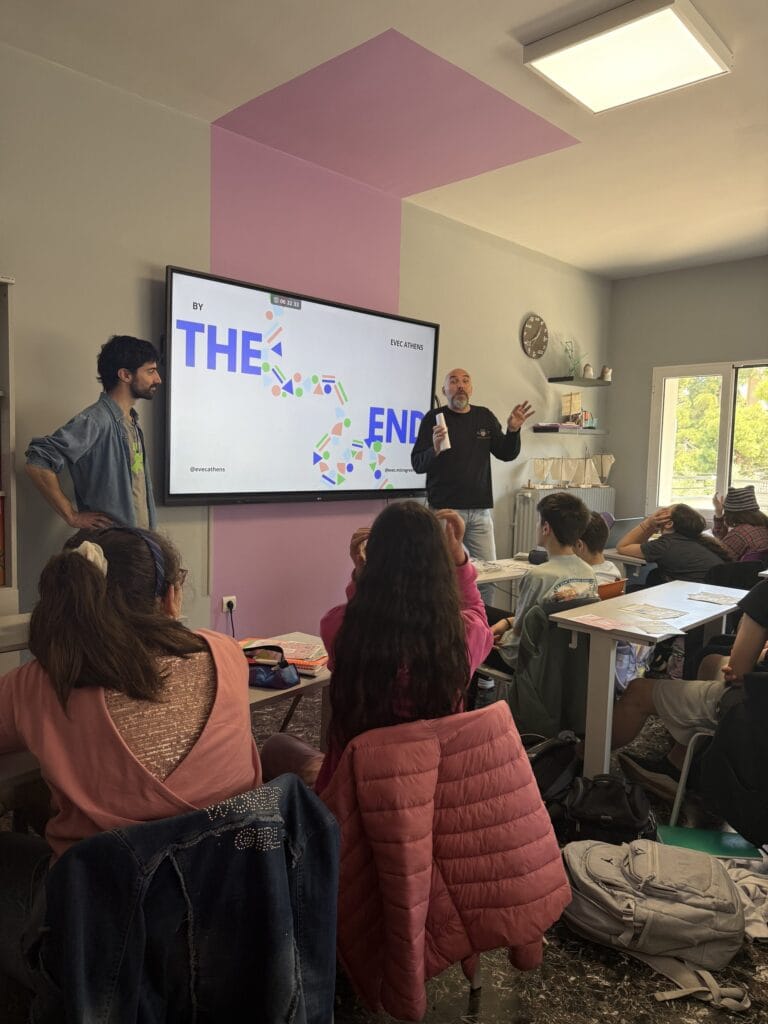
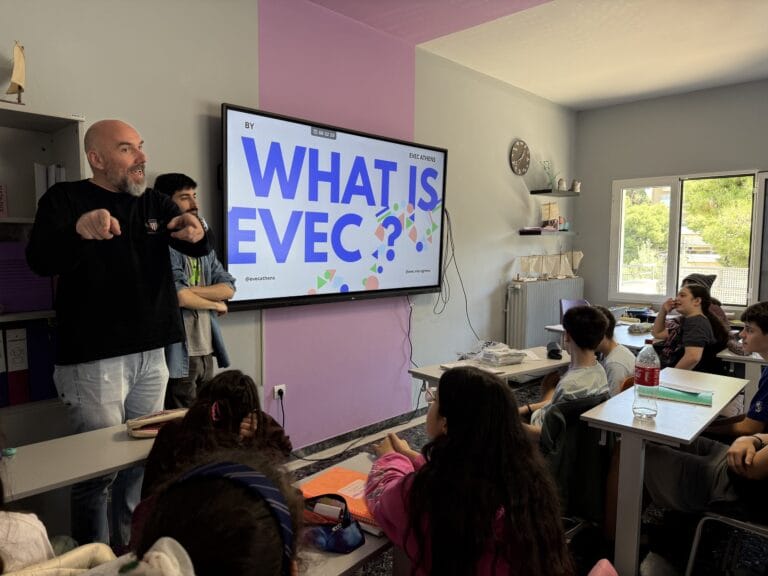
Hands-on workshops in Athens on growing microgreens in the city, harvesting at home and cooking them, run by our team and international volunteers.
The portal keeps project results visible and usable after funding ends, which gives your proposal a concrete answer to the exploitation and legacy questions evaluators ask.

Evaluators look for evidence of delivery, so here is ours, live and open for inspection.
Twenty-one open-access microgreens studies rewritten for the public, each crediting and linking the original research team. Read it as a sample of the communication quality your project would receive.
Our urban growing space is offered free to young entrepreneurs starting a microgreens business without capital. For a consortium, it doubles as a demonstration and citizen engagement venue.
More than 110 free articles, including the 26-guide Varieties crop database, the 21 plain-language Science Library rewrites, grow-at-home and business growing guides and a cookbook of tested recipes, built and maintained as open educational content.
Everything above is live and in daily use today, alongside three free self-paced Academy courses, complete as first versions. We also publish work in progress openly: four educational toolkits are open drafts, each labelled as such, with a public feedback form on the toolkits page. We keep that distinction visible on every page, because a partner who blurs the line between finished and unfinished work is a dissemination risk, not an asset.
The organisation behind the methodology is EVEC Athens, the European Voluntary and Educational Center (evec.org.gr), a non-governmental organisation in Athens working in European projects since 2017. On the question research managers rightly ask about small civil-society partners: EVEC, as the legal entity, carries the contractual and reporting responsibility, while day-to-day activities are run with hosted international European Solidarity Corps volunteers, an operating model that has run continuously since 2025. See everything we have built →
The latest additions to our Science Library show how we put peer-reviewed research in front of the public.
Pea, lentil, chickpea and sunflower microgreens as a protein source — with the measured numbers, and an honest note on where the…
What fermentation does to microgreens: research on radish microgreen beverages and gut microbiota metabolites, plus kimchi-style ferments that extend shelf life.
Microgreens have not yet been grown in orbit, but plant scientists argue they suit a spacecraft well. What the research actually says…
Every article credits and links the original study. Browse the full collection in the Science Library.
In a Horizon Europe work plan, a dissemination partner working with this method fills three named, recognisable roles:
To bring EVEC into a consortium, tell EVEC the call, the topic and the role you need filled at evec.org.gr; together you scope which of these roles the call actually needs, put it in writing, and EVEC provides the formal commitment for your application. Reach out early enough to shape the work plan together.
The following is an illustrative example, not a commitment; the real scope is agreed with your consortium against the call text. In a project on urban food systems, EVEC contributes to the communication, dissemination and exploitation work package as follows:
Deliverables: a plain-language summary series published open on this portal, and a citizen engagement report documenting the demonstration activities and how audiences responded. Both remain publicly available here after the project ends.
Working on a different research theme? Citizen science, food systems, health, climate, education — most Horizon topics touching people have a microgreens hook. Find yours, then take it to EVEC.
The methodology: this portal is the home of the microgreens methodology — one hands-on way of learning that works for any vocation and any age, running since 2025.
The organisation behind it: EVEC Athens (European Voluntary and Educational Center), an accredited Greek NGO working in European projects since 2017 · OID E10172681 · PIC 909448430 · Erasmus+ Youth accreditation 2023-1-EL02-KA150-YOU-000188397 · ESC Quality Label 2023-1-EL02-ESC50-QLA-000195138 — both valid until 2027. Verify in the EU organisation registry (search for OID E10172681), see the track record, or visit the organisation at evec.org.gr.
The methodology and its evidence live here on the portal; Horizon Europe partnerships are arranged with EVEC Athens. Send us one paragraph about your project — the call, the work package, the gap you are closing — and you will get three concrete ways the methodology can add value to it. A real reply from the people who built the method, not an autoresponder.
Co-funded by the European Union.
This portal presents the microgreens methodology; the organisation behind it is EVEC Athens — the European Voluntary and Educational Center (evec.org.gr). Views and opinions expressed are those of the author(s) only and do not necessarily reflect those of the European Union or the European Commission. Neither the European Union nor the granting authority can be held responsible for them.
Open licence. Except where stated otherwise, the educational materials on this portal are licensed under CC BY 4.0 — free to use, adapt and share, including commercially, with credit. See the licence terms.
Accessibility. We aim for WCAG 2.1 AA and publish what does and does not yet meet it — see the accessibility statement. If anything here blocks you, tell us and we will send the material in a format that works for you.