Get in touch
Questions about growing, workshops, the cooperative or partnerships? Send us a message and we will reply by email.
Prefer email? Write to erasmus@evec.org.gr
EVEC Microgreens
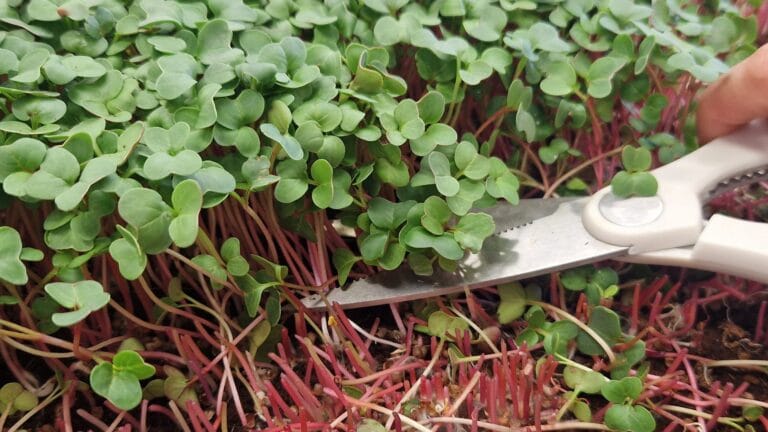
A single tray of microgreens is a complete cross-curricular unit. It carries biology, maths and data handling, nutrition and sustainability in one project, produces a visible harvest inside ten school days, and costs almost nothing to run on an ordinary classroom windowsill.
This page is for two people. If you are writing a School Education partnership for Erasmus+ and need a partner with ready content, working infrastructure and real practice, you will find usable material here. If you are a teacher who wants a tray of microgreens growing on the windowsill next month, everything you need to plan the first lesson is already published and free.
One tray maps cleanly across the curriculum: germination and plant biology in science, measurement, graphing and data handling in maths, a harvest the class can actually eat in nutrition, and a low-resource growing method that makes sustainability concrete rather than abstract. The same unit develops competences described in GreenComp, the EU sustainability competence framework — most directly in the areas of ‘Envisioning sustainable futures’ and ‘Acting for sustainability’.
One distinction matters on this page, so we make it early. The portal, the Varieties crop database, the Academy courses and the cookbook are live and in daily use; the classroom toolkits are open drafts your school — or your consortium — can help finish. That is not a compromise: piloting a draft resource with your learners is a legitimate, fundable project activity, and finishing the toolkits is a ready-made work package.
Everything here is free and openly published. The first row is live and in daily use today — material you can teach with next week. The second row is where your school can shape what comes next.
A free, self-paced course for educators in the EVEC Microgreens Academy, live and complete. It walks through planning, running and assessing a classroom microgreens unit, so you can test the method yourself before you commit a term to it. Browse the Academy →
Twenty-nine open crop guides covering sowing, timing, care and flavour, variety by variety. In class it works as a reference library: give each student a different crop, and comparing their results becomes the data lesson. Open the database →
A cookbook of tested recipes closes the loop from tray to plate, and the portal holds more than a hundred free articles that work as reading tasks and research prompts. See the cookbook →
A ten-day unit for lower-secondary learners (13-14), a hydroponics-and-sensors project for ages 15 to 19, and the 10-Day Growing Guide that sets the pace of any unit. All are published as open drafts with feedback forms — pilot them, mark them up, help us finish them.
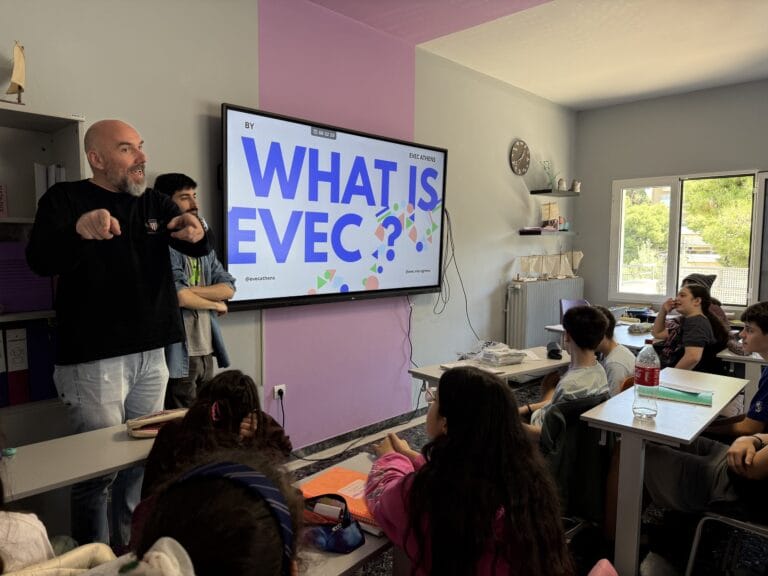
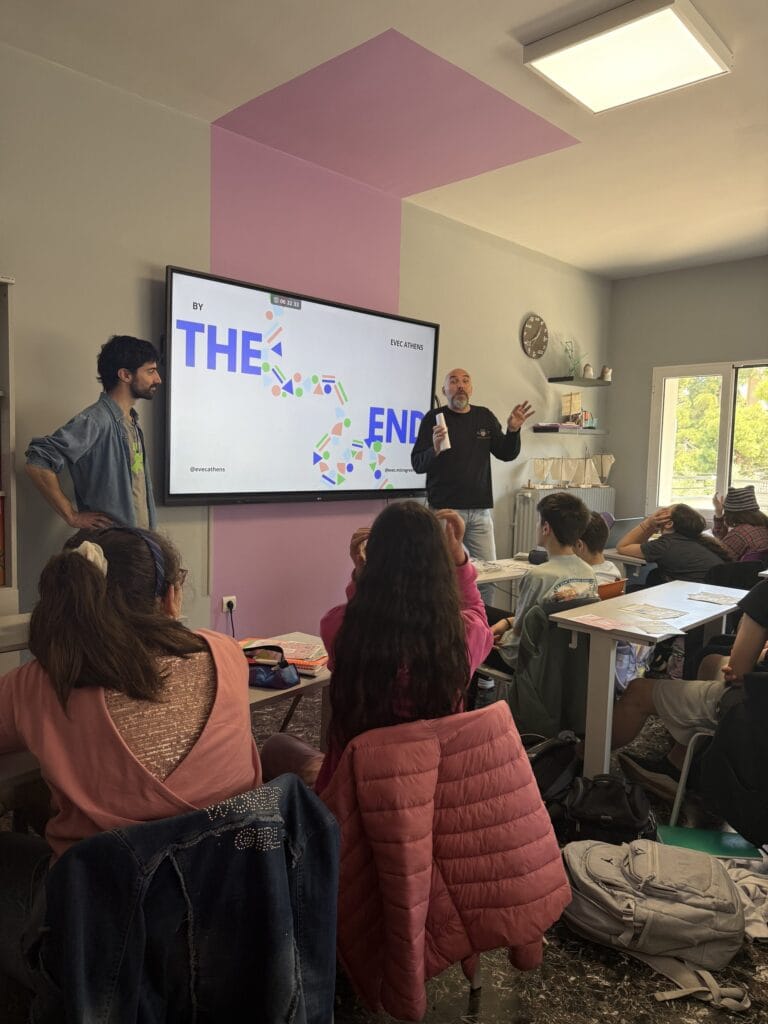
Our team and international ESC volunteers run workshops in Athens on growing microgreens in the city, harvesting at home and cooking with the harvest, so the practical guidance in our materials draws on experience with real groups.
For a project consortium, the organisation behind the methodology — EVEC Athens (evec.org.gr) — brings working infrastructure in Athens, a large body of open educational content and a portal that keeps results visible long after funding ends, which supports dissemination and the sustainability of results.
Everything below is published, free to use in class, and honestly labelled. Live and in daily use today: the Academy courses, the Varieties crop database, the Science Library and the cookbook. Open drafts you can help finish: the three toolkits below, with a shared feedback form on the toolkits page.
The full ten-day classroom journey for lower-secondary learners aged 13 to 14 — published under its working title ‘Primary School Children (13-14)’ — with facilitator notes, games and experiment journals. Pilot it with one class and your notes shape the final version. Open the toolkit →
A hydroponics and sensors project for ages 15 to 19: student teams build a small system, collect their own data and interpret it. Piloting this draft with your learners is a fundable project activity in its own right. Open the high school toolkit →
The universal seed-to-harvest guide that gives any unit its structure and timing, so the science lines up with the harvest. It is the backbone the other toolkits stand on. Open the growing guide →
Our track record is deliberately stated plainly. The microgreens methodology was born inside European Solidarity Corps project 2024-1-EL02-ESC51-VTJ-000225260 and has run since 2025 with international volunteers. Behind it stands the organisation EVEC Athens (evec.org.gr), accredited for Erasmus+ Youth and working in EU projects since 2017, with 20+ delivered; the portal has been live since January 2026; workshops run in Athens with real groups. We would rather show you published work you can inspect today than quote figures we have not yet published.
See everything we have built →
Three free, self-paced courses are live and complete in the EVEC Microgreens Academy, including one designed for educators. They are open educational resources — take them yourself or use them with your group. This list updates as new courses are published.
A free, self-paced course for teachers and youth workers: run one growing cycle yourself, pick the right toolkit for your group, plan…
All courses live in the EVEC Microgreens Academy.
New classroom-ready writing is added to the portal regularly, including the Science Library, where we rewrite peer-reviewed microgreens research in plain language. We keep the caveats, the sample sizes and the uncertainty — which makes the rewrites honest source material for older students learning to read science critically.
A 10-day project for ages 15–19: teams build a small hydroponic system with sensors, collect data and connect biology, sustainability and technology.…
A structured 10-day classroom journey from seed to harvest for learners aged 13–14, combining science, nutrition, sustainability and teamwork. Open draft, feedback…
Classroom activities for preschool and primary teachers: a mini garden, light and seed experiments, growth charts in math, tastings. Results in 7…
Browse the full collection on the blog.
If you are planning KA122 short-term mobility for school staff, the organisation behind the methodology, EVEC Athens, can host a job-shadowing visit. Your teachers spend time in our working growing space in Athens — a real teaching and growing space, not a demonstration corner — and shadow how the team and international volunteers prepare and run workshops. They go home with the routines, the materials list and the confidence to run the unit in their own classroom.
The sketch below is an illustrative example, not a fixed offer — the real division of work is agreed with the consortium. In a School Education partnership, a natural work package for us looks like this:
Deliverables: the finalised open-licensed toolkit v1.0, and a pilot report documenting what the classrooms changed and why.
Looking for a different angle? From languages to art to inclusion, every subject and school theme has a microgreens hook. Find yours and send us your idea.
The methodology: this portal is the home of the microgreens methodology — one hands-on way of learning that works for any vocation and any age, running since 2025.
The organisation behind it: EVEC Athens (European Voluntary and Educational Center), an accredited Greek NGO working in European projects since 2017 · OID E10172681 · PIC 909448430 · Erasmus+ Youth accreditation 2023-1-EL02-KA150-YOU-000188397 · ESC Quality Label 2023-1-EL02-ESC50-QLA-000195138 — both valid until 2027. Verify in the EU organisation registry (search for OID E10172681), see the track record, or visit the organisation at evec.org.gr.
Tell us what you are planning and we will reply by email. One message to erasmus@evec.org.gr reaches the whole team.
Co-funded by the European Union.
This portal presents the microgreens methodology; the organisation behind it is EVEC Athens — the European Voluntary and Educational Center (evec.org.gr). Views and opinions expressed are those of the author(s) only and do not necessarily reflect those of the European Union or the European Commission. Neither the European Union nor the granting authority can be held responsible for them.
Open licence. Except where stated otherwise, the educational materials on this portal are licensed under CC BY 4.0 — free to use, adapt and share, including commercially, with credit. See the licence terms.
Accessibility. We aim for WCAG 2.1 AA and publish what does and does not yet meet it — see the accessibility statement. If anything here blocks you, tell us and we will send the material in a format that works for you.