Get in touch
Questions about growing, workshops, the cooperative or partnerships? Send us a message and we will reply by email.
Prefer email? Write to erasmus@evec.org.gr
EVEC Microgreens
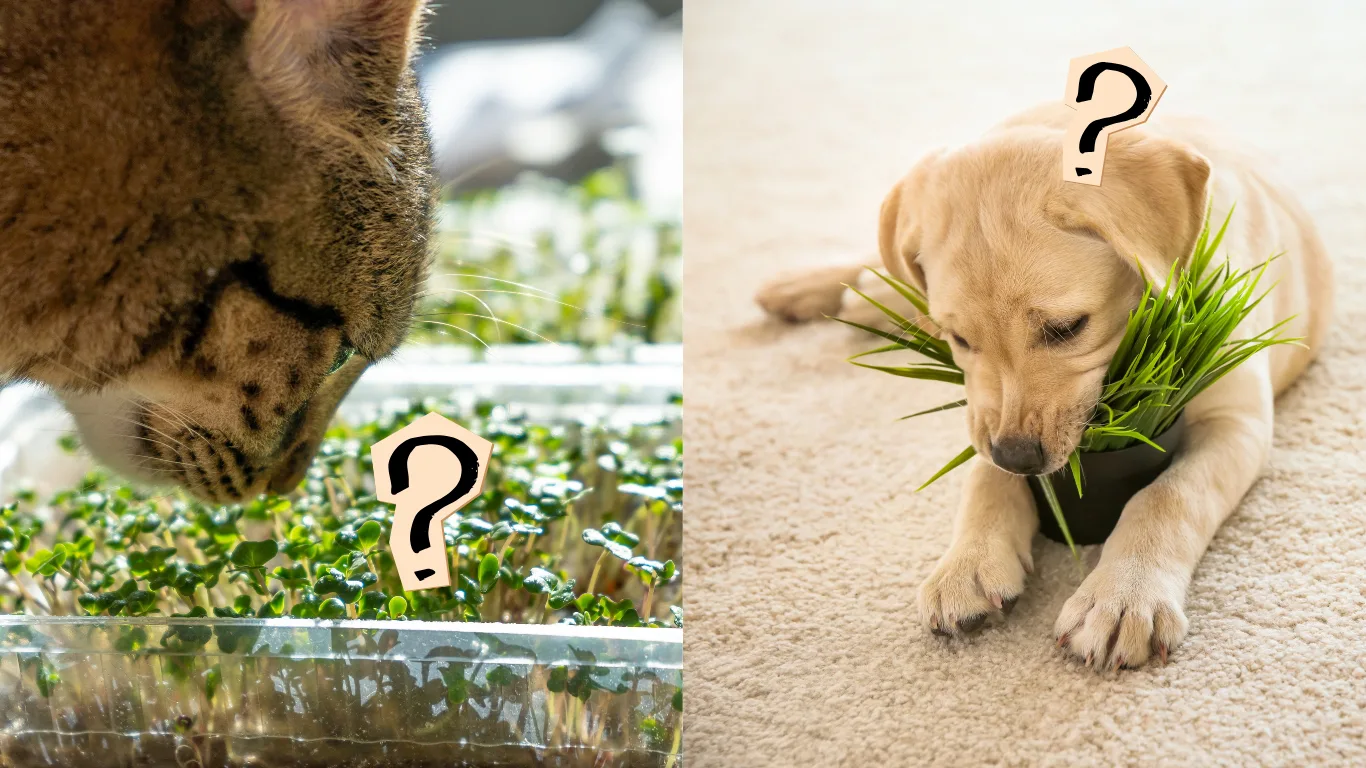
No study has tested microgreens in pet dogs, cats, rabbits or guinea pigs. Lab rats, mice, fruit flies and farm rabbits give useful clues, cat grass is basically a cereal microgreen, and onion-family microgreens are toxic to dogs and cats.
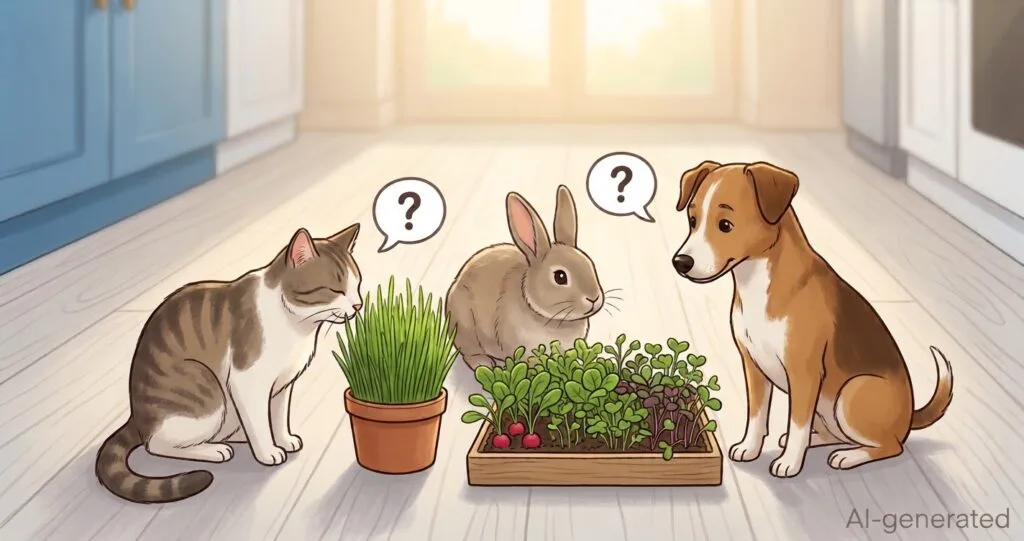
Your cat sniffs the tray on the windowsill. Your rabbit’s nose won’t stop twitching. So, are microgreens for pets a healthy snack or a risk?
The EVEC library of 374 microgreens research papers was searched for studies on pet dogs, cats, rabbits and guinea pigs. There are none. But scientists have fed microgreens to rats, mice, fruit flies and farm rabbits. Those experiments, together with vet safety advice, give a useful and honest answer.
Most animal studies on microgreens have nothing to do with microgreens for pets. Rats, mice and fruit flies are “models”. They are stand-ins that let scientists test an idea before trying it in people.
To do that, researchers often make the animals unwell on purpose. They give them diabetes, a toxin or a very fatty diet, then check whether microgreens reduce the damage. Keep that in mind. A result in a sick lab rat is not a promise for a healthy pet.
Two related studies used the same design. Male rats were split into eight groups of six. Some had diabetes, some were given aflatoxin (a poison made by mould on food), and some had both. For six weeks, some groups ate pellets in which 10% of the food was dried microgreen powder.
Six rats per group is a small number, so these are early signals.
At the US Department of Agriculture, 60 mice ate a low-fat or a high-fat diet for eight weeks, with or without red cabbage (Huang et al., 2016).
On the high-fat diet, mice eating red cabbage microgreens gained less weight. They also had lower LDL (“bad”) cholesterol and less fat and cholesterol stored in the liver. Their livers showed fewer signs of inflammation. Mature red cabbage also reduced weight gain, so the baby plants were not the only vegetable that helped.
The same team later tested kale. Both kale microgreens and mature kale limited weight gain in mice on a high-fat diet. Both also increased the variety of gut bacteria, and the effect was stronger with microgreens. This work was presented at a science conference in 2023. The scientists said more experiments are needed to see whether people would get the same benefits (American Chemical Society, 2023).
Note that these were extracts, concentrated liquids made in a lab, not leaves on a plate.
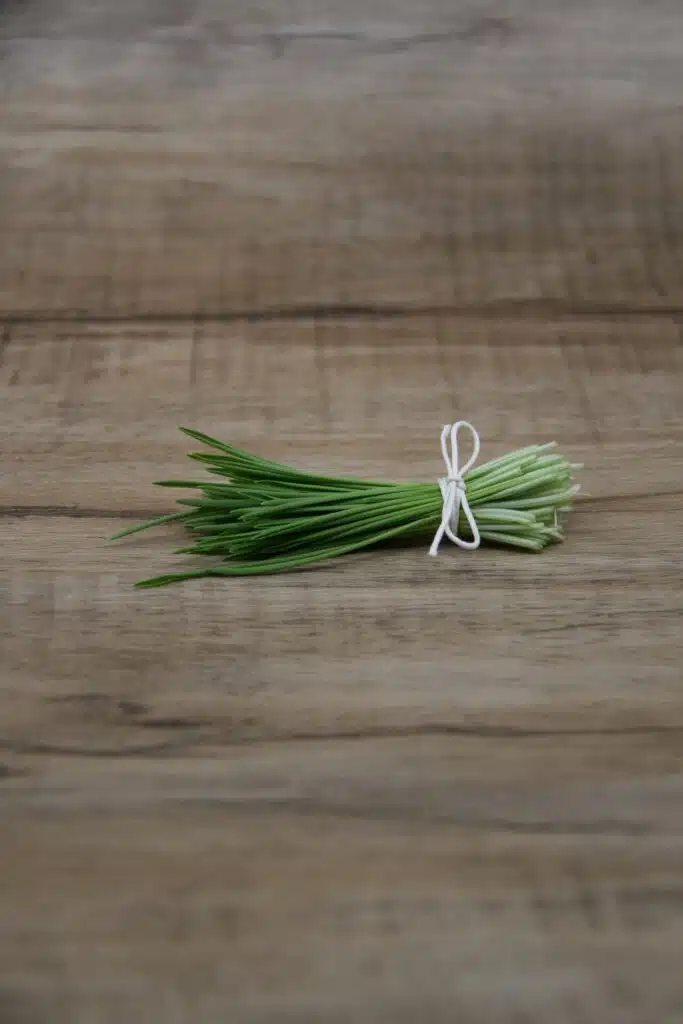
Where green fodder is hard to grow, rabbit farmers often use barley “fodder”. Barley seeds grow on trays for about eight days and are then fed whole, with leaves, roots and seeds. That is very close to a barley microgreen.
Two trials give a clear lesson:
Why the difference? The fresh fodder was 82% water. The rabbits filled up on watery greens and missed out on energy and protein.
The lesson for anyone curious about microgreens for pets is simple: greens are an extra, not a replacement for a balanced diet. Also remember that these were farm rabbits, where the goal is fast growth. A pet rabbit’s needs are different.
The pot of “cat grass” sold in pet shops is usually young wheat, oat or barley. In other words, it is a cereal microgreen.
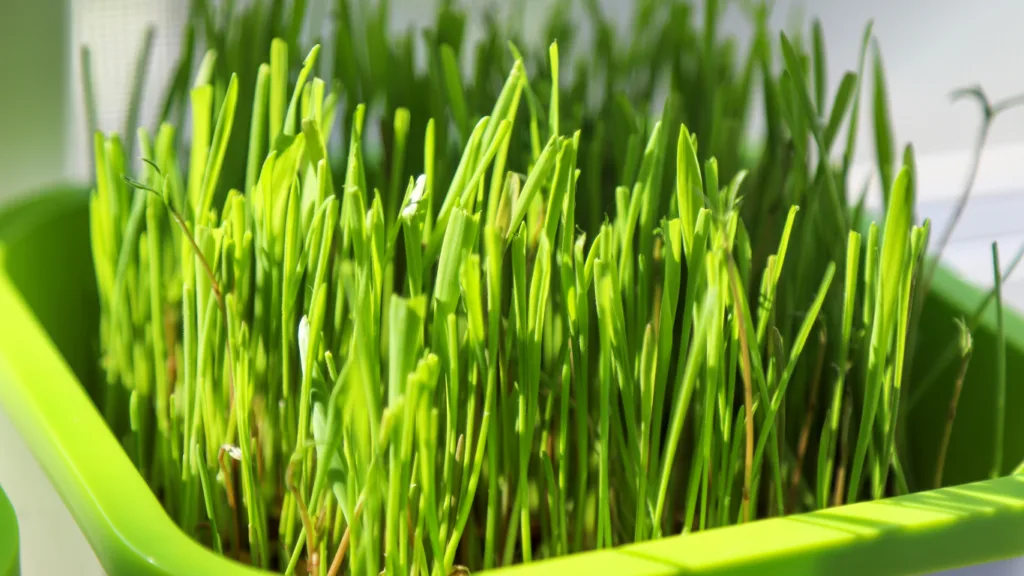
Do cats need it? A University of California, Davis team surveyed cat owners. In one survey of 1,021 owners, 71% of cats had been seen eating plants at least six times. Only 9% of owners said their cat often looked ill beforehand. And 27% said their cat often vomited afterwards (Hart et al., 2021). The researchers think plant eating is a natural, inherited behaviour, and they share tips for indoor cats.
What no study shows is that cats get important nutrients from grass. Cats are meat-eaters, and their main food must be complete cat food. If your cat vomits often, with or without grass, ask a vet. Still, if you want to try microgreens for pets, a pot of cat grass is the easiest place to start.
Dogs. There are no microgreen studies on dogs. Many dogs nibble grass, and the same UC Davis researchers found it is rarely linked to illness. A microgreen would only ever be a tiny extra next to complete dog food.
Rabbits. The RSPCA recommends a diet of about 85% hay and grass, 10% leafy greens and 5% pellets. It also advises introducing new greens gradually, in small amounts. Kale and broccoli are on its list of good greens, and cabbage is fine occasionally. Their microgreen versions have not been tested in rabbits, so keep them to a small part of that 10%.
Guinea pigs. Like humans, guinea pigs cannot make their own vitamin C, so they need vitamin C-rich foods every day. Fresh greens are part of that. As with rabbits, introduce any new green slowly and in small amounts.
Some microgreen kits include onion, garlic, chives or leeks. These plants belong to the Allium family, and they are toxic to dogs and cats. They can upset the stomach and damage red blood cells, which can lead to anaemia. Cats are more sensitive, but dogs are at risk too (ASPCA).
Raw, cooked and dried forms are all dangerous. Signs of anaemia can take several days to appear (Merck Veterinary Manual). When it comes to microgreens for pets, this is the one firm rule: never share onion-family microgreens, and keep those trays out of reach. If your pet eats some, call your vet or an animal poison helpline straight away.
Can cats eat microgreens? Cereal “cat grass” (wheat, oat, barley) is widely offered and most cats nibble plants without being ill. Never give onion-family microgreens.
Can dogs eat microgreens? Nobody has studied it. If you want to try, offer only a tiny amount of a non-onion microgreen, and ask your vet first.
Can rabbits eat microgreens? Barley seedlings have been tested in farm rabbits. For pets, treat microgreens as a small part of the daily greens, introduced slowly.
Can pets benefit from microgreens? Honestly, nobody knows yet. Lab rats and mice show that microgreens can change health markers. However, those animals were ill or overfed on purpose, and mature vegetables often helped too. Farm rabbits show that greens work best as a small extra.
What is clear: cat grass is a fine nibble for most cats, and onion-family microgreens are a firm no. Until real studies on microgreens for pets exist, enjoy your harvest yourself and share only tiny, safe bites.
Why does this matter? Pets cannot tell us when a new food upsets them. Their safety depends on owners who check the facts before they share.
Want to grow some for your own plate? Start with our research-based guides to radish or broccoli microgreens.
Papers 1, 2, 5 and 6 are in the EVEC science library. The rest are journal papers, a press release, or official vet and pet-care pages.
This article is part of the free knowledge portal of EVEC Microgreens. Wherever you are on your microgreens journey, there is a path for you:
Co-funded by the European Union.
This portal presents the microgreens methodology; the organisation behind it is EVEC Athens — the European Voluntary and Educational Center (evec.org.gr). Views and opinions expressed are those of the author(s) only and do not necessarily reflect those of the European Union or the European Commission. Neither the European Union nor the granting authority can be held responsible for them.
Open licence. Except where stated otherwise, the educational materials on this portal are licensed under CC BY 4.0 — free to use, adapt and share, including commercially, with credit. See the licence terms.
Accessibility. We aim for WCAG 2.1 AA and publish what does and does not yet meet it — see the accessibility statement. If anything here blocks you, tell us and we will send the material in a format that works for you.