Get in touch
Questions about growing, workshops, the cooperative or partnerships? Send us a message and we will reply by email.
Prefer email? Write to erasmus@evec.org.gr
EVEC Microgreens
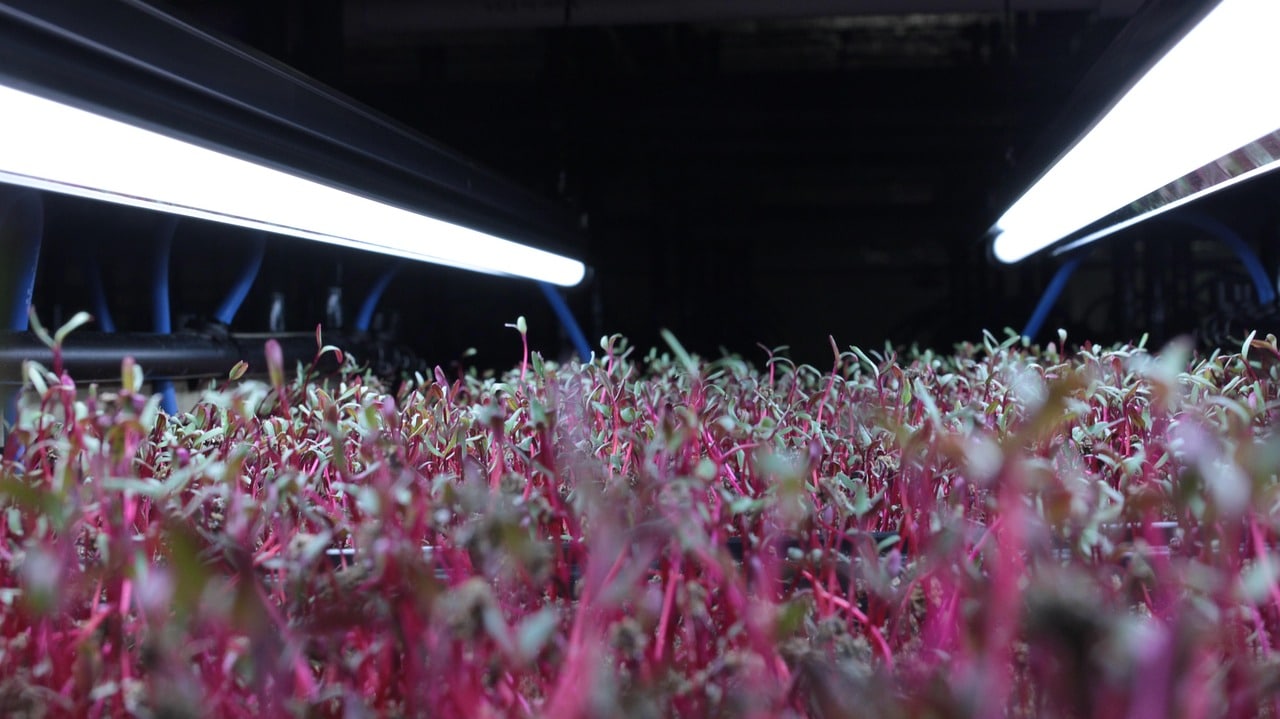
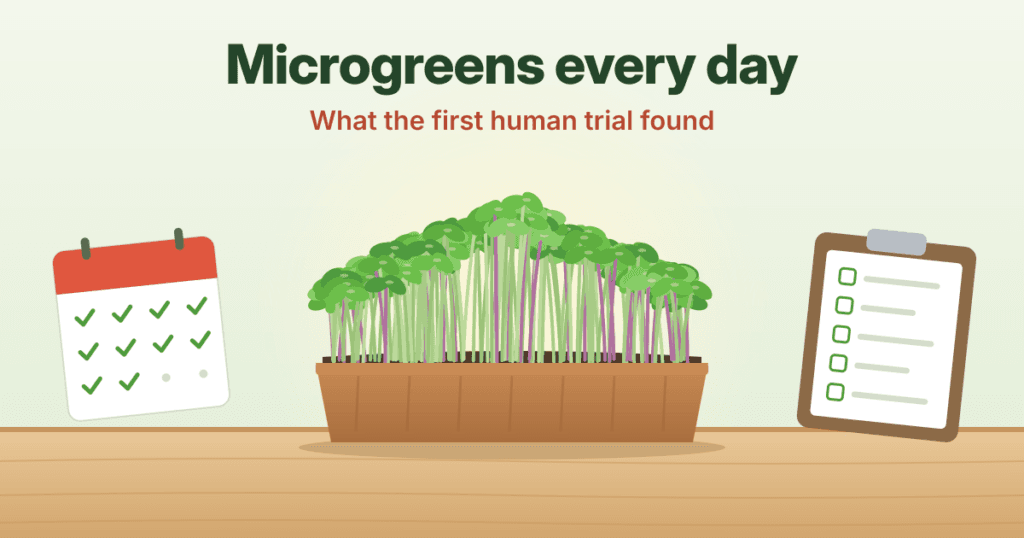
A Colorado State University trial tested whether healthy adults aged 45–70 would eat 2 cups of microgreens every day for two weeks. They did, and their stomachs were fine, but most health measures did not change, and the researchers expected that.
Most microgreen research happens in labs, on trays, test tubes and cells. But what happens when real people start eating microgreens every day? In a trial published in 2025, a team at Colorado State University finally tested it.
Their answer is honest and a little surprising. Here is what the trial did, what it found, and why “it worked” means something different from what you might think.
The researchers recruited healthy men and post-menopausal women aged 45 to 70. Twenty-six people started, and 24 finished (Lee et al., 2025).
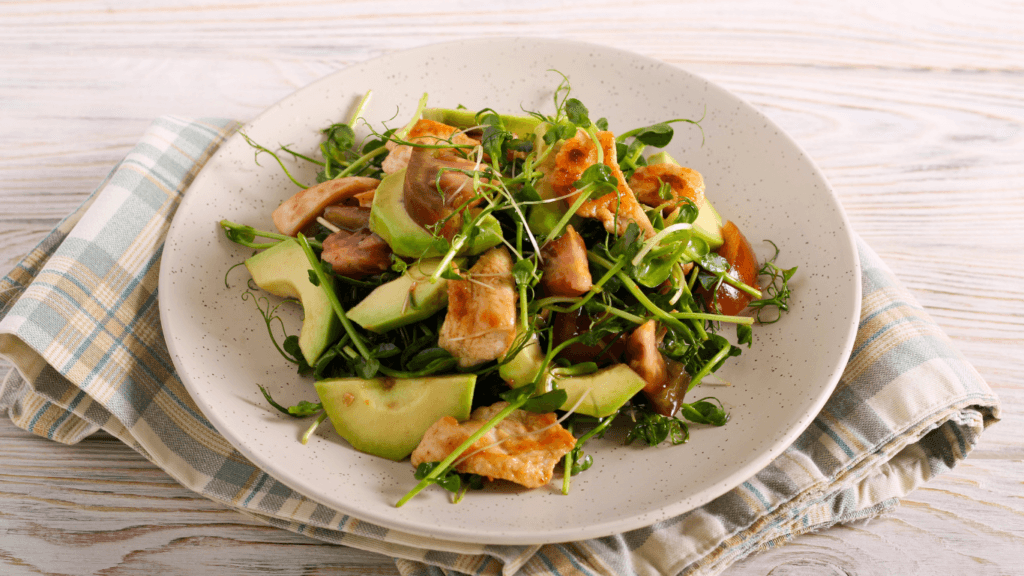
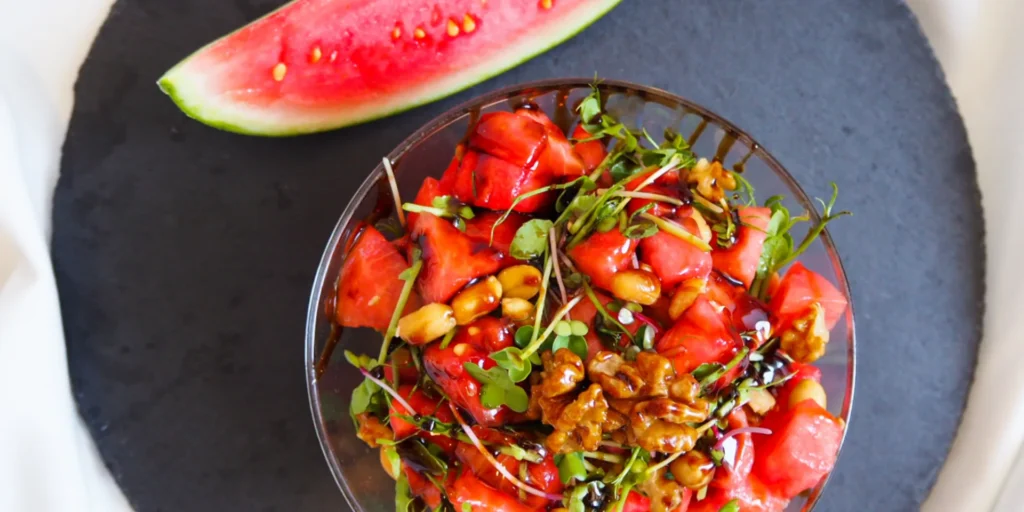
Each person ate two microgreens, one after the other:
Two cups sounds like a lot, but microgreens are light. The team weighed them: 2 cups was about 28–30 g. Everyone ate them raw, because there is no published data yet on how cooking changes them. Each participant also got a salad spinner to wash them.
This design is called a randomised crossover trial. Each person acts as their own comparison, which is useful when a study is small.
This was the main question. Would people stick with eating microgreens every day for two weeks?
They did. Participants ate 95.6% of their portions. On average they missed less than one day per two weeks, usually because they forgot, felt unwell, were travelling or were fasting for religious reasons (Lee et al., 2025).
That matters more than it sounds. A food that people will not eat cannot help anyone.
Overall, gut symptoms did not get worse. One score linked to gut inflammation symptoms improved after the red cabbage period. The authors also note that some individuals may have minor sensitivity (Lee et al., 2025).
Here is the honest part. After two weeks, the researchers found no changes in:
That is not a failure. The researchers expected it. The participants were already healthy, and two weeks is short. The trial was designed to test whether daily eating is possible, not whether it improves health.
The team also scored the rest of each person’s diet on a scale used for the US dietary guidelines. During the red cabbage weeks, the average score was 72, compared with 64 during the break. That difference was not quite statistically significant, so it is a hint, not a result (Lee et al., 2025).
The EVEC library holds only a handful of human studies on microgreens:
The other health-related microgreen studies we found in the library, including those on gut bacteria, used test tubes, cells or animals, not people.
Scientists build evidence in steps. First: can people eat it every day without problems? This trial says yes, at least for healthy adults aged 45–70, for two weeks. Next come longer and bigger trials that measure real health outcomes. The authors say exactly that: “future studies designed to evaluate their health impacts are needed.”
The authors also list the study’s limits: only two weeks, healthy people who already ate fairly well, and many missing diet records during the break.
Want to grow your own? Start with our research-based guides to radish or broccoli microgreens, or read the original studies in the library of 374 microgreens research papers.
All are open-access papers in the EVEC science library.
This article is part of the free knowledge portal of EVEC Microgreens. Wherever you are on your microgreens journey, there is a path for you:
Co-funded by the European Union.
This portal presents the microgreens methodology; the organisation behind it is EVEC Athens — the European Voluntary and Educational Center (evec.org.gr). Views and opinions expressed are those of the author(s) only and do not necessarily reflect those of the European Union or the European Commission. Neither the European Union nor the granting authority can be held responsible for them.
Open licence. Except where stated otherwise, the educational materials on this portal are licensed under CC BY 4.0 — free to use, adapt and share, including commercially, with credit. See the licence terms.
Accessibility. We aim for WCAG 2.1 AA and publish what does and does not yet meet it — see the accessibility statement. If anything here blocks you, tell us and we will send the material in a format that works for you.