Get in touch
Questions about growing, workshops, the cooperative or partnerships? Send us a message and we will reply by email.
Prefer email? Write to erasmus@evec.org.gr

EVEC Microgreens
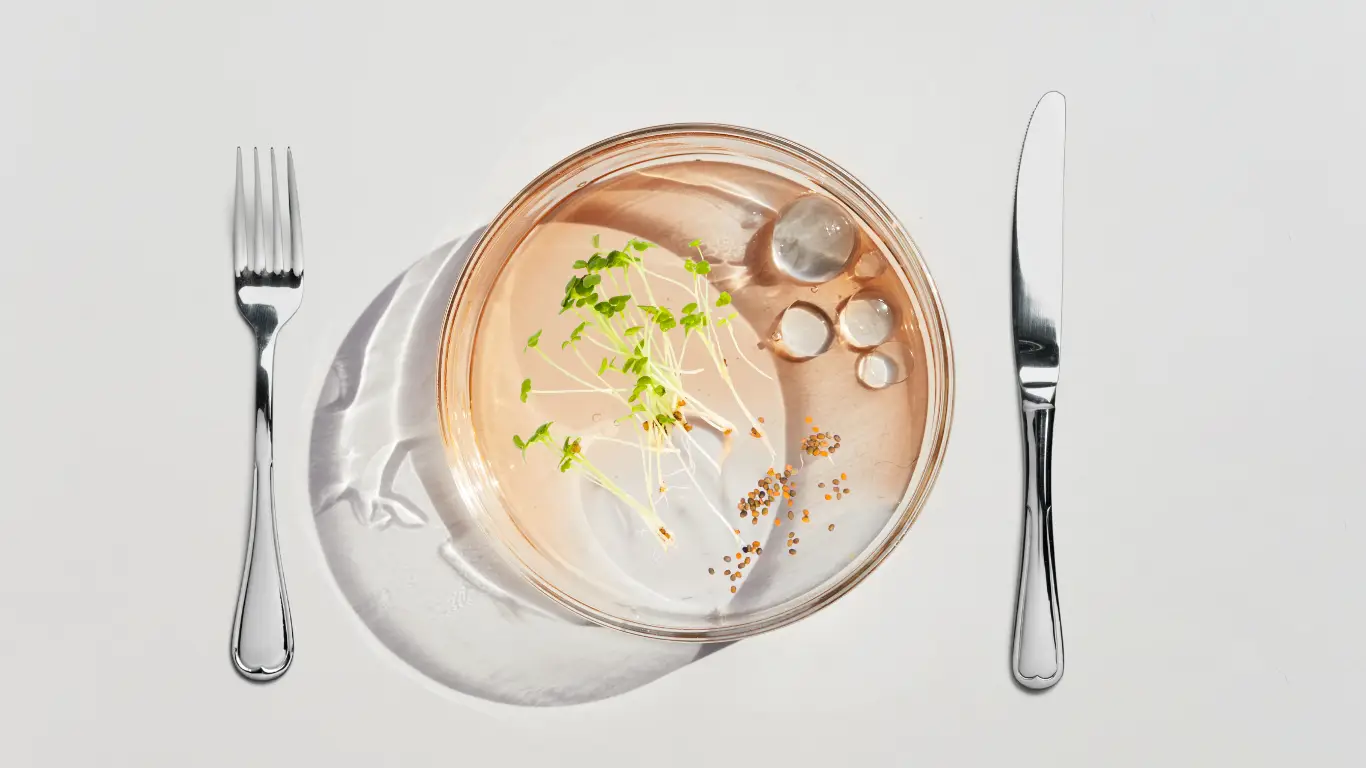
Microgreens have been measured at 20.4 to 147 mg of vitamin C per 100 g, and vitamin C is a required cofactor for collagen synthesis. What that does and does not justify for skin — and the six skincare claims we removed from this page.
Microgreens are a measured source of vitamin C. Xiao and colleagues assayed 25 commercial microgreens and found 20.4 to 147.0 mg of total ascorbic acid per 100 g fresh weight, and normal skin has been measured as holding high concentrations of the vitamin, which is a required cofactor for collagen synthesis. That is the entire honest case for microgreens and skin, and it is a case for eating vegetables rather than a skincare claim — humans cannot make vitamin C and have to get it from food, as the authors of a 2022 arugula microgreen study in our Science Library point out. Beyond that, the evidence runs out.
Microgreens turn up constantly in “eat your skincare” content, usually attached to a list of things they supposedly do to your face. This page is the version with the evidence attached, which is shorter and less exciting than the version we used to publish.
What we corrected in this article. This page used to list eight things microgreens do for skin, sourced to two commercial blogs. We have removed six of them: “detoxification”, “protection from sun damage”, the claim that they reduce fine lines and wrinkles, the suggestion that they are “particularly beneficial” for people with acne, eczema or rosacea, and two red clover claims — one of which advised applying plant material to burns. What is left is the part that has a source behind it.
Skin does depend on vitamin C. In their review for Nutrients, Pullar, Carr and Vissers (2017) describe normal skin as containing high concentrations of it, and vitamin C is a required cofactor in collagen synthesis. Collagen is what gives the dermal layer its strength and elasticity. That is biochemistry — a description of what the nutrient is needed for, not a measured outcome of eating any particular food. What happens to a person’s skin when they eat more of a vitamin C–rich vegetable has not been tested in microgreens.
The same review is careful about something the beauty industry usually is not. Vitamin C is added to a great many topical products on the strength of that biochemistry, but the authors state plainly that the efficacy of applying it to the skin, as opposed to optimising dietary intake, is poorly understood, and they identify where the lack of evidence limits what can be concluded. So the strongest honest statement is this: your skin needs vitamin C, and eating enough of it is the well-established way to supply it.
Microgreens are a good dietary source of vitamin C, and that has been measured. Xiao, Lester, Luo and Wang (2012) assayed 25 commercial microgreens and found total ascorbic acid ranging from 20.4 to 147.0 mg per 100 g fresh weight, along with carotenoids, phylloquinone and tocopherols.
That is the whole argument: microgreens are an easy-to-grow dietary source of a nutrient the body requires. It is an argument for eating vegetables, not a claim that any particular tray will change your complexion. If your diet is already adequate in vitamin C, there is no evidence that adding more does anything extra for your skin.
That food replaces sunscreen. Antioxidant intake is not photoprotection in any practical sense. Use sunscreen, and treat anything you read connecting diet to sun damage as a footnote to that, never a substitute.
That microgreens treat a skin condition. Acne, eczema, psoriasis and rosacea are medical conditions with real treatments. No trial has tested microgreens against any of them. If you have one, that is a conversation for a doctor or a dermatologist.
We also removed a section claiming red clover could be applied directly to the skin to ease pain from burns, sores or psoriasis. Do not put plant material on a burn or on broken skin. Burns need cool running water and, beyond the most minor, medical attention. A second claim, that red clover “may have cancer-preventing properties”, had no citable evidence behind it and is not something a food page should be saying.
This article is general information about nutrition, not medical or dermatological advice.
Take a look at our articles featuring delicious recipes, which microgreens are best for different purposes and skincare ideas with microgreens!
Julia
Removed from this list: two commercial blogs, which were the only sources on the page. See our editorial standards.
This article is part of the free knowledge portal of EVEC Microgreens. Wherever you are on your microgreens journey, there is a path for you:
Co-funded by the European Union.
This portal presents the microgreens methodology; the organisation behind it is EVEC Athens — the European Voluntary and Educational Center (evec.org.gr). Views and opinions expressed are those of the author(s) only and do not necessarily reflect those of the European Union or the European Commission. Neither the European Union nor the granting authority can be held responsible for them.
Open licence. Except where stated otherwise, the educational materials on this portal are licensed under CC BY 4.0 — free to use, adapt and share, including commercially, with credit. See the licence terms.
Accessibility. We aim for WCAG 2.1 AA and publish what does and does not yet meet it — see the accessibility statement. If anything here blocks you, tell us and we will send the material in a format that works for you.

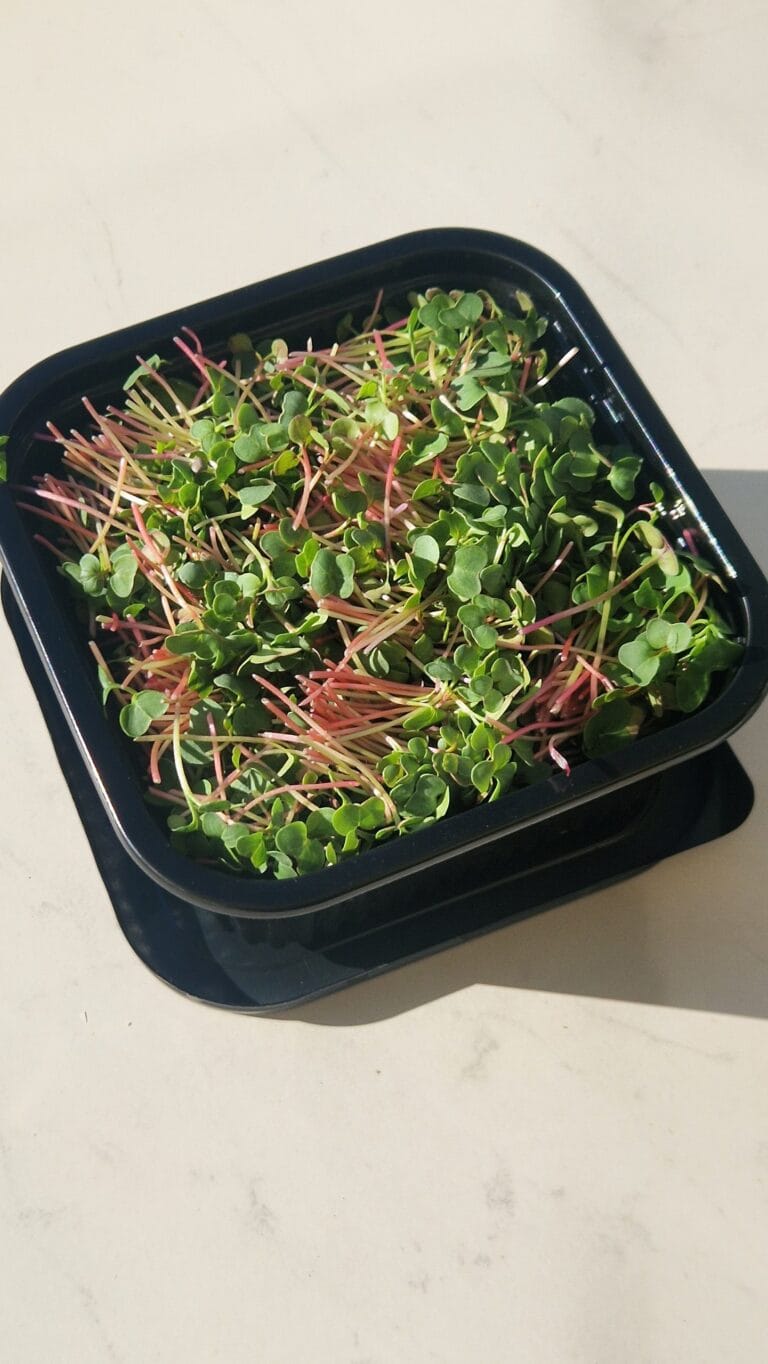


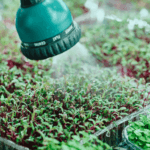

[…] Eat your skincare: vitamin C, collagen and microgreens […]
[…] Eat your skincare: vitamin C, collagen and microgreens […]
[…] Eat your skincare: vitamin C, collagen and microgreens […]