Get in touch
Questions about growing, workshops, the cooperative or partnerships? Send us a message and we will reply by email.
Prefer email? Write to erasmus@evec.org.gr
EVEC Microgreens
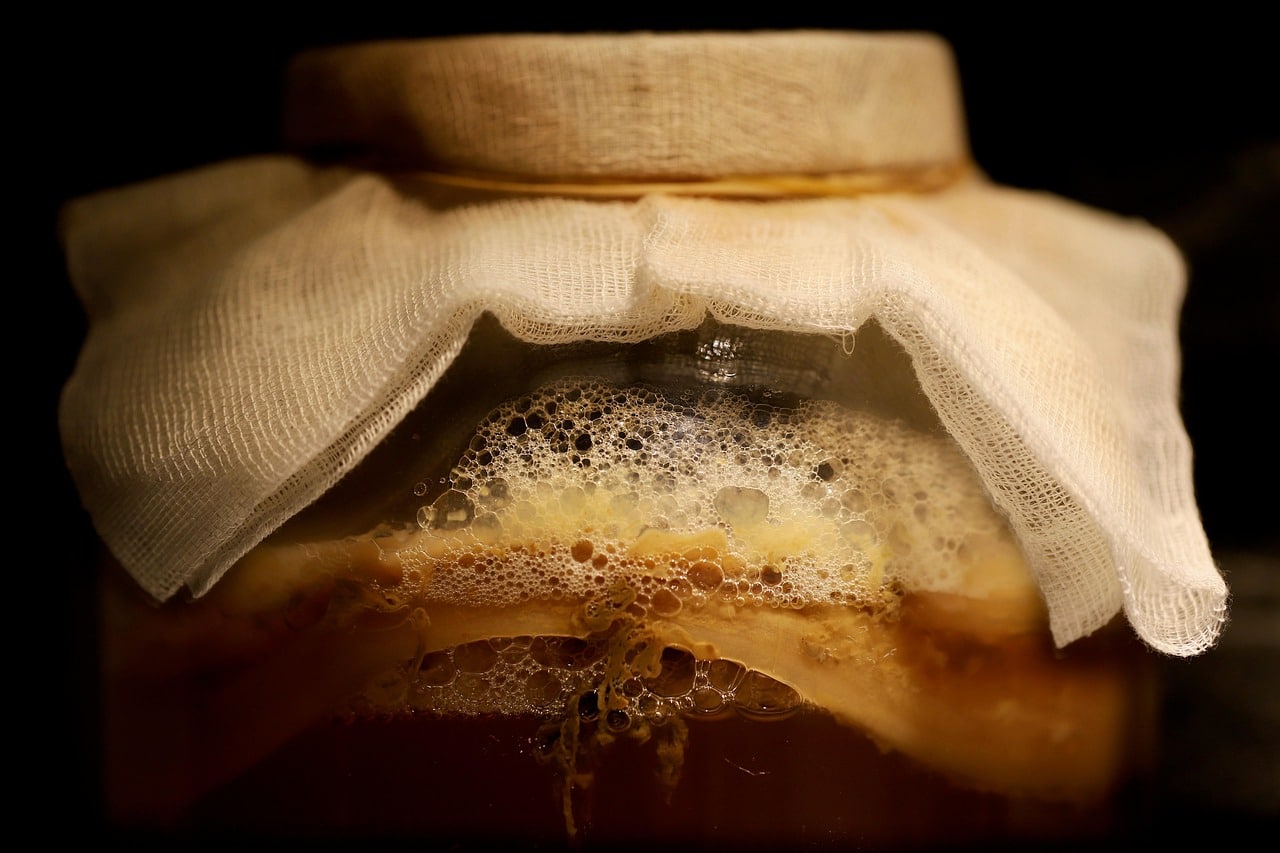
What fermentation does to microgreens: research on radish microgreen beverages and gut microbiota metabolites, plus kimchi-style ferments that extend shelf life.
In recent years, a new trend has emerged that takes the many properties of microgreens one step further: fermentation. This process, known for centuries in the preservation of foods such as sauerkraut or kimchi, is now being applied to microgreens to create ingredients with new flavors and nutritional benefits.
Fermentation is a biological process in which microorganisms, mainly bacteria and yeasts, transform the sugars present in foods into organic acids, gases, or other compounds.
When applied to vegetables, this process can profoundly modify their chemical and sensory composition. During fermentation, the plant’s cell walls are partially broken down, organic acids and bioactive compounds are produced, and beneficial microorganisms develop.
These changes can improve digestibility and create new flavor profiles. In some cases, fermentation can also modify the nutritional content of the food, increasing certain compounds or reducing others depending on the vegetable and the process used.
In the case of microgreens, fermentation is currently being explored both in plant-based products and in functional beverages.
The use of microgreens in fermented foods is beginning to be studied from a scientific perspective. For example, recent research has analyzed the use of radish microgreens in fermented beverages, evaluating how fermentation variables affect flavor, stability, and nutritional composition.
Other work has shown that compounds present in microgreens are transformed during digestion and fermentation. A 2025 multi-omics study put Brassica microgreens through simulated gastrointestinal digestion followed by large-intestine fermentation and found that they shaped gut microbiota and metabolite profiles in a species-related manner — different Brassica species, different outcome. Two things are worth saying plainly about that study: it is a laboratory model, not a feeding trial in people, and it tested fresh microgreens through a fermentation step, not microgreens that had been fermented as a food.
These findings point to a possible role for fermented microgreens within the growing field of functional foods.
Beyond the scientific field, fermenting microgreens also opens up interesting culinary possibilities.
Some of the applications that are starting to be explored include kimchi style ferments made with mixes of microgreens; fermented sauces and pastes made with mustard, radish, or cabbage sprouts; fermented beverages enriched with microgreens; and condiments or relishes with acidic, vegetal flavors.
The result is often an ingredient with more complex flavors that combine acidic, vegetal, and slightly umami notes.
For chefs and microgreen producers, these processes can also help extend the product’s shelf life, an important aspect given that fresh microgreens are highly perishable.
One of the most promising aspects of fermented microgreens is their possible impact on gut health.
Fermentation generates live bacteria and organic acids, and a 2022 study in Scientific Reports that fermented a set of common vegetables found measurable shifts in their nutrient, mineral and biocomponent profiles. What we cannot tell you — and will not imply — is that eating fermented microgreens improves gut health in people. No trial has tested that. The honest position is that the ingredients are promising and the outcome is unmeasured.
Since microgreens already contain a high concentration of antioxidants, vitamins, and phytochemicals, fermenting them could enhance their role as functional foods within health oriented diets.
Although the fermentation of microgreens is still an emerging practice, everything suggests that it is a field with great potential both for research and gastronomy.
The combination of fast-growing crops, high nutritional value, and traditional fermentation techniques opens new possibilities for developing innovative products, from functional beverages to fermented condiments used in haute cuisine.
As interest in fermented foods and functional ingredients continues to grow, fermented microgreens may become an increasingly visible trend within the world of healthy eating and contemporary gastronomy.
In July 2026 we removed two entries from this list — a kitchen-equipment shop’s blog and a wellness blog. Neither was a source for anything on this page that the peer-reviewed references below do not cover, and neither meets our editorial standards.
García-Pérez, P., Tomas, M., Giuberti, G., Capanoglu, E., Callegari, M. L., Lucini, L., & Patrone, V. (2025). Brassica microgreens shape gut microbiota and functional metabolite profiles in a species-related manner: A multi-omics approach following in vitro gastrointestinal digestion and large intestine fermentation. Microbiological Research, 298, 128226. https://doi.org/10.1016/j.micres.2025.128226 (paywalled; abstract free at the publisher)
Vučetić, A., Šovljanski, O., Pezo, L., Gligorijević, N., Kostić, S., Vulić, J., & Čanadanović-Brunet, J. (2025). A comprehensive antioxidant and nutritional profiling of Brassicaceae microgreens. Antioxidants, 14(2), 191. https://www.mdpi.com/2076-3921/14/2/191
Kiczorowski, P., Kiczorowska, B., Samolińska, W., Szmigielski, M., & Winiarska-Mieczan, A. (2022). “Effect of fermentation of chosen vegetables on the nutrient, mineral, and biocomponent profile in human and animal nutrition”. Scientific Reports, 12, 13422. https://www.nature.com/articles/s41598-022-17782-z
Gunjal, M., Khalangre, A., Singh, J., Ercisli, S., & Rasane, P. (2025). “Novel approach for development and optimization of microgreens-based functional dairy beverage: antioxidant enhancement, consumer acceptability, and kinetic shelf-life modeling”. Food Chemistry: X, 28, 102559. https://pmc.ncbi.nlm.nih.gov/articles/PMC12159483/
This article is part of the free knowledge portal of EVEC Microgreens. Wherever you are on your microgreens journey, there is a path for you:
Co-funded by the European Union.
This portal presents the microgreens methodology; the organisation behind it is EVEC Athens — the European Voluntary and Educational Center (evec.org.gr). Views and opinions expressed are those of the author(s) only and do not necessarily reflect those of the European Union or the European Commission. Neither the European Union nor the granting authority can be held responsible for them.
Open licence. Except where stated otherwise, the educational materials on this portal are licensed under CC BY 4.0 — free to use, adapt and share, including commercially, with credit. See the licence terms.
Accessibility. We aim for WCAG 2.1 AA and publish what does and does not yet meet it — see the accessibility statement. If anything here blocks you, tell us and we will send the material in a format that works for you.