Get in touch
Questions about growing, workshops, the cooperative or partnerships? Send us a message and we will reply by email.
Prefer email? Write to erasmus@evec.org.gr

EVEC Microgreens
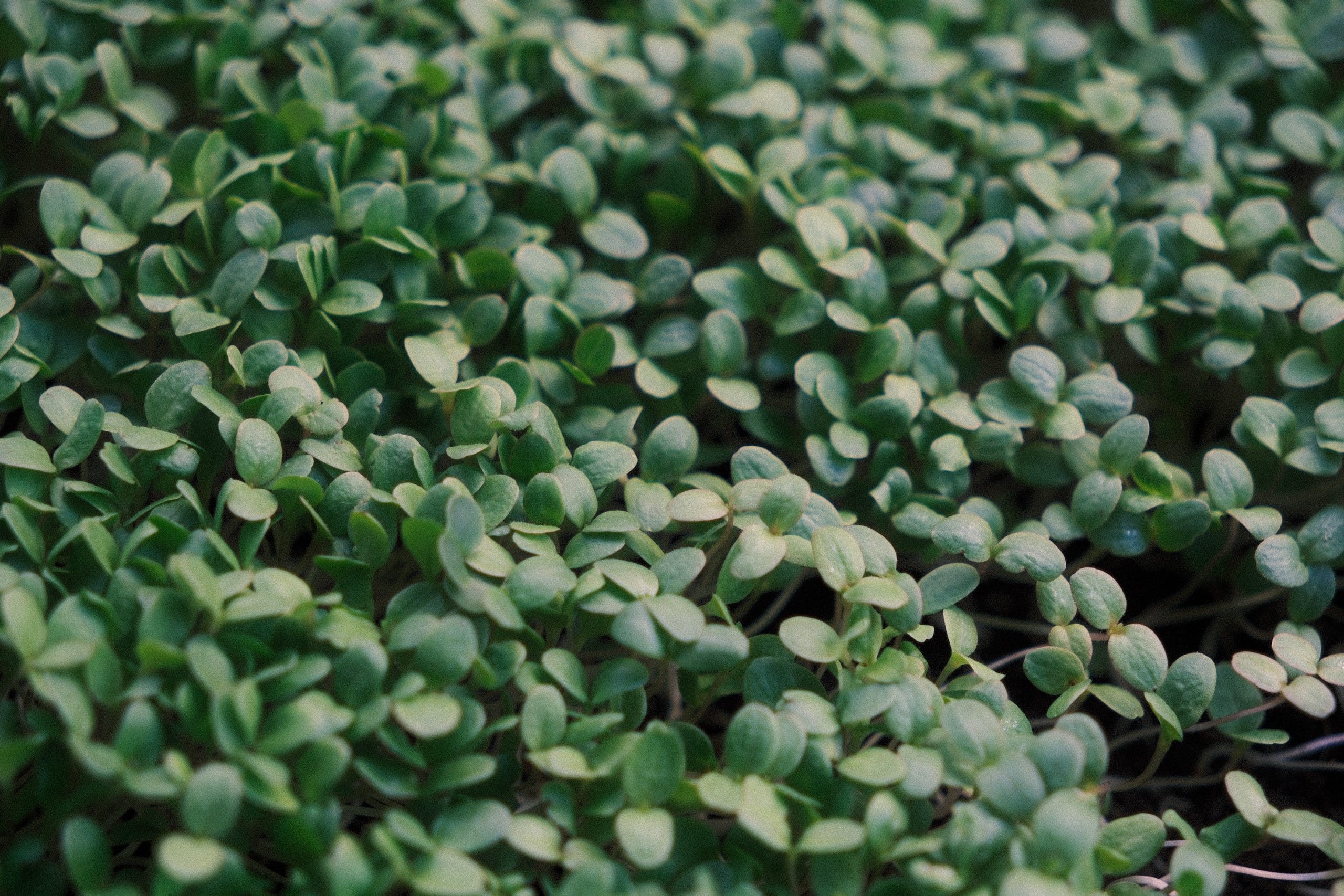
Fenugreek microgreens are a fast, beginner-friendly crop with an earthy, curry-like flavour and gentle maple sweetness. Learn to soak, grow and harvest them.
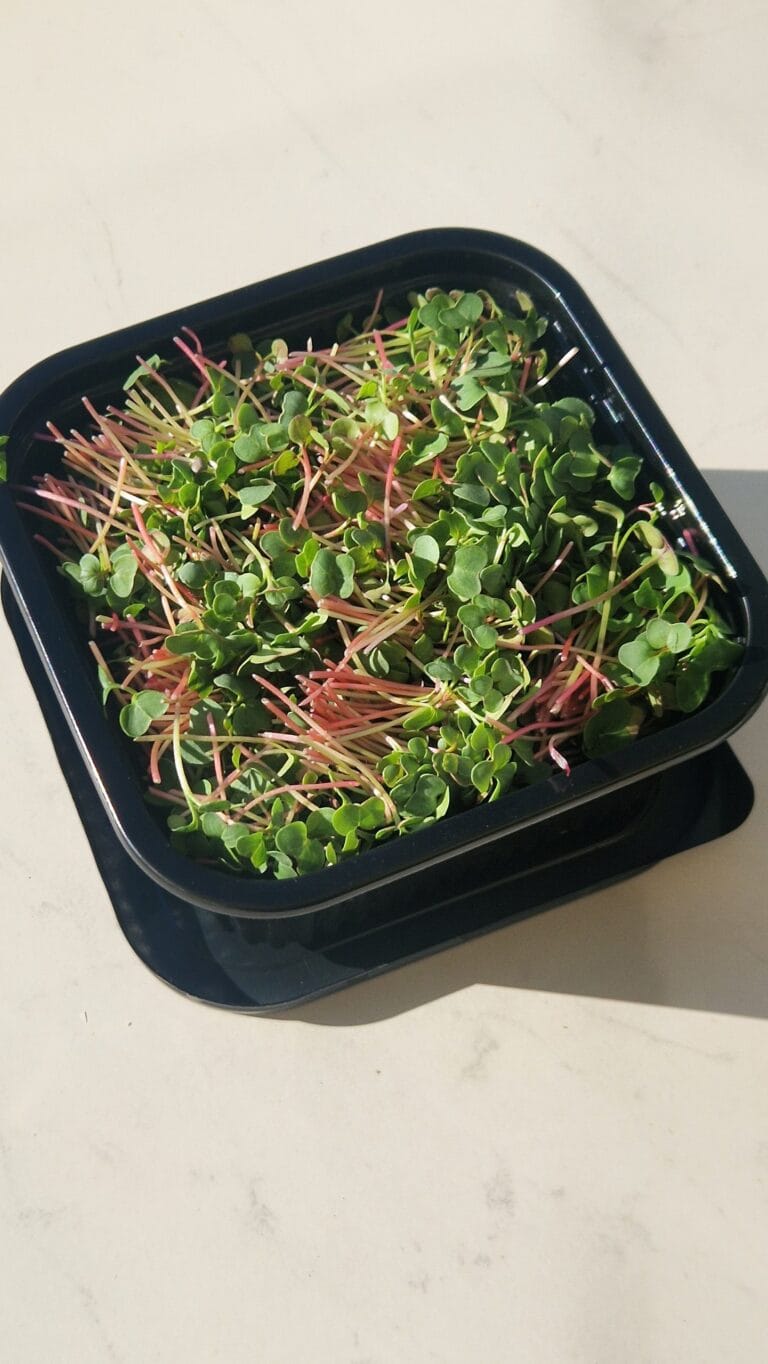
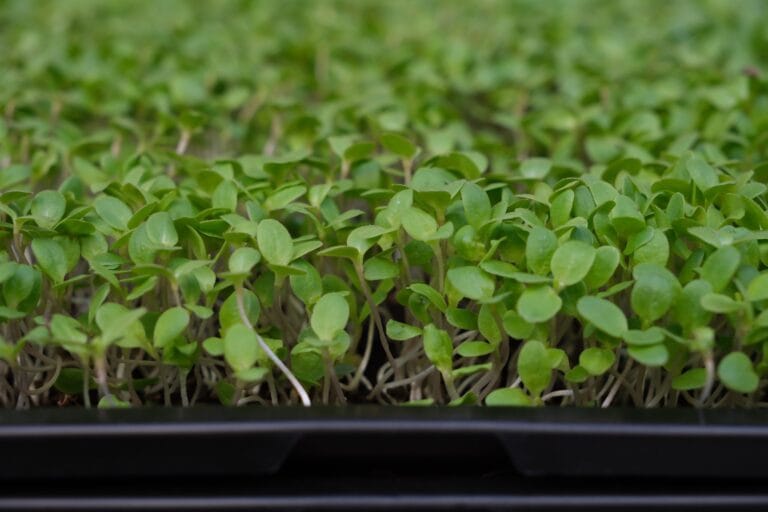
Fenugreek microgreens (Trigonella foenum-graecum) are one of the quickest and most rewarding crops a beginner can try. Grown from the same small golden seeds used to flavour South Asian curries, they carry a warm, earthy, faintly bitter taste with a subtle maple-like sweetness — far milder and greener than the dried spice. They germinate readily, need only a short soak and a few days in the dark, and are ready to cut within a couple of weeks, which makes them a genuinely satisfying introduction to growing your own greens at home.
The first reason is flavour. Fenugreek — known as methi in South Asian kitchens — is hard to find fresh outside specialist shops, yet a single tray on a windowsill gives you a steady supply of tender, aromatic leaves for a fraction of the cost of a supermarket punnet.
It is also genuinely forgiving. Fenugreek is a legume, so the seeds are vigorous and germinate quickly, and the crop needs no special equipment: a shallow tray, a little compost or coir, and a bright spot are enough. It makes a good next step once you have a crop or two under your belt — browse our Grow at Home hub for more beginner-friendly greens to grow alongside it.
Finally, it is fast. Most trays are ready in eight to twelve days, so you can keep a rolling supply going with very little wasted effort. Sow a fresh tray every week or two and you will rarely be without a handful.
| Seed soaking | 4–8 hours (a short soak; some growers skip it) |
| Germination | 2–4 days |
| Blackout (dark) period | 3–4 days |
| Ready to harvest | 7–11 days (some growers cut from day 5–8) |
| Difficulty | Easy |
| Flavour | Earthy and mildly bitter, curry-like with a subtle maple sweetness |
Buy only food-grade, untreated fenugreek seed from a supplier that tests for pathogens, and keep everything scrupulously clean — the warm, moist soak is exactly the condition bacteria like. Fenugreek seed has a real food-safety history: it was traced as the source of a serious 2011 E. coli outbreak in sprouts. Growing in soil and cutting above the soil line is lower-risk than sprouting, but clean seed and good hygiene still matter. One more note: fenugreek is a traditional uterine stimulant — normal culinary amounts as a garnish are considered low-risk, but if you are pregnant, check with your doctor before eating it in quantity.
Harvest once the stems reach about 5–8 cm and the first pair of leaves has opened, usually between day eight and day twelve. Cut just above the soil line with clean scissors, taking only what you need — fenugreek turns noticeably more bitter the longer it is left, so it is best cut on the young side. Some pale seed husks may cling to the leaves; brush them off gently or give the greens a quick rinse.
Fenugreek microgreens are best eaten fresh. If you need to store them, pat the cut greens dry, seal them in an airtight container lined with a piece of kitchen paper, and keep them in the fridge, where they hold for up to about a week. Cutting them dry rather than wet makes a real difference to how long they last.
The flavour is unmistakably fenugreek — warm, savoury and a little bitter — but softened into something fresh and leafy. Scatter them over dal, curry or a bowl of rice just before serving, where they echo the spice without the intensity of dried methi. They also lift flatbreads, whether folded through a paratha dough or sprinkled on top after baking.
Beyond South Asian cooking they work well stirred through yoghurt or a raita, tucked into a cheese sandwich, or used as a slightly bitter counterpoint in a mixed salad. Because heat dulls their aroma, add them at the end rather than cooking them in.
Fenugreek is one of those crops that quickly earns a permanent place in the rotation: fast, cheap and full of character. Once you are comfortable with it, other soaked legume crops follow the same rhythm.
Related: Chickpea microgreens · Protein-rich microgreens: pea, lentil, chickpea and sunflower
Studies from our Science Library that concern fenugreek microgreens, in plain language with links to the original research. This list updates automatically as new studies are added.
No studies specific to this crop yet — browse the full Science Library.
Recipes and kitchen ideas from our cookbook team that use fenugreek microgreens.
No recipes for this crop yet — the cookbook has plenty to start with.
Growing a different crop next? Every variety has a guide like this one in the Varieties database.
This article is part of the free knowledge portal of EVEC Microgreens. Wherever you are on your microgreens journey, there is a path for you:
Co-funded by the European Union.
This portal presents the microgreens methodology; the organisation behind it is EVEC Athens — the European Voluntary and Educational Center (evec.org.gr). Views and opinions expressed are those of the author(s) only and do not necessarily reflect those of the European Union or the European Commission. Neither the European Union nor the granting authority can be held responsible for them.