Get in touch
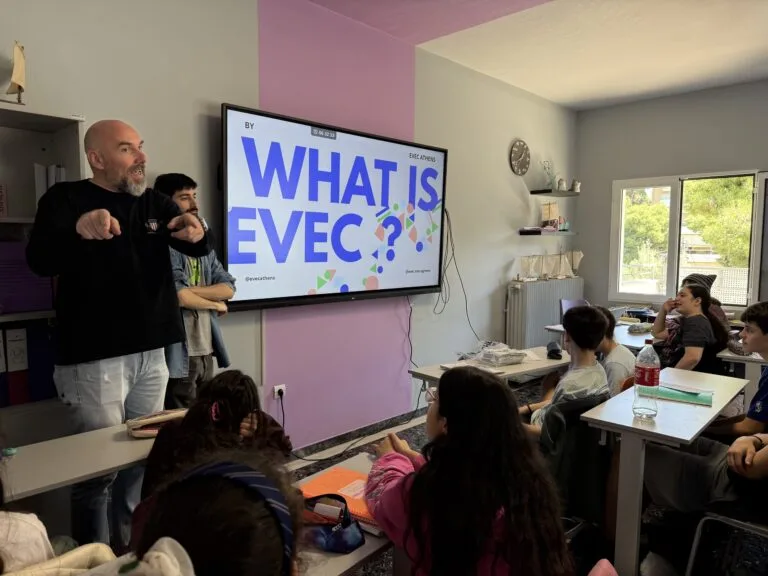
Questions about growing, workshops, the cooperative or partnerships? Send us a message and we will reply by email.
Prefer email? Write to erasmus@evec.org.gr
EVEC Microgreens
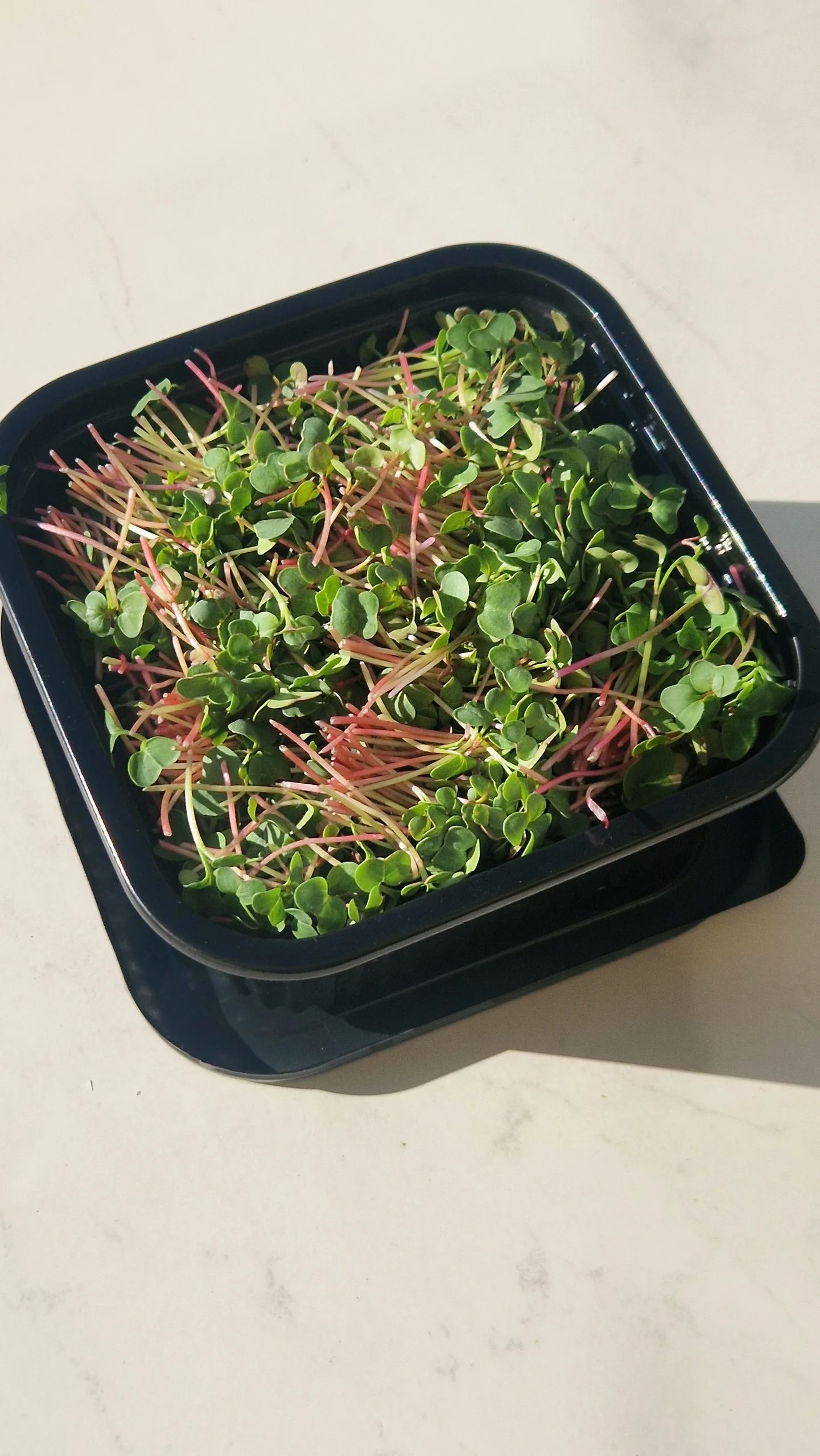
A free, self-paced course for aspiring microgreens entrepreneurs: master production, run the 10-day bootcamp, cost a tray honestly, find customers — and start without capital in Athens.
Type: Self-paced online course · Level: Beginner to first sale · Time: about 3 hours of reading plus one 10-day production cycle · Cost: Free · Status: Pilot version, feedback welcome
You can start a microgreens business with almost no capital — one of the few food businesses where that is true — but it is still a real business, with production discipline, food safety, costing and customers. This course walks you from your first tray to your first honest business plan, with no get-rich promises anywhere on the path.

Before you buy a single seed, understand the market you would be entering: who buys microgreens, what they pay for, and why freshness is the whole game. Read with a skeptic’s eye — the goal of this module is an informed decision, not enthusiasm.
Materials: Grow microgreens for business and the business library (market and selling articles first)
You are done when you can name your two most likely customer types and the main reason this might not work — and you still want to try.
Nobody buys from a grower who cannot grow. Run at least one full cycle with the 10-Day Guide, then pick two or three commercial crops from the Varieties database — fast, reliable movers like radish and pea are where most businesses start.
Materials: the 10-Day Growing Guide (open draft) and the Varieties database — start with radish and pea
You are done when you have harvested two consecutive trays of consistent quality from the same crop.
The Young Entrepreneurs toolkit is a ten-day bootcamp that joins daily growing practice with the business side: planning, finance, marketing and pitching. Work through it alongside a real production cycle — the tray on your shelf is your case study.
Materials: Microgreens Toolkit – Young Entrepreneurs (18–30) (open draft — your feedback shapes the final version)
You are done when you have a one-page business model you could explain to a stranger in two minutes.
Most microgreens businesses fail on arithmetic, not agronomy. Count everything one tray costs you — seed, medium, energy, packaging and, above all, your time — and only then set a price, from cost upwards rather than from hope downwards.
Materials: the costing and pricing articles in the business library, plus your own numbers from Modules 2 and 3
You are done when you know your cost per tray to the cent and the minimum price at which selling is worth your while.
Start smaller than feels ambitious: one chef, one café, one market stall, one weekly subscription box for neighbours. Freshness is your unfair advantage over any supermarket — sell greens harvested the same morning and let the product argue for you.
Materials: the selling and customer articles in the business library
You are done when one real person outside your family has paid real money for your greens.
If what stops you is money or space, this is the module that changes things: the Microgreens Cooperative in Athens offers a free growing space — no capital, no rent — with mentoring, for young people ready to build a real microgreens venture. Tell us who you are and what you want to build; you do not need a business plan to start the conversation.
Materials: The Microgreens Cooperative · Contact us · course feedback also very welcome
You are done when you have either sown your first commercial batch — or written to us to start one in Athens.
This course is an openly licensed (CC BY 4.0) educational resource of the microgreens methodology — VET providers and youth organisations are welcome to use it as work-based learning material. The organisation behind the methodology is EVEC Athens (evec.org.gr). See all courses or partner with us.
This article is part of the free knowledge portal of EVEC Microgreens. Wherever you are on your microgreens journey, there is a path for you:
Co-funded by the European Union.
This portal presents the microgreens methodology; the organisation behind it is EVEC Athens — the European Voluntary and Educational Center (evec.org.gr). Views and opinions expressed are those of the author(s) only and do not necessarily reflect those of the European Union or the European Commission. Neither the European Union nor the granting authority can be held responsible for them.
Open licence. Except where stated otherwise, the educational materials on this portal are licensed under CC BY 4.0 — free to use, adapt and share, including commercially, with credit. See the licence terms.
Accessibility. We aim for WCAG 2.1 AA and publish what does and does not yet meet it — see the accessibility statement. If anything here blocks you, tell us and we will send the material in a format that works for you.