Get in touch
Questions about growing, workshops, the cooperative or partnerships? Send us a message and we will reply by email.
Prefer email? Write to erasmus@evec.org.gr
EVEC Microgreens
A 2025 study compared calcium in six microgreens, including sunflower. A young volunteer looks at what was measured and what the result does and does not mean.
A short look at what one study found about calcium in sunflower microgreens, and what that result does and does not mean.
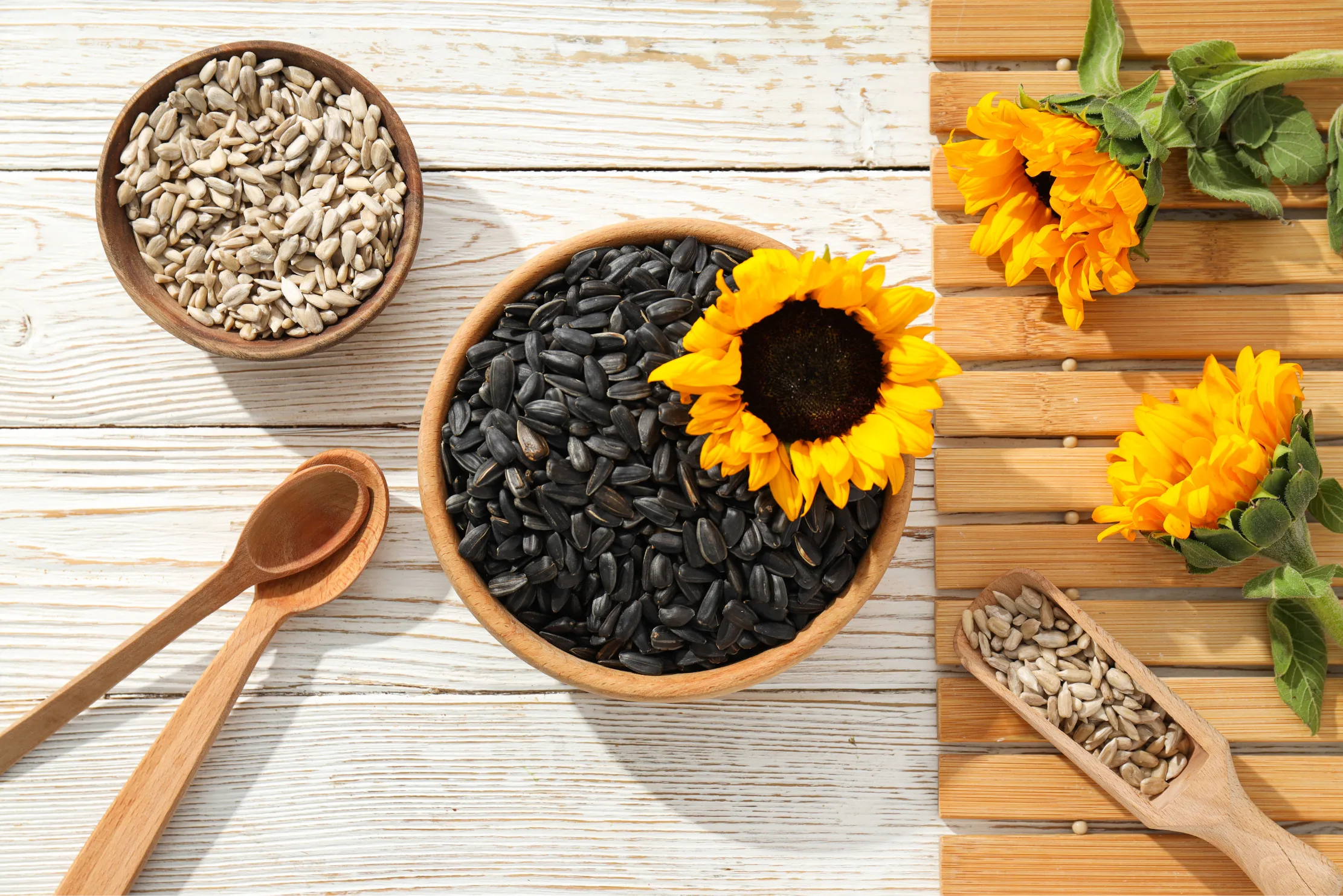
Have you ever looked closely at a sunflower? Its bright yellow color and round shape can remind us of the sun. But there is something even more interesting hiding inside what looks like one large flower. A sunflower head is actually made up of many small flowers arranged together. But the sunflower has another surprising side. It does not have to become a tall plant with a large flower before it can be eaten. When it is still very young, it can be harvested as a microgreen. Microgreens are young plants that are harvested at an early stage of growth.
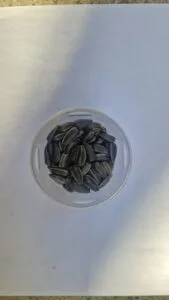
A group of researchers studied six different types of microgreens: broccoli, black radish, red beet, pea, bean and sunflower. They wanted to compare their nutritional contents.
One result was especially interesting. Sunflower microgreens had the highest calcium concentration among the six types studied. The researchers measured 145.29 milligrams of calcium in 100 grams of fresh sunflower microgreens.
But what does calcium in sunflower microgreens actually mean?
Calcium is one of the minerals found in food. Our bodies need minerals to carry out many normal functions. Calcium is especially well known for its role in bones and teeth.
The interesting part of this research is not simply the number. It is the fact that the sunflower plant was still very young when the researchers studied it. Even at this early stage, sunflower microgreens contained more calcium than the other five types in this comparison. This does not mean that sunflower microgreens are a magic food. It also does not mean that eating them alone can provide everything our bodies need. The researchers were comparing the nutritional contents of different microgreens, not testing them as a treatment for a disease.
The researchers grew the six types of microgreens under controlled conditions. Sunflower microgreens were grown at about 23°C, with 16 hours of light and 8 hours of darkness each day. Depending on the plant, the microgreens were harvested between 7 and 21 days after germination, when their first true leaves had developed.
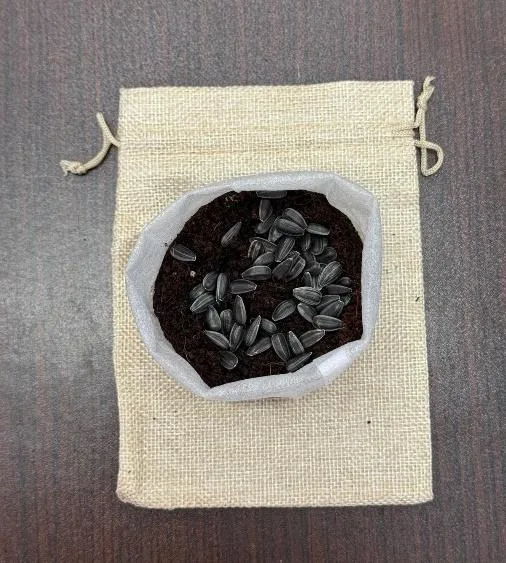
For me, the most surprising lesson is that a plant does not have to be large to be interesting. A tiny sunflower plant can already have a nutritional profile that scientists can measure and compare. The next time you see a large sunflower, you can remember that its story begins much earlier, when it is only a small plant. This research shows us why scientists study plants at different stages of growth: sometimes, a tiny plant can reveal something worth our attention.
Balık, S., Elgudayem, F., Daşgan, H.Y., Kafkas, N.E. & Gruda, N.S. (2025). Nutritional quality profiles of six microgreens. Scientific Reports, 15, 6213. https://doi.org/10.1038/s41598-025-85860-z
Read the open-access paper in the EVEC science library.
This article is part of the free knowledge portal of EVEC Microgreens. Wherever you are on your microgreens journey, there is a path for you:
Co-funded by the European Union.
This portal presents the microgreens methodology; the organisation behind it is EVEC Athens — the European Voluntary and Educational Center (evec.org.gr). Views and opinions expressed are those of the author(s) only and do not necessarily reflect those of the European Union or the European Commission. Neither the European Union nor the granting authority can be held responsible for them.
Open licence. Except where stated otherwise, the educational materials on this portal are licensed under CC BY 4.0 — free to use, adapt and share, including commercially, with credit. See the licence terms.
Accessibility. We aim for WCAG 2.1 AA and publish what does and does not yet meet it — see the accessibility statement. If anything here blocks you, tell us and we will send the material in a format that works for you.