Get in touch
Questions about growing, workshops, the cooperative or partnerships? Send us a message and we will reply by email.
Prefer email? Write to erasmus@evec.org.gr

EVEC Microgreens
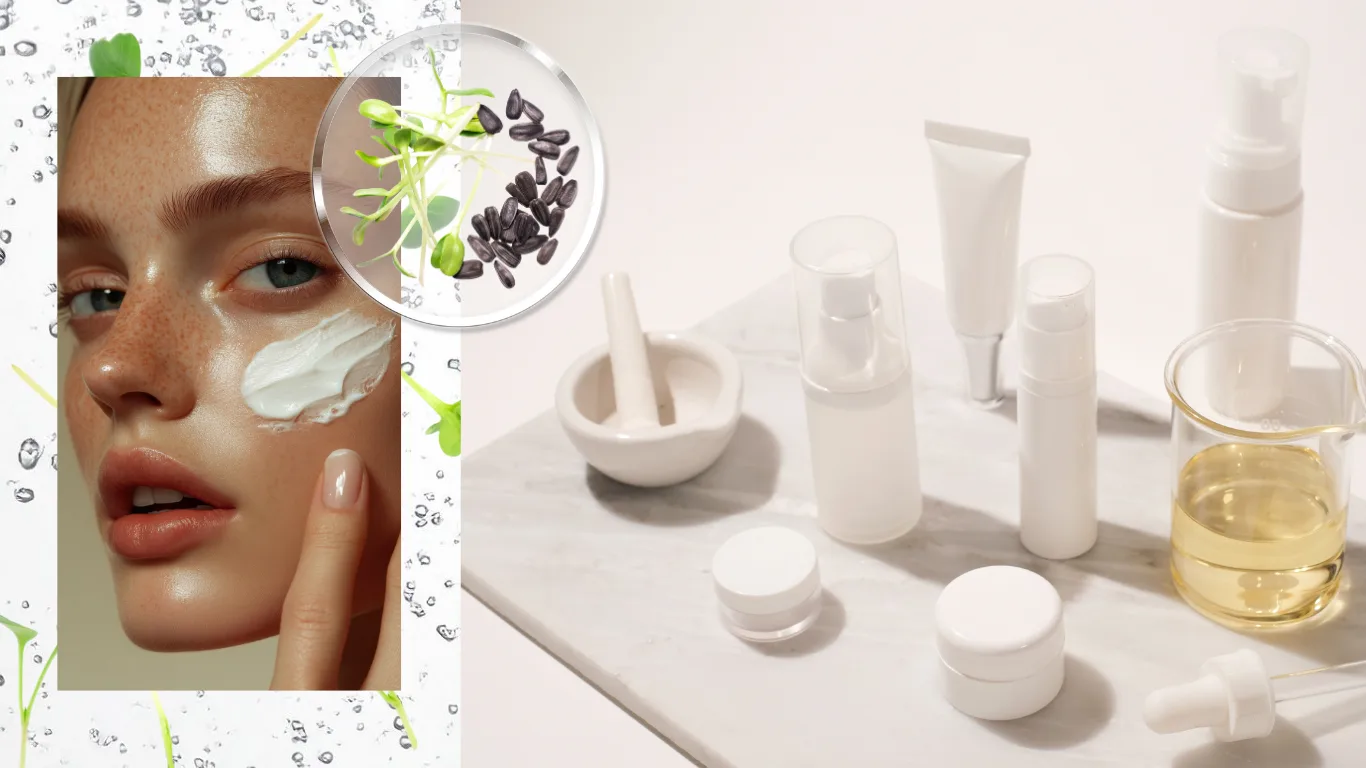
Part 3 of the beauty series: infused water with cucumber, lemon and microgreen stems, plus a face cream of olive oil, coconut oil and beeswax that keeps a month.
Summer is fading as September rapidly sets in and routine, that we couldn’t escape from, returns unapologetic as ever. But if there’s one thing we shouldn’t be sorry for, it’s neglecting our skin. As autumn brings cooler winds and drier weather, pay special attention and keep it protected and hydrated. Not sure how? Visit our latest posts where we shared face masks and toner recipes to get started. In this post, we are expanding your beauty routine by introducing microgreens-infused water and a diy hydrating face cream. Two more homemade cosmetics, on the same terms as the rest of this series: cheap, pleasant, and not sold to you as a treatment.
What we corrected in this article. This page used to say infused water “supports your skin from the inside out”, that microgreens make “glowing skin foods” an effortless part of your lifestyle, that a homemade face cream can “deliver a concentrated dose of vitamins, antioxidants, and essential nutrients that support skin health”, and that the result is “as moisturizing, nutrient-rich, and effective” as a shop-bought one. None of that was sourced, skin is a barrier that blended plant nutrients largely do not cross, and we have not tested this cream against anything. The recipes are unchanged. The same correction has been applied across all four parts of this series.
A recipe as easy as drinking water. If you can’t get enough of microgreens and their benefits, you can also infuse water with cucumber slices, lemon, and a few stems of microgreens for a drink that is more interesting than plain water and just as hydrating. Add mint, fruits or even tea, mix and match and have fun, create your own drink according to your preferences and allergies. Simple, isn’t it?
Adding microgreens to meals and snacks is a good habit for the ordinary reason that eating vegetables is a good habit — not because any of them is a “glowing skin food”.
Microgreens can be stirred into a homemade face cream, and the process is simple: make the oil-and-beeswax base, then add the strained microgreen water. What that gives you is a green-tinted moisturiser you made yourself. It is not a route for getting vitamins or antioxidants into your skin, and we are not going to describe it as one.
This recipe uses simple oils and easy to find ingredients instead of specialty or expensive butters and waxes. It will not be the same as a store-bought cream — it has no preservative system, it keeps about a month in the fridge, and we have not compared it with anything. It is an oil-and-beeswax balm you can make in a kitchen, which is the appeal.
Ingredients
Equipment needed:
Instructions
There’s a lot of people saying that the secret to having great skin is drinking water. Hydration matters, for the ordinary reasons hydration matters — but there is no secret here, and nothing on this page will change a complexion. What these two recipes are is a good use for a tray of greens.
That’s why, in our efforts to spread the diverse uses and benefits microgreens can bring, we hope you all find these beauty recipes useful and easy to follow. The fourth and final part, an exfoliant and serum you can make yourself, finishes this series of skincare products featuring microgreens so don’t forget to check it out! The earlier parts of the series are linked below, and if you have a question about any of these recipes you can reach us through our contact page.
Julia
“Eat your skincare: vitamin C, collagen and microgreens”
How to Incorporate Microgreens into your Beauty Routine: Microgreens-Infused Water and DIY Face Cream: Microgreen masks and Smoothie Booster – Part 1/4
How to Incorporate Microgreens into your Beauty Routine: Microgreens-Infused Water and DIY Face Cream: Microgreens Toner and Baths – Part 2/4
Health benefits of infused water
Beeswax and coconut oil face cream
DIY olive oil moisturizer
https://www.themakeyourownzone.com/diy-olive-oil-moisturizer
This article is part of the free knowledge portal of EVEC Microgreens. Wherever you are on your microgreens journey, there is a path for you:
Co-funded by the European Union.
This portal presents the microgreens methodology; the organisation behind it is EVEC Athens — the European Voluntary and Educational Center (evec.org.gr). Views and opinions expressed are those of the author(s) only and do not necessarily reflect those of the European Union or the European Commission. Neither the European Union nor the granting authority can be held responsible for them.
Open licence. Except where stated otherwise, the educational materials on this portal are licensed under CC BY 4.0 — free to use, adapt and share, including commercially, with credit. See the licence terms.
Accessibility. We aim for WCAG 2.1 AA and publish what does and does not yet meet it — see the accessibility statement. If anything here blocks you, tell us and we will send the material in a format that works for you.

[…] How to Incorporate Microgreens into your Beauty Routine: Microgreens-Infused Water & DIY Face Cr… […]