Get in touch
Questions about growing, workshops, the cooperative or partnerships? Send us a message and we will reply by email.
Prefer email? Write to erasmus@evec.org.gr
EVEC Microgreens
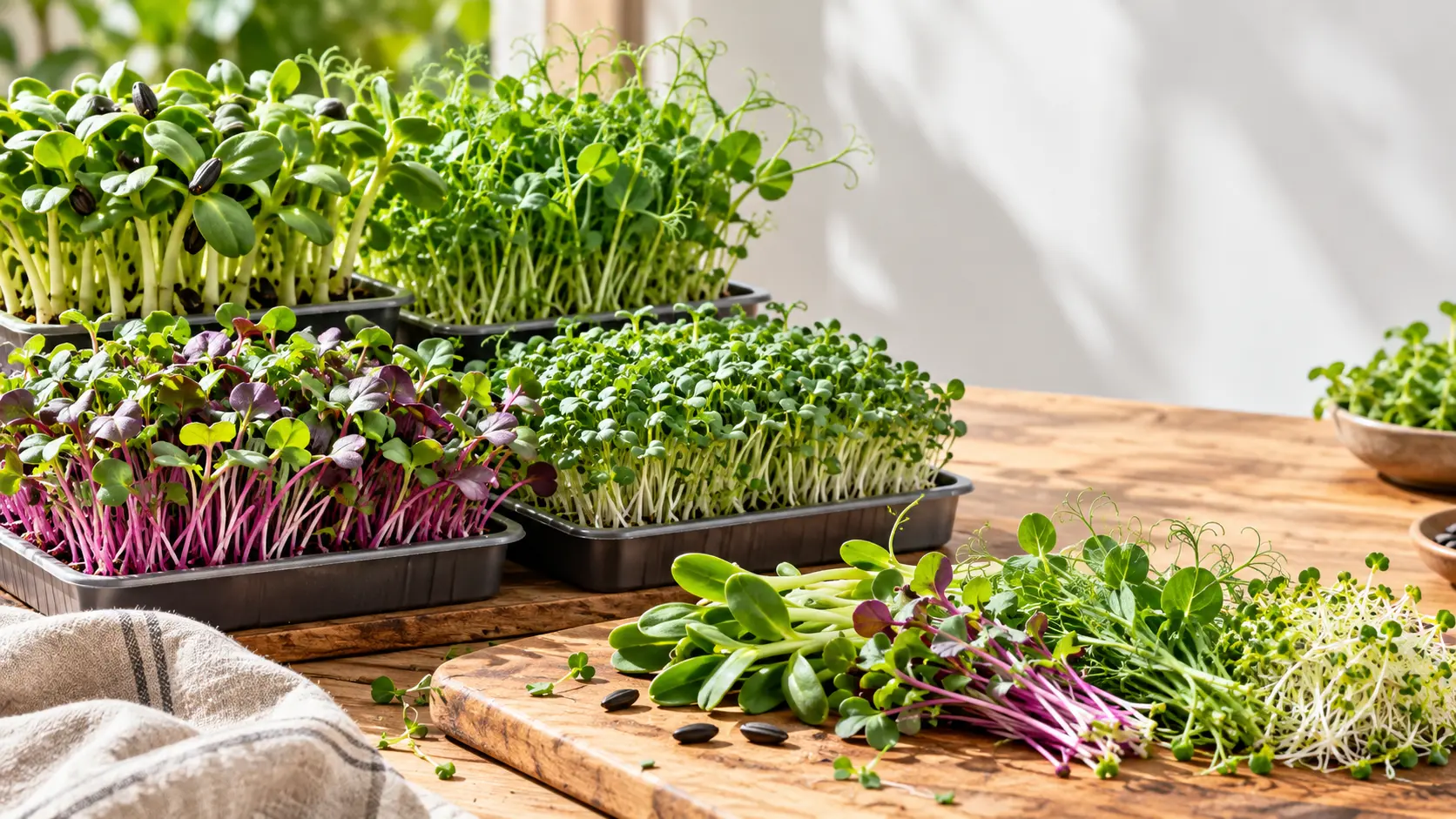
The "40 times more nutritious" line goes back to a 2012 study that measured only a few nutrients in 25 types of microgreens. Six later studies give a more mixed picture, and serving size changes it again.
Scroll through microgreens videos on TikTok and you will soon meet a big number. One sponsored post promises microgreens “up to 40x nutrient dense” compared with the grown-up vegetable. So are microgreens more nutritious, or is that just a good sales line?
The honest answer is: sometimes, for some nutrients, in some plants. Here is where the famous “40 times more nutritious” number comes from, and what scientists found when they looked again.
The claim goes back to a 2012 study. Researchers from the University of Maryland and the US Department of Agriculture measured vitamins C, E and K and beta-carotene in 25 types of microgreens, including red cabbage, cilantro and basil.
The university’s press release said the microgreens contained “four to 40 times” more nutrients than their mature counterparts. That phrase has travelled around the internet ever since.
But three details usually get lost:
So “4 to 40 times” was a range across different plants and vitamins, not a promise for every microgreen.
The EVEC science library holds several studies that compared microgreens with the adult plant directly. Their results are mixed, and that is the point.
A 2017 US study grew broccoli microgreens three ways and compared their minerals with mature broccoli. Microgreens grown in compost had, on average, 1.73 times as much (73% more) of eight common minerals. But microgreens grown hydroponically, in water, scored 0.86 and 0.95, which is slightly less than the mature vegetable (Weber, 2017).
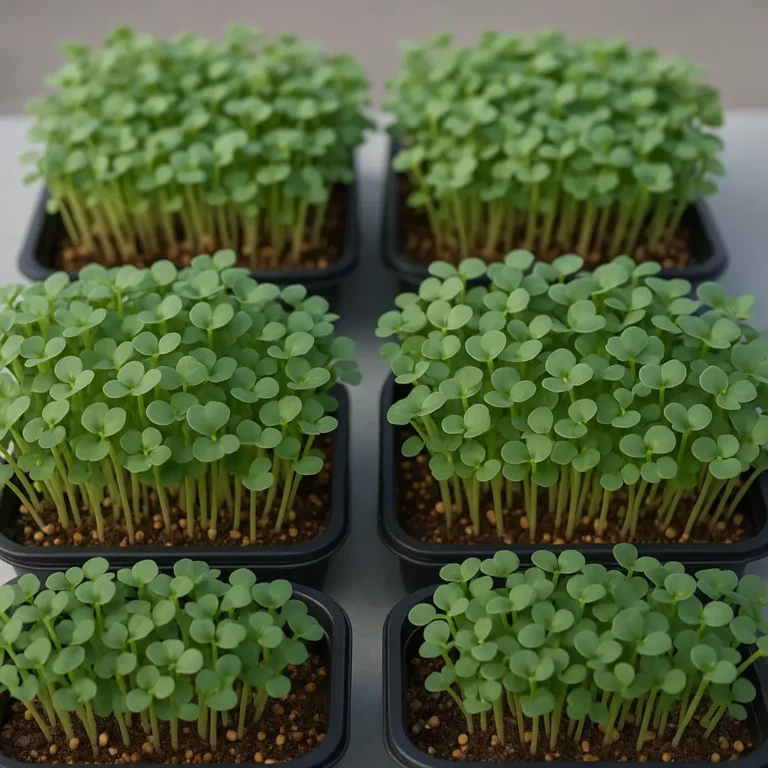
A 2020 study compared iron in fenugreek, rocket and broccoli. Mature fenugreek and rocket contained more iron than their microgreens. Iron from mature fenugreek and broccoli was also easier to release during a simulated digestion. Only fenugreek microgreens beat their adult version in a cell test of iron uptake (Khoja et al., 2020).
Coriander microgreens had more phenols, flavonoids and protein than mature leaves. But mature leaves had more vitamin C, chlorophyll and carotenoids (Dhakshayani & Priya, 2022).
In Perilla (also called shiso), total phenolic content and antioxidant power increased as the leaves grew up. The microgreens’ main advantage was their distinctive smell (Dimita et al., 2022).
A 2025 Polish study compared radish sprouts, microgreens and roots. Microgreens were richest in soluble fibre, organic acids and minerals. Sprouts had the most protein. Roots had less fat, fewer calories and more carbohydrates (Kajszczak et al., 2025).
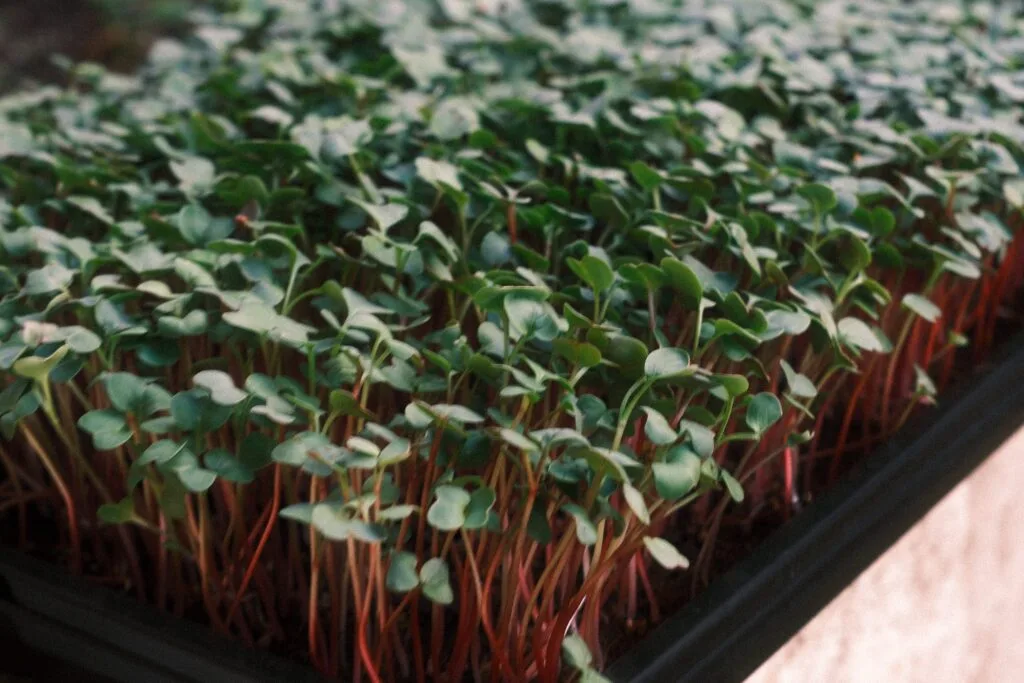
An Italian study of broccoli, chicory and lettuce microgreens found more vitamin E (α-tocopherol) and carotenoids than reported for the mature vegetables (Paradiso et al., 2018).
The studies are not contradicting each other. They measured different things:
Here is the part most videos skip. The 2017 broccoli study did the maths. Even for its best microgreens, the compost-grown ones, you would need about 53 g to get the same minerals as a 91 g serving of raw broccoli florets (Weber, 2017). That is a big handful, far more than a garnish.
A sprinkle on a sandwich is probably only a few grams (our estimate). Microgreens are a tasty addition to vegetables, not a replacement for them.
Next time you see “40 times more nutritious” or another big number, ask four questions:
Not as a rule: microgreens are not 40 times more nutritious across the board. The famous range came from one 2012 study that measured only a few nutrients in 25 types, and later studies found mixed results.
Gram for gram, some microgreens lead on some nutrients. Plate for plate, they are a tasty addition to vegetables, not a replacement.
This article is part of the free knowledge portal of EVEC Microgreens. Wherever you are on your microgreens journey, there is a path for you:
Co-funded by the European Union.
This portal presents the microgreens methodology; the organisation behind it is EVEC Athens — the European Voluntary and Educational Center (evec.org.gr). Views and opinions expressed are those of the author(s) only and do not necessarily reflect those of the European Union or the European Commission. Neither the European Union nor the granting authority can be held responsible for them.
Open licence. Except where stated otherwise, the educational materials on this portal are licensed under CC BY 4.0 — free to use, adapt and share, including commercially, with credit. See the licence terms.
Accessibility. We aim for WCAG 2.1 AA and publish what does and does not yet meet it — see the accessibility statement. If anything here blocks you, tell us and we will send the material in a format that works for you.