Get in touch
Questions about growing, workshops, the cooperative or partnerships? Send us a message and we will reply by email.
Prefer email? Write to erasmus@evec.org.gr
EVEC Microgreens
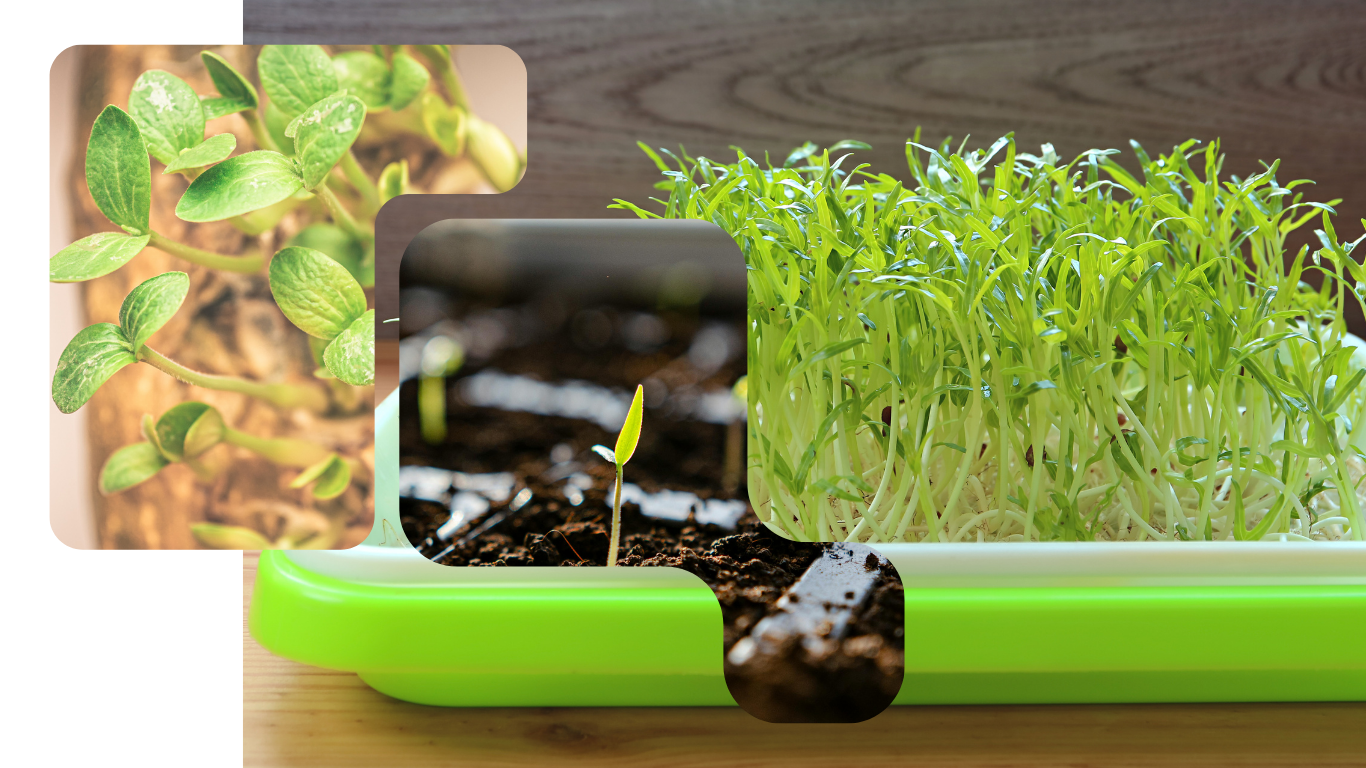
The three main growing systems for microgreens — soil, hydroponics and coconut fibre — compared on cost, cleanliness and results, so you can choose the right one.
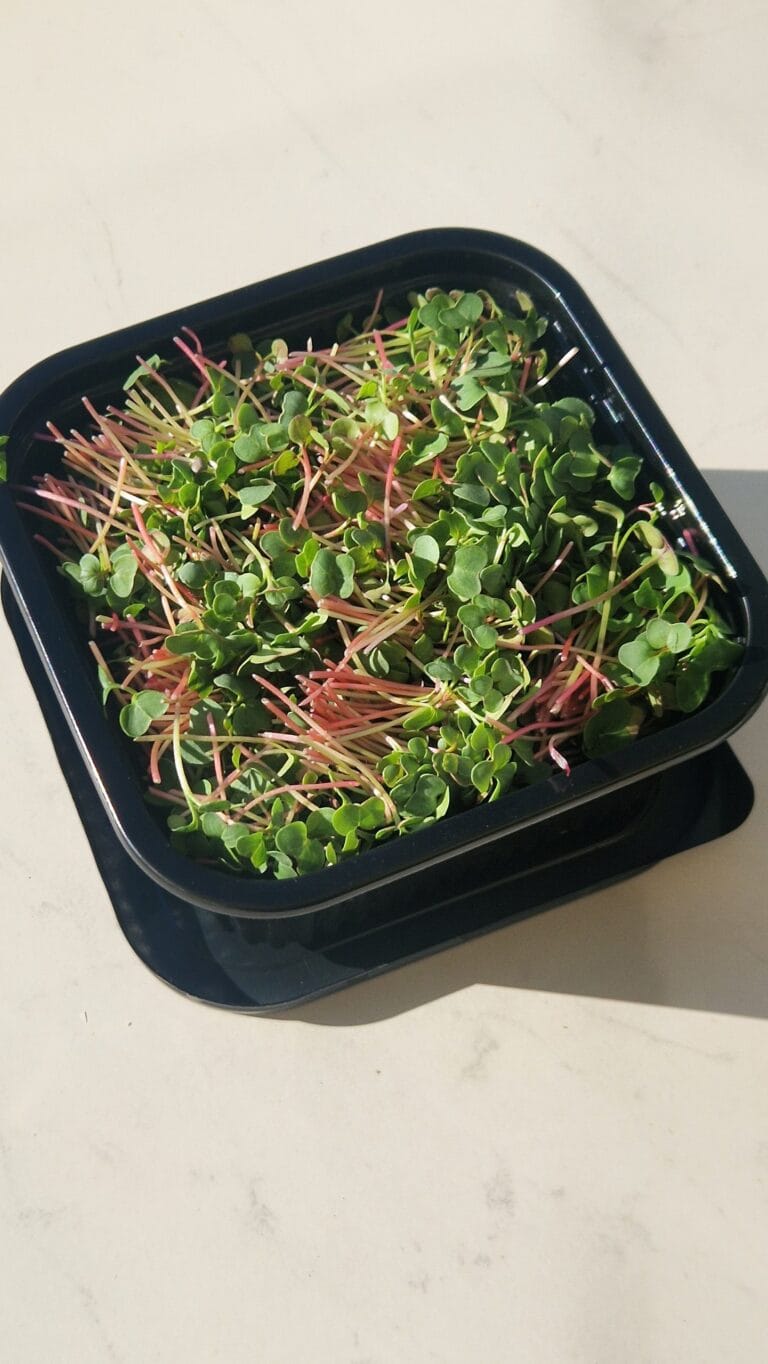
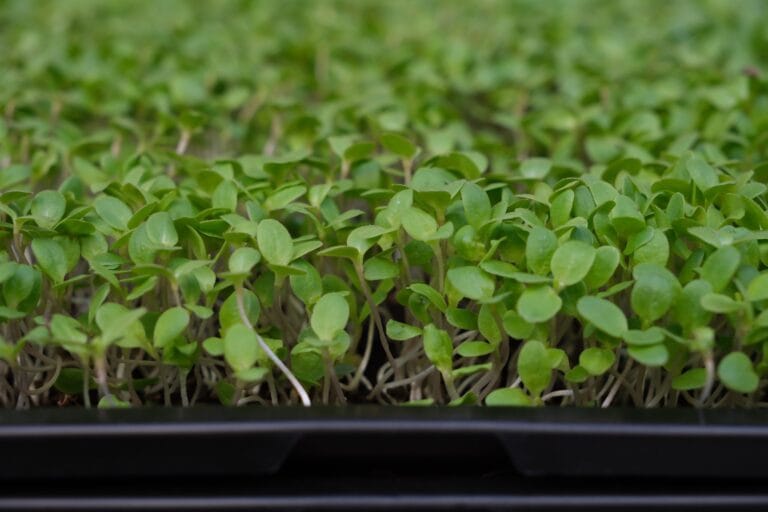
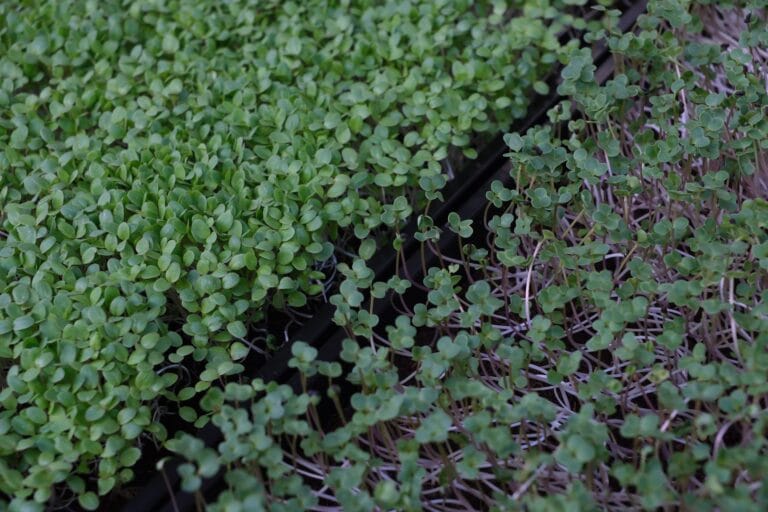
Choosing a growing system means trading yield, nutritional quality, sustainability and production cost against each other — the four dimensions this article compares. The three most common methods are soil based growing, hydroponics, and substrate based systems such as coconut fiber (coir). We use coconut fiber to grow our microgreens, but we also alternate between different methods. Which system suits a crop depends on the crop — the crop database gives sowing and harvest detail species by species.
The oldest and most widespread method for producing microgreens is soil cultivation. According to a study published in the Journal of Advanced Applied Scientific Research, this system offers a good physical structure and a natural supply of micronutrients, while also being accessible for small scale producers and home growers.
However, it also presents some significant drawbacks:
Therefore, soil is a good choice for home or local production but becomes less manageable when precision or large scale production is required.
The hydroponic system, based on nutrient solutions without soil, has gained popularity in microgreen production. The research Growing Hydroponic Microgreens. A New Class of Vegetable Food Revolution highlights that hydroponics allows for more precise control over nutrients, moisture, and overall cleanliness of the growing environment.
The main advantages of this method include:
However, there are also disadvantages:
According to various studies, hydroponically grown microgreens tend to display more intense colors and a softer texture, although some species may contain slightly lower mineral levels compared to those grown in soil.
Coconut fiber has become one of the most efficient and sustainable substrates. Derived from coconut industry byproducts, it provides excellent water retention and aeration, which promotes root development and reduces the risk of fungal growth.
The study Comparative Study on Nutrients of Microgreens Cultivated in Soil, Water and Coco Pith from the Journal of Advanced Applied Scientific Research concluded that microgreens grown in coco pith achieved better results in growth and chlorophyll concentration, while maintaining equal or superior nutritional levels compared to other systems.
Additionally, coir is an eco friendly option since it repurposes natural waste and avoids the use of peat, a non renewable resource.
As we can see, both hydroponics and coconut fiber systems achieve better results in yield and hygiene than traditional soil, although their initial costs and technical complexity can be limiting factors. Even so, soil based cultivation remains a suitable option for home or rural producers, where simplicity and low cost are more important than technical precision.
That’s all for today, friends.
As always, we hope you found this article useful.
See you next time!
Carlota
Bhaswant, M. (2023). Microgreens — A comprehensive review of bioactive molecules and health benefits. https://pmc.ncbi.nlm.nih.gov/articles/PMC9864543/
Dubey, S., Harbourne, N., Harty, M., Hurley, D., & Elliott-Kingston, C. (2024). Microgreens production: Exploiting environmental and cultural factors for enhanced agronomical benefits. Plants, 13(18), 2631. https://www.mdpi.com/2223-7747/13/18/2631
Growing hydroponic microgreens – A new class of vegetable food revolution. Retrieved from https://www.researchgate.net/publication/361322654_Growing_Hydroponic_Microgreens_-_A_New_Class_of_Vegetable_Food_Revolution
Thapa, U., & Kundu, S. (2025). A review on sustainable microgreen cultivation for urban farming with minimal resources. Journal of Scientific Research and Reports, 31(8), 613-621. https://www.journaljsrr.com/index.php/JSRR/article/view/3405
This article is part of the free knowledge portal of EVEC Microgreens. Wherever you are on your microgreens journey, there is a path for you:
Co-funded by the European Union.
This portal presents the microgreens methodology; the organisation behind it is EVEC Athens — the European Voluntary and Educational Center (evec.org.gr). Views and opinions expressed are those of the author(s) only and do not necessarily reflect those of the European Union or the European Commission. Neither the European Union nor the granting authority can be held responsible for them.
Open licence. Except where stated otherwise, the educational materials on this portal are licensed under CC BY 4.0 — free to use, adapt and share, including commercially, with credit. See the licence terms.
Accessibility. We aim for WCAG 2.1 AA and publish what does and does not yet meet it — see the accessibility statement. If anything here blocks you, tell us and we will send the material in a format that works for you.