Get in touch
Questions about growing, workshops, the cooperative or partnerships? Send us a message and we will reply by email.
Prefer email? Write to erasmus@evec.org.gr
EVEC Microgreens
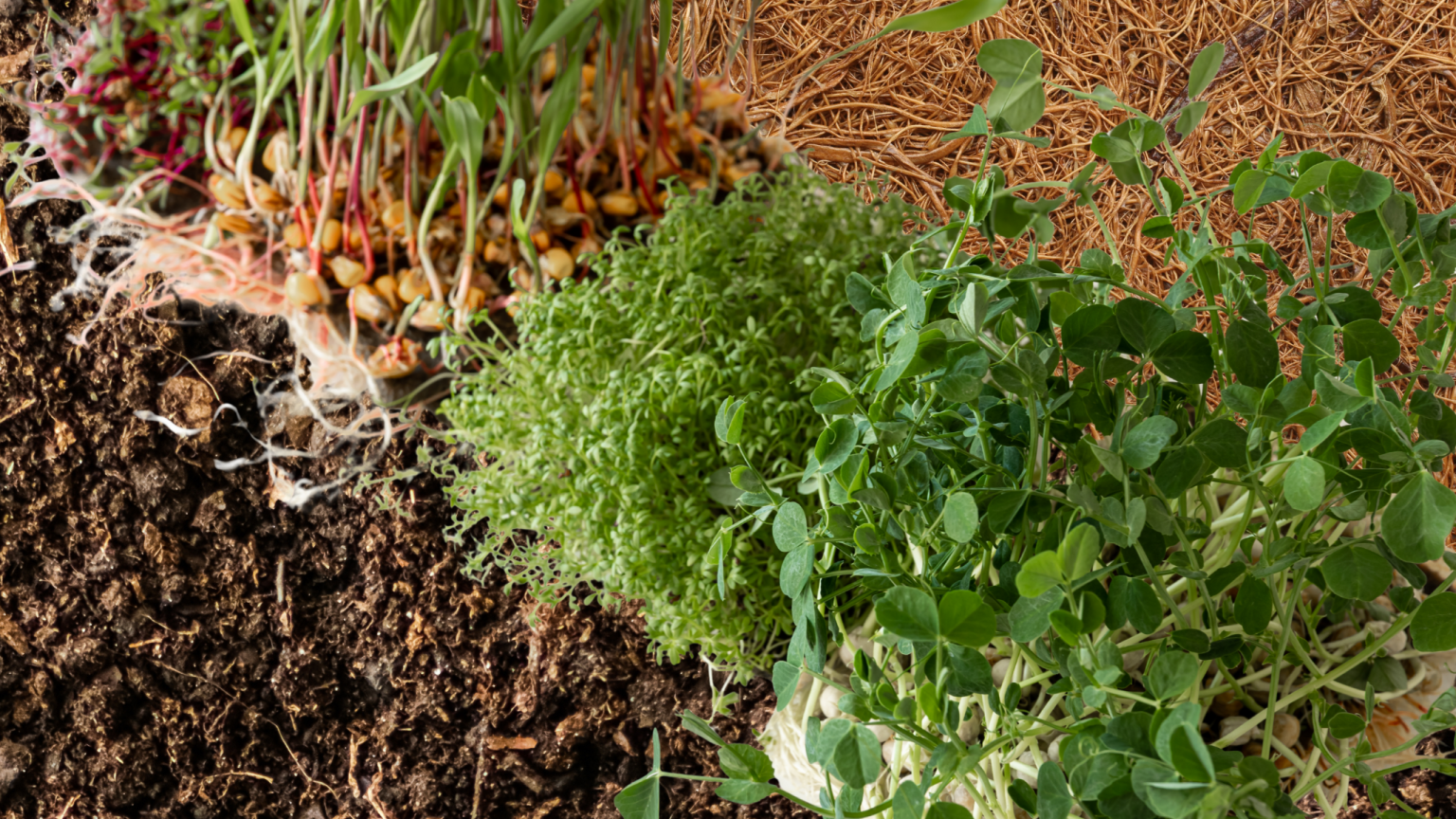
What this project actually is: free open-licensed courses, crop guides and a science library that reports findings honestly — and the health claims we removed.
This page explains how we think about microgreens and a healthy lifestyle: as a teaching project, not a health programme. Healthy habits are easier to keep up when they are attached to something concrete you can grow and eat, and that is the observation this project started from. What we publish is a body of free, openly licensed teaching material built around one crop that almost anyone can grow in a week or two on a windowsill — microgreens.
What we actually publish is free online courses, a crop database, step-by-step growing guides and a Science Library that reports what the published research says — including the places where the evidence is thin, contested, or simply absent. Everything we write ourselves is released under CC BY 4.0 so that teachers, trainers and youth workers can reuse and adapt it; third-party material we include — photographs, illustrations, embedded media and the open-access research we summarise — stays under its own licence, as set out in our Terms of Use. We do not promise health outcomes, and when we get something wrong we say so on the page itself.
According to Reverso’s English dictionary, a healthy lifestyle is:
“A way of living that promotes good health.”
In everyday terms that usually means:
That is a description of a way of living, not a claim about any particular food. Microgreens are one small, cheap, fast ingredient that can sit inside it.
We asked our team what a healthy lifestyle means to them. The conclusion? It’s not just about diet or fitness. It’s about building sustainable habits that support your whole being.
A healthy lifestyle means practicing daily self-care, making smart food choices, staying physically active, and creating time for rest and reflection. It includes taking care of our mental well-being, surrounding ourselves with a supportive environment, and feeling good — both in body and soul.
We believe that time is essential. Health also means having time for yourself — to grow, to relax, and to recharge. That is a value we hold, not a research finding, and we have kept it on this page as such.
Our project is more than just ideas — we work with the crop we write about. That’s why we:
We believe in leading by example and showing how small steps can bring big changes.
If you’re asking, “What are microgreens?”, here’s a simple answer:
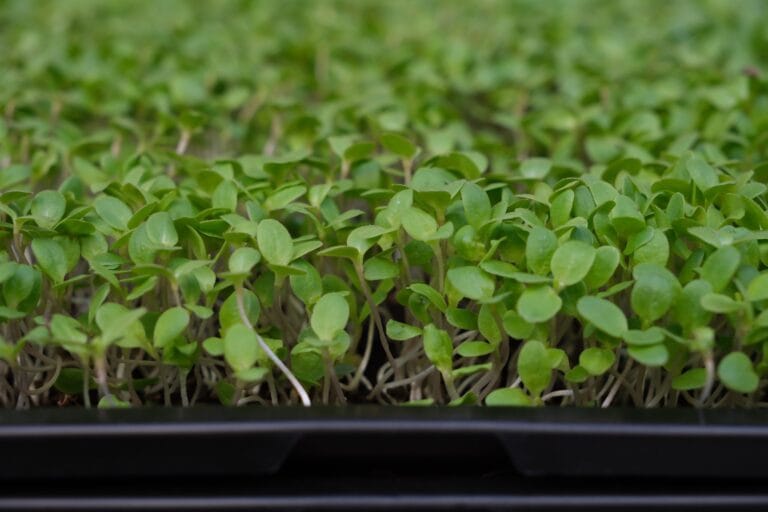
Microgreens are the young, edible seedlings of vegetables and herbs. They’re harvested 7–21 days after germination and are:
Those three properties — small, fast, cheap — are why we build teaching material around them. Here is where the project puts them to work:
Curious how to grow your own? Check out our Microgreens Growing Guide
Join us as we work through what is known about microgreens, what is still open, and how to grow them well. Everything here is free to use and free to reuse.
Read what the research actually says — our Science Library
Take a free course at the EVEC Microgreens Academy
General healthy-eating guidance from Harvard Health — an independent source, not ours
Karolina
Updated 30 July 2026. An earlier version of this page said “promoting superfoods — especially microgreens — as a simple yet powerful way to improve health”, that our material would help you “feel better and live longer”, that we use microgreens in meals “to improve health”, and it listed “health & disease prevention” and “beauty and skincare routines” among the roles microgreens play. We have removed all of that. “Superfood” is a marketing word with no scientific or regulatory meaning. We have no evidence that eating microgreens extends anyone’s life, prevents any disease or improves anyone’s skin, and none of those statements carried a source. Nothing has been left as a gap: the rest of this page now describes what the project does instead of what we hoped it would achieve. See our editorial standards.
This article is part of the free knowledge portal of EVEC Microgreens. Wherever you are on your microgreens journey, there is a path for you:
Co-funded by the European Union.
This portal presents the microgreens methodology; the organisation behind it is EVEC Athens — the European Voluntary and Educational Center (evec.org.gr). Views and opinions expressed are those of the author(s) only and do not necessarily reflect those of the European Union or the European Commission. Neither the European Union nor the granting authority can be held responsible for them.
Open licence. Except where stated otherwise, the educational materials on this portal are licensed under CC BY 4.0 — free to use, adapt and share, including commercially, with credit. See the licence terms.
Accessibility. We aim for WCAG 2.1 AA and publish what does and does not yet meet it — see the accessibility statement. If anything here blocks you, tell us and we will send the material in a format that works for you.