Get in touch
Questions about growing, workshops, the cooperative or partnerships? Send us a message and we will reply by email.
Prefer email? Write to erasmus@evec.org.gr
EVEC Microgreens
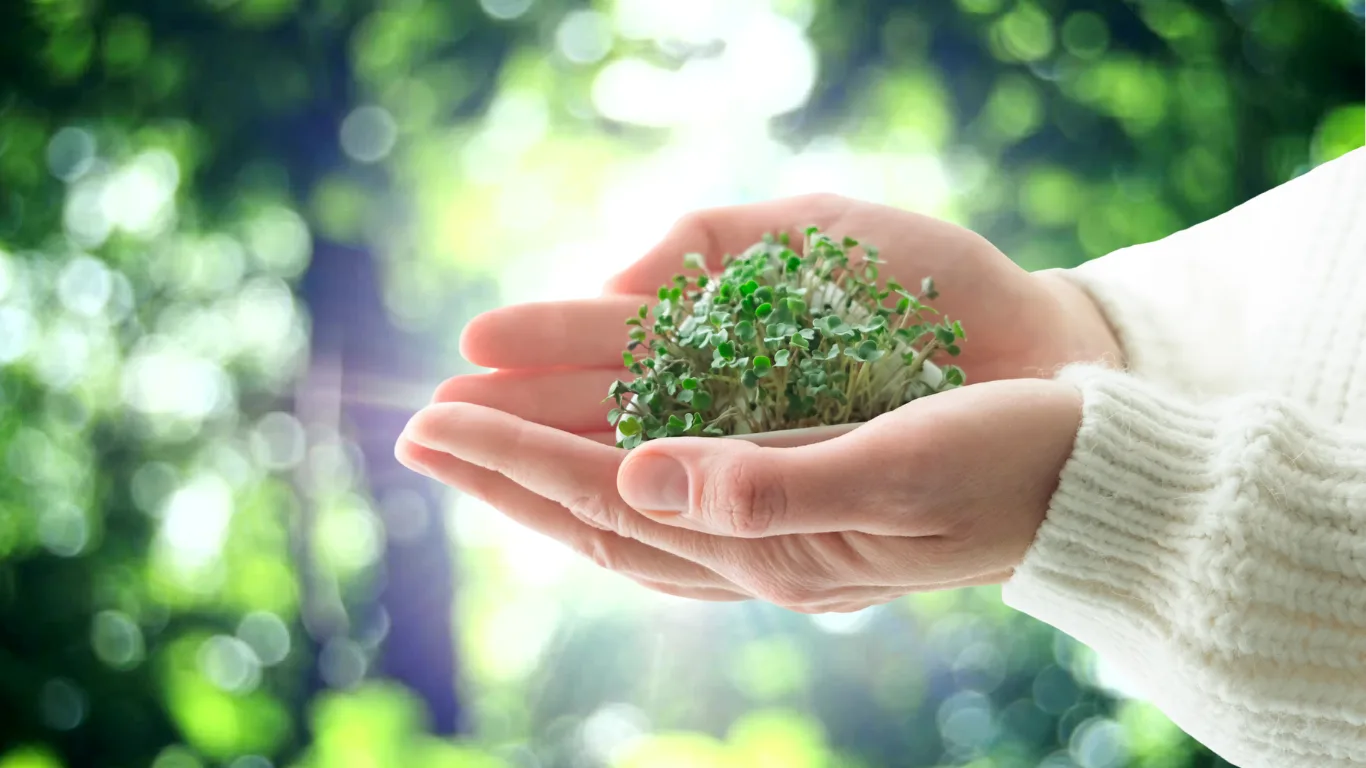
What microgreens actually cost in water, energy and waste — and why the figures this page used to quote for that did not hold up.
The environmental case for microgreens is mentioned in passing across this library but rarely set out on its own. This article does that, looking at what the crop costs in water, energy and waste next to conventional production. It was prompted by an article published by the seed vendor MP Seeds.
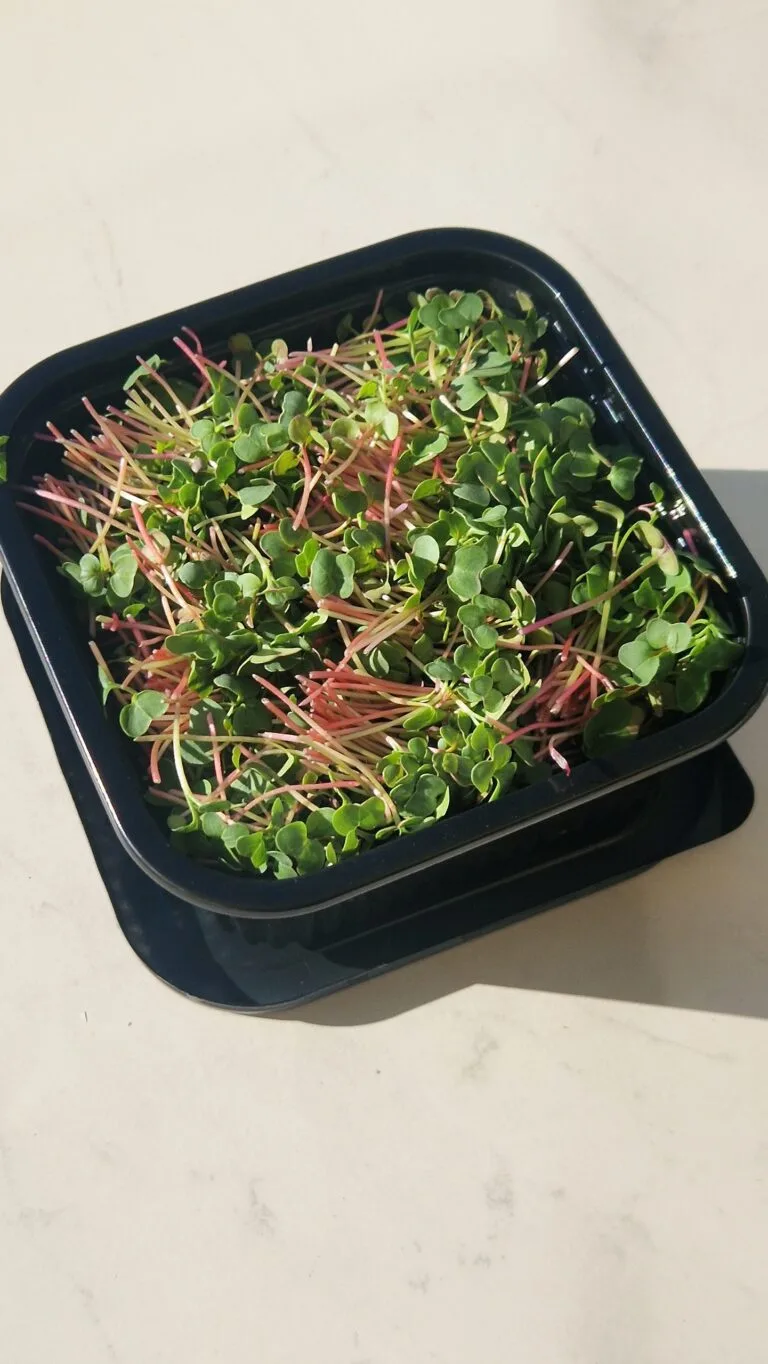
In short, microgreens are a small crop with a modest environmental case: they can be grown close to where they are eaten, on a windowsill, a balcony or a kitchen counter, which removes the transport for whatever share of your greens you grow yourself.
Thanks so much, friends, for joining us once again. See you in the next article!
Carlota
Weber, C. F. (2017). Broccoli microgreens: A mineral-rich crop that can diversify food systems. Frontiers in Nutrition, 4, 7. https://doi.org/10.3389/fnut.2017.00007
Correction note, 14 August 2026: this page previously said that microgreens “use up to 90% less water compared to traditional crops”, that LED lights “consume up to 75% less energy than traditional bulbs”, and that producing one kilo of beef “can generate almost 100 kg of CO₂ equivalent” while microgreens “require much less energy and produce significantly fewer greenhouse gases”. All three rested on a single seed-vendor article, none could be verified, and all three have been removed. The water claim also contradicted our own sustainability and microgreens and cereal microgreens articles, which already scope the water advantage to Weber (2017)’s broccoli-specific extrapolation. The energy section claimed the opposite of what those pages say about indoor growing, and now matches them. See our editorial standards.
This article is part of the free knowledge portal of EVEC Microgreens. Wherever you are on your microgreens journey, there is a path for you:
Co-funded by the European Union.
This portal presents the microgreens methodology; the organisation behind it is EVEC Athens — the European Voluntary and Educational Center (evec.org.gr). Views and opinions expressed are those of the author(s) only and do not necessarily reflect those of the European Union or the European Commission. Neither the European Union nor the granting authority can be held responsible for them.
Open licence. Except where stated otherwise, the educational materials on this portal are licensed under CC BY 4.0 — free to use, adapt and share, including commercially, with credit. See the licence terms.
Accessibility. We aim for WCAG 2.1 AA and publish what does and does not yet meet it — see the accessibility statement. If anything here blocks you, tell us and we will send the material in a format that works for you.