Get in touch
Questions about growing, workshops, the cooperative or partnerships? Send us a message and we will reply by email.
Prefer email? Write to erasmus@evec.org.gr
EVEC Microgreens
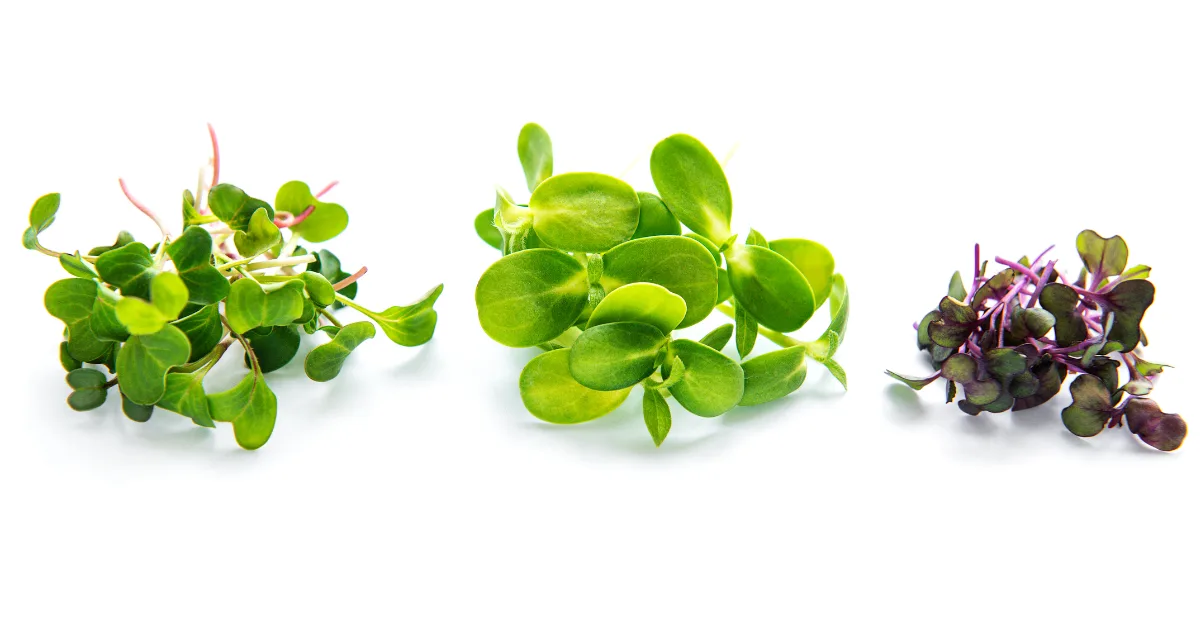
Microgreen powder is not magic and not a scam. Drying keeps protein, most minerals and some vitamins, but loses part of the vitamin C and some B vitamins, and freeze-drying protects more than heat.
Scroll through social media and you will find microgreen powder sold in pouches and capsules, often with claims that it is “up to 40 times” more nutritious. So is microgreen powder a smart shortcut, or an expensive way to buy dried leaves? Several studies in the EVEC science library have tested what drying does to microgreens. Here is what they found.
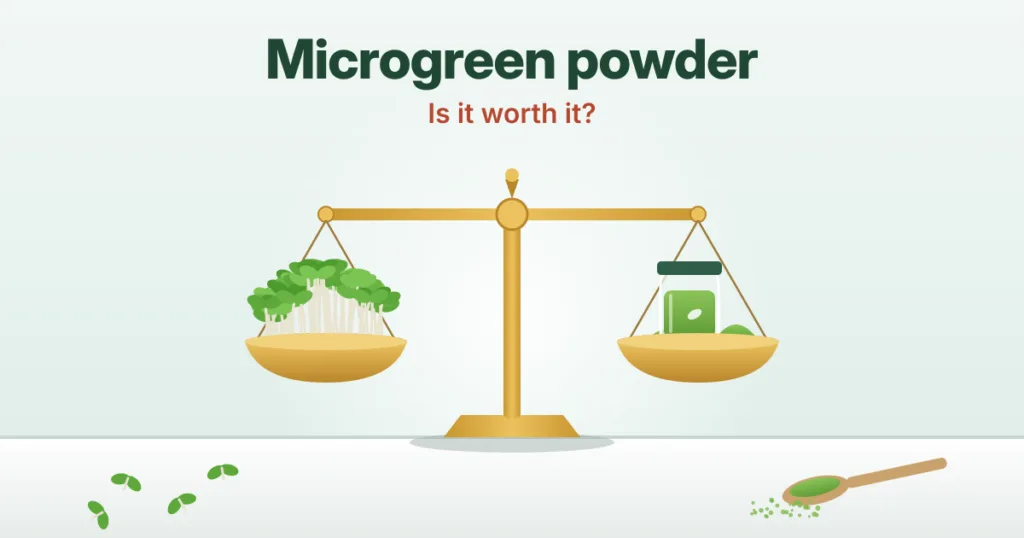
A US study measured how much of each microgreen is dry matter, the part left when water is removed. Broccoli microgreens were only 3.9% dry matter, radish 4.1%, red cabbage 5.0% and sunflower 9.4% (Di Gioia et al., 2023).
Turn that around and you get a handy rule ⚠️ (our calculation): 1 g of broccoli or radish powder comes from about 25 g of fresh microgreens, and 1 g of sunflower powder from about 11 g. So a 5 g scoop could, in theory, hold the solids of 50–125 g of fresh microgreens. That is more than most people eat in a day.
“In theory” is the key phrase. What matters is how much survives the drying.
The clearest test comes from Penn State. Researchers dried radish microgreens with hot air at 45, 65 or 95 °C and compared them with freeze-dried ones (Jauregui et al., 2025).
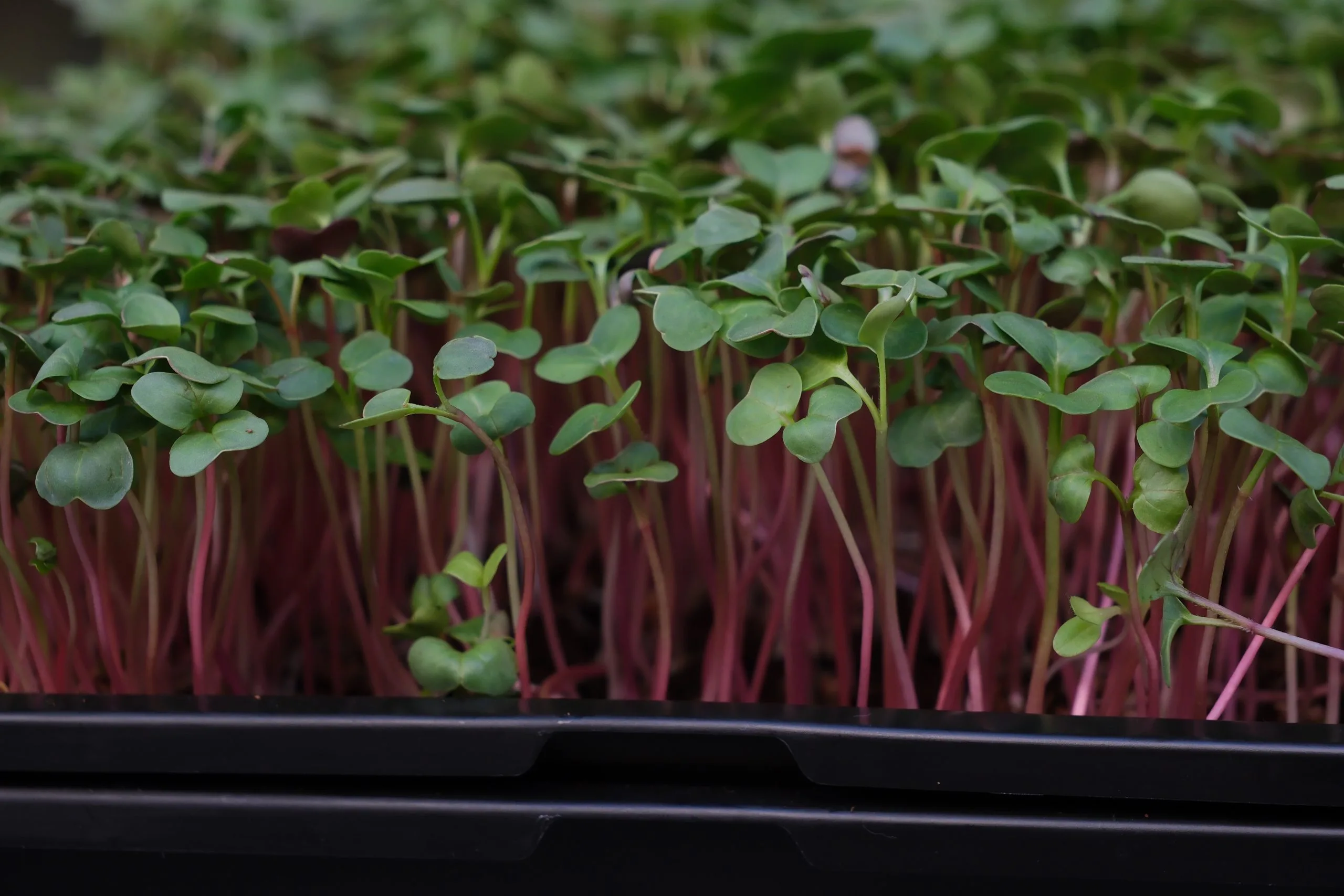
The team also measured how much of each nutrient a digestion test could release, called “bioaccessibility”. For phenolics and several vitamins it ranged from 13% to 68%, whatever the drying method. In other words, not everything in a powder ends up available to your body. The same is true of fresh food, which is why researchers measure it.
The authors note that freeze-dried microgreens are already sold as powders for smoothies and drinks, but freeze-drying is expensive and uses a lot of energy. Gentle hot-air drying could make cheaper powders possible, especially where fresh greens are hard to get.
A 2026 Brazilian study turned red cabbage microgreens into a foam and dried it three ways: freeze-drying, oven-drying at 70 °C and a fast method called cast-tape drying at 98 °C. The freeze-dried powder had the most phenolics, flavonoids, anthocyanins and antioxidant activity. Fast, hot drying was quick and easy to scale up, but damaged more of the bioactive compounds (Silva et al., 2026).
Note that these powders were only 14% microgreens. The rest was mostly water, plus starch, maltodextrin and an emulsifier used to make the foam. It is a good reminder to read the ingredients list of any powder you buy.
An Indonesian team dried broccoli microgreens in a microwave and an air fryer. In one paper, fresh microgreens showed the highest average antioxidant and anticancer activity in lab tests (Tallei et al., 2024). In a second paper, air-fryer-dried microgreens had the highest antioxidant score in a test tube, fresh came second and microwave-dried came last (Tallei et al., 2025).
These were lab tests on extracts, not studies in people. The honest summary: drying changes which compounds are present, and different tests can point in different directions.
Powder can be a useful ingredient. In an Iranian study, sunflower microgreen powder replaced 4–12% of the flour in gluten-free cakes and added protein, fibre, minerals and antioxidants. But the more powder, the darker the cake and the lower its overall liking score (Mansouri et al., 2024).
That number goes back to a 2012 US study that compared fresh microgreens with mature vegetables and found 4 to 40 times more of some vitamins and carotenoids (Xiao et al., 2012). It was never about dried powders, and it did not apply to every nutrient. We explained the full story in our article Are Microgreens Really 40 Times More Nutritious?
No study in the EVEC library has tested a commercial microgreen powder or capsule in people.
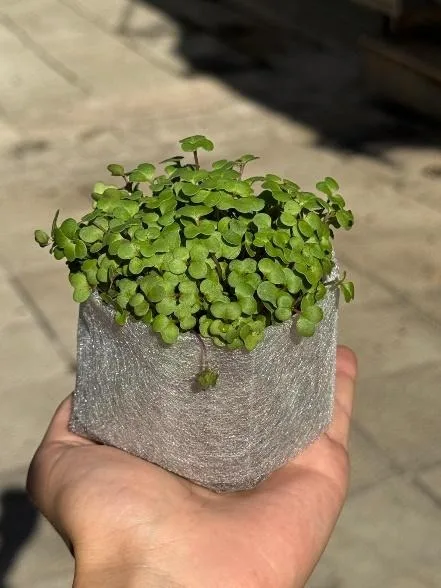
Microgreen powder is not magic and not a scam. It is concentrated dried greens. Drying keeps protein, most minerals and some vitamins, but loses part of the vitamin C and some B vitamins, and freeze-drying protects more than heat. If a powder helps you eat more greens, fine. Just do not pay extra for miracle claims.
Why does this matter? Supplements are a big business, and teenagers see their ads every day. Knowing how to check a claim protects your health and your money.
Prefer fresh? Grow your own with our research-based guides to radish, broccoli or sunflower microgreens, or read the studies in the library of 374 microgreens research papers.
Papers 1–6 are in the EVEC science library; paper 7 is the original 2012 study behind the “40 times” figure.
This article is part of the free knowledge portal of EVEC Microgreens. Wherever you are on your microgreens journey, there is a path for you:
Co-funded by the European Union.
This portal presents the microgreens methodology; the organisation behind it is EVEC Athens — the European Voluntary and Educational Center (evec.org.gr). Views and opinions expressed are those of the author(s) only and do not necessarily reflect those of the European Union or the European Commission. Neither the European Union nor the granting authority can be held responsible for them.
Open licence. Except where stated otherwise, the educational materials on this portal are licensed under CC BY 4.0 — free to use, adapt and share, including commercially, with credit. See the licence terms.
Accessibility. We aim for WCAG 2.1 AA and publish what does and does not yet meet it — see the accessibility statement. If anything here blocks you, tell us and we will send the material in a format that works for you.