Get in touch
Questions about growing, workshops, the cooperative or partnerships? Send us a message and we will reply by email.
Prefer email? Write to erasmus@evec.org.gr

EVEC Microgreens
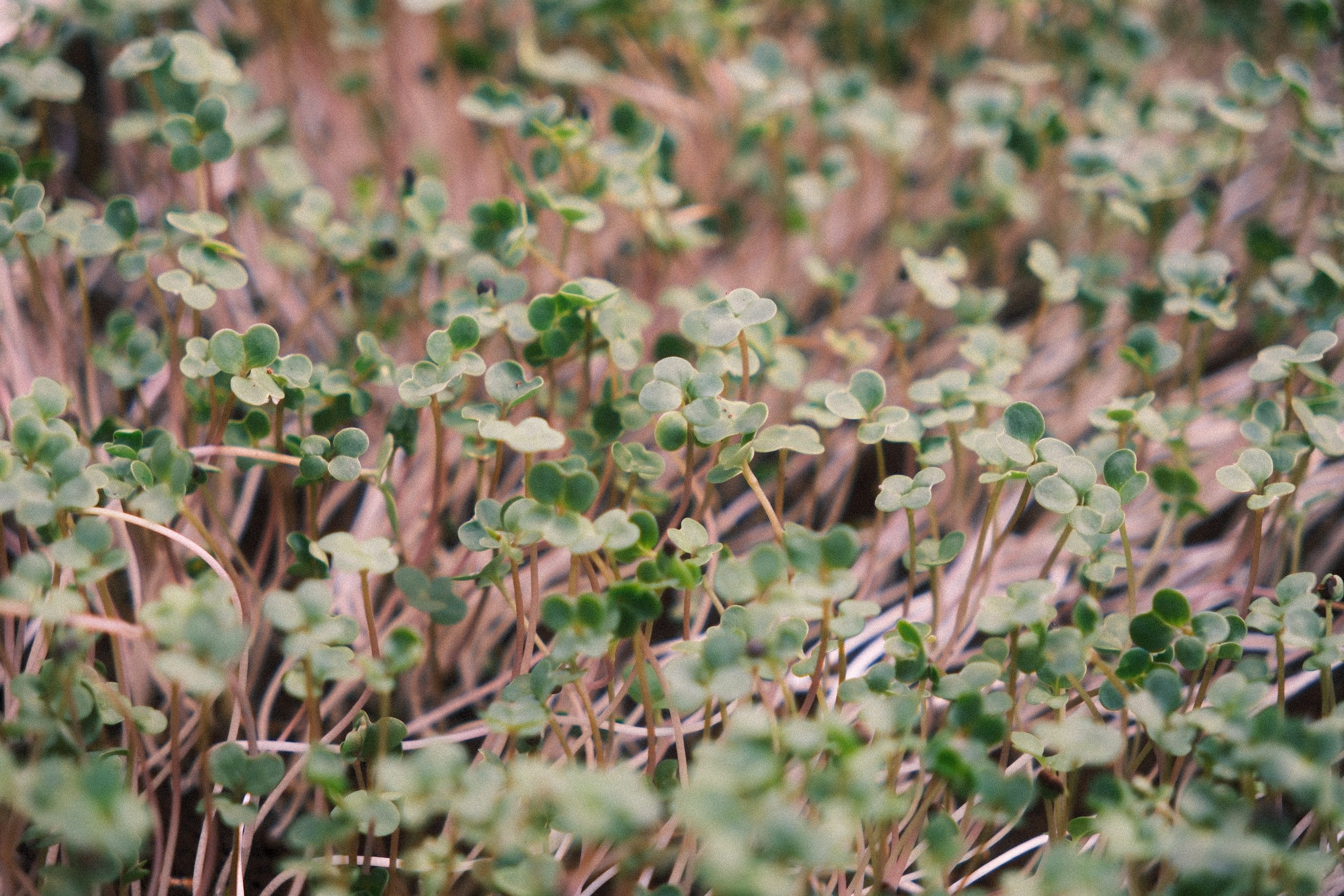
Beetroot (beet) microgreens give you deep red stems and a mild, earthy sweetness. Learn how to sow, grow, harvest and store this slow, easy crop at home.
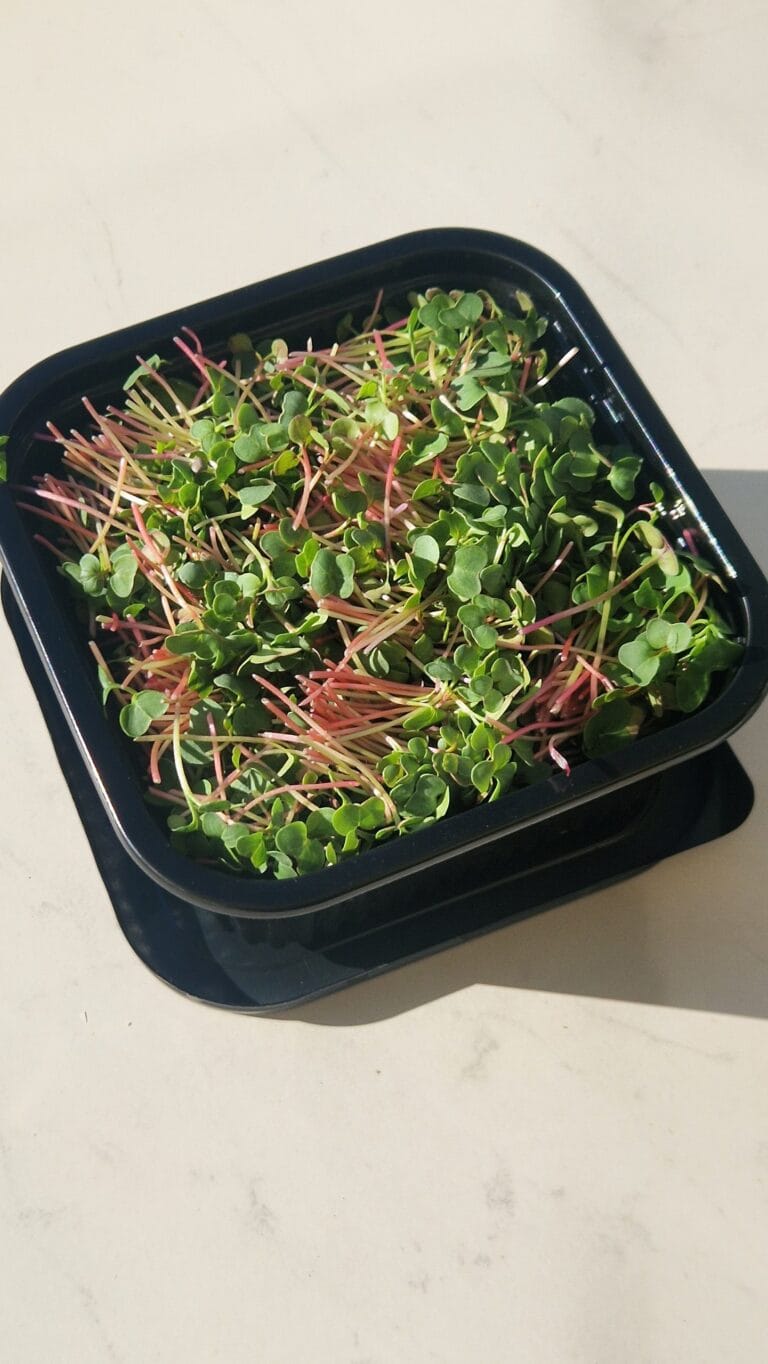
Beetroot (beet) microgreens are young beet seedlings (Beta vulgaris) cut at the first-leaf stage, when they carry vivid magenta-red stems beneath a pair of soft green leaves. They are among the most decorative greens you can grow at home, and they taste like a gentler, sweeter version of mature beetroot leaves rather than of the root itself. Beetroot is a slower, steadier crop than most, but it is forgiving enough for a first attempt and, once you have seen the colour, hard to give up. If the whole process is new to you, start with our Grow at Home hub and come back here for the beet-specific detail.
Beetroot earns its place mainly on looks. The stems are a saturated red that almost nothing else in the microgreen world can match, so a small pinch lifts a plate far more than the effort suggests. The flavour is mild and earthy with a faint sweetness, far less pungent than a peppery brassica such as radish or broccoli, which makes beetroot easy to use generously.
| Seed soaking | Optional — sow dry, or soak 4–8 hours |
| Germination | 3–5 days |
| Blackout (dark) period | 4–6 days |
| Ready to harvest | 10–20 days |
| Difficulty | Moderate — slow, with uneven germination |
| Flavour | Earthy, mild, faintly sweet |
Use only untreated, food-grade beetroot seed sold for microgreens or sprouting. Beet seed meant for field planting is frequently treated with fungicide and dyed a bright colour — it is not safe to eat. If in doubt, choose seed clearly labelled untreated or organic.
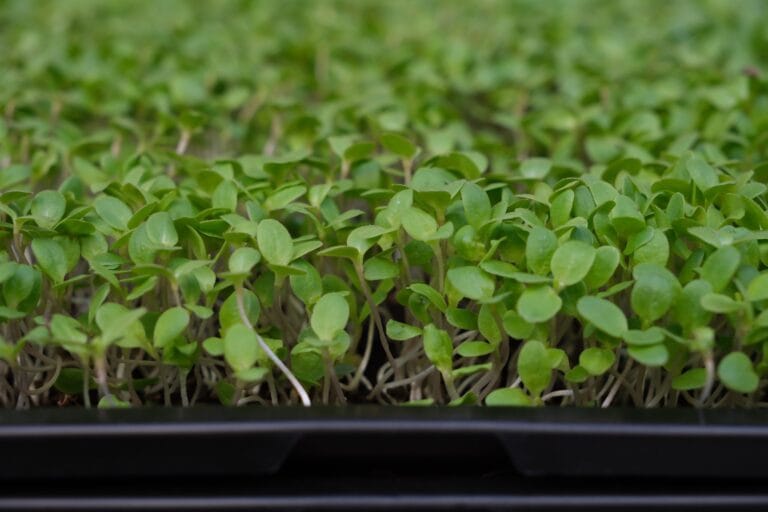
Beetroot has a generous window, but it is at its best a little earlier than you might expect — around day ten to twelve, while the stems are deep red and the leaves still tender. Left too long, the stems begin to toughen, the leaves yellow and the flavour turns sharply earthy. Harvest by gathering a handful and cutting cleanly just above the soil with sharp scissors, keeping as much of the coloured stem as you can.
Because the tops are cut dry — one more reason to water from below — they keep well. Blot off any surface moisture, then store them in a lidded container or bag in the fridge, where they hold for around five to seven days. Rinse them only just before you use them.
The whole point of beetroot microgreens is colour, so use them where they will be seen. They are mild enough to scatter over almost anything: feta or goat’s cheese salads, hummus, avocado toast, soups, risotto or a plate of smoked fish. The red stems bleed a little once dressed and can tint a pale dish pink, which is usually a feature rather than a fault. Pair them with citrus, walnuts or a sharp vinaigrette to bring out the sweetness, and treat them much as you would any delicate raw garnish.
Beetroot rewards a little patience with a colour few other crops can offer, and once you have grown a single tray you will want it on hand for every plate that needs lifting.
Related: radish microgreens for a faster, peppery contrast, and our full library of crop guides for what to grow next.
Studies from our Science Library that concern beetroot microgreens, in plain language with links to the original research. This list updates automatically as new studies are added.
No plain-language write-up for this crop yet — the peer-reviewed studies are listed further down this page, or browse the full Science Library.
Recipes and kitchen ideas from our cookbook team that use beetroot microgreens.
No recipes for this crop yet — the cookbook has plenty to start with.
Growing a different crop next? Every variety has a guide like this one in the Varieties database.
Our research archive holds 16 peer-reviewed studies on beetroot microgreens. They are free to read and download, and each one credits its original authors.
This article is part of the free knowledge portal of EVEC Microgreens. Wherever you are on your microgreens journey, there is a path for you:
Co-funded by the European Union.
This portal presents the microgreens methodology; the organisation behind it is EVEC Athens — the European Voluntary and Educational Center (evec.org.gr). Views and opinions expressed are those of the author(s) only and do not necessarily reflect those of the European Union or the European Commission. Neither the European Union nor the granting authority can be held responsible for them.
Open licence. Except where stated otherwise, the educational materials on this portal are licensed under CC BY 4.0 — free to use, adapt and share, including commercially, with credit. See the licence terms.
Accessibility. We aim for WCAG 2.1 AA and publish what does and does not yet meet it — see the accessibility statement. If anything here blocks you, tell us and we will send the material in a format that works for you.