Get in touch
Questions about growing, workshops, the cooperative or partnerships? Send us a message and we will reply by email.
Prefer email? Write to erasmus@evec.org.gr

EVEC Microgreens

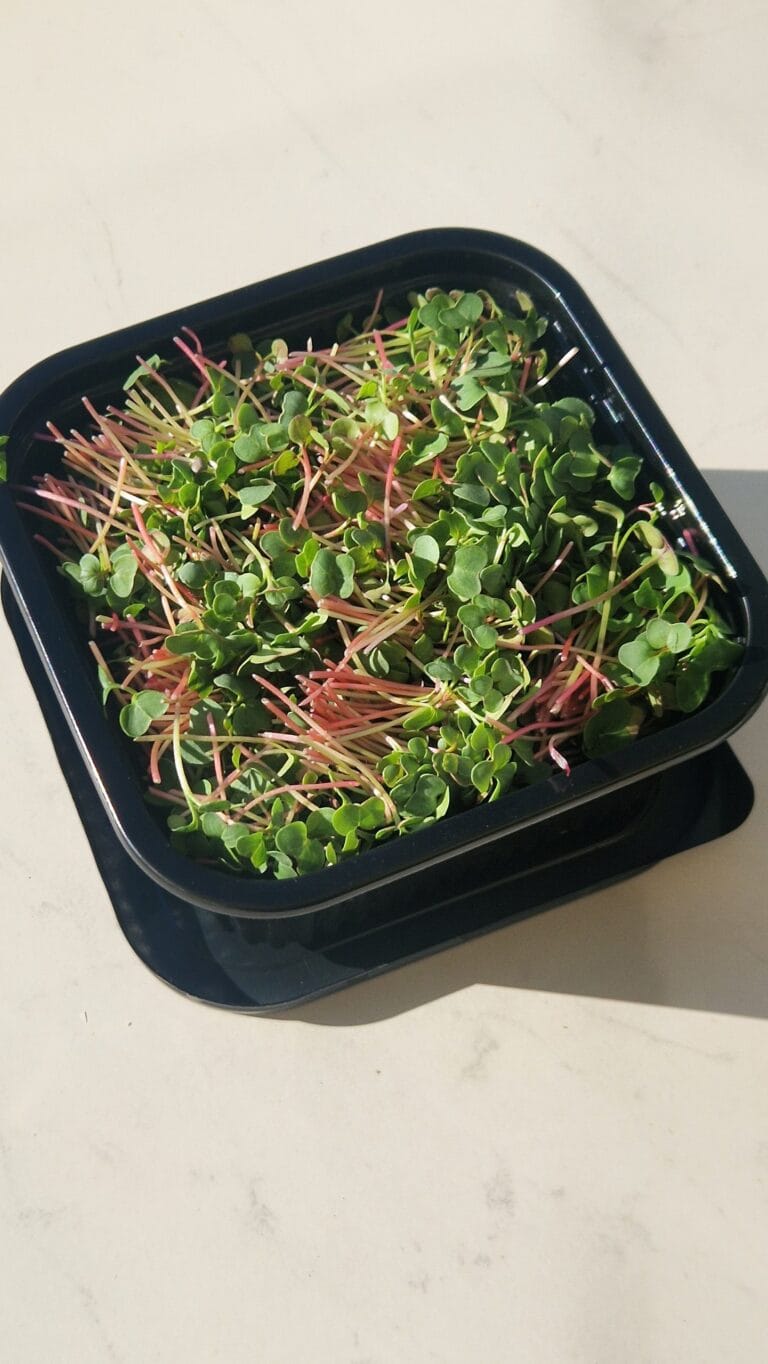
Radish and alfalfa in spring, sunflower and kale in summer, mustard and broccoli in autumn, cilantro and red cabbage in winter, with dishes to match each.
Summer is ending, autumn is beginning, and with the change of season, we thought it would be the perfect time to write this article to show how microgreens can accompany us throughout the year. While they can be grown and enjoyed at any time, certain varieties and recipes work especially well in each season.
Microgreens are versatile in the kitchen, and they add freshness, texture and colour to dishes that change character as the year turns. What follows is about cooking and growing seasons — which varieties suit which months, and what to do with them — not about what any season does to your body.
Spring is the season of rebirth, and there’s nothing better than light, refreshing microgreens.
Their slightly spicy or mild flavor perfectly complements the lightness of this season.
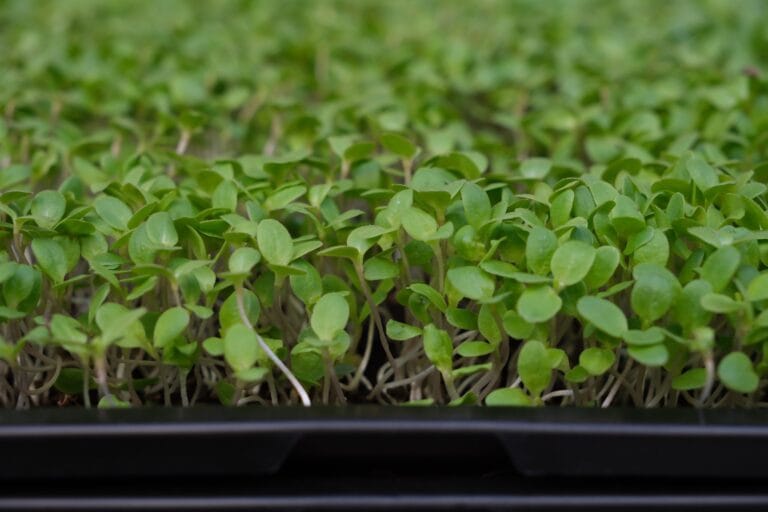
In summer, we look for hydration and easy to prepare dishes without turning on the stove too much.
They add crunch and a fresh, green note to summer dishes that are otherwise mostly cold and soft.
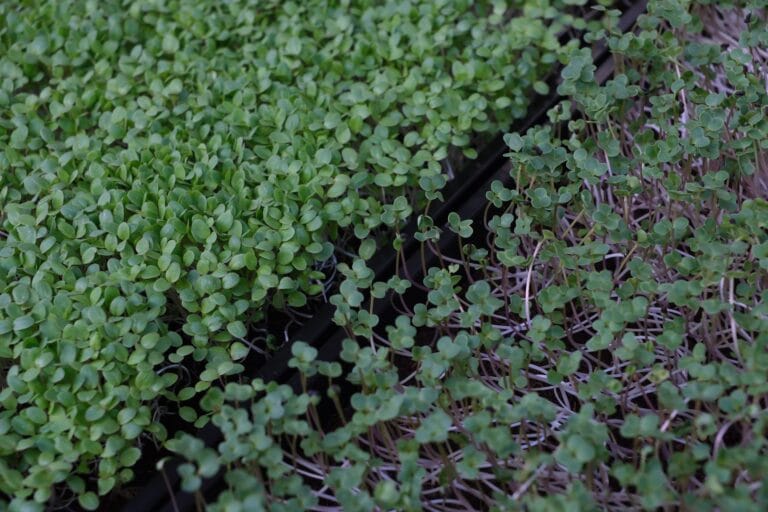
Autumn invites us to enjoy warmer, heartier dishes. Microgreens with stronger flavors perfectly enhance these recipes.
They bring a refreshing contrast to more substantial meals.
Winter is when a tray on the windowsill earns its keep. Outdoor salad crops have stopped, fresh leaves in the shops are imported and expensive, and a tray of microgreens goes from seed to harvest in a fortnight regardless of the weather outside. Strongly flavoured varieties also stand up to the heavier cooking the season calls for.
They add an extra touch of color and vitality to the colder months…
As you can see, microgreens not only adapt to your daily cooking, but they can also accompany you throughout the seasons: freshness in spring, lightness in summer, intensity in autumn, and something green still growing on the windowsill in winter.
Cheers, friends, see you next time!
Carlota
Updated 30 July 2026. The winter section of this article was previously headed “Winter: energy and immune support” and said: “In winter, it’s important to boost our immune system. Microgreens rich in vitamins and antioxidants are perfect allies.” The closing paragraph promised “immune support in winter”. We have removed all three. “Boosting” the immune system is not a recognised physiological outcome, and no source was ever given for the claim here. Composition studies do show that some microgreen varieties are high in vitamin C per gram — Xiao et al. (2012) measured total ascorbic acid across 25 microgreens at 20.4 to 147.0 mg per 100 g fresh weight, which we report in microgreens vs. mature versions. What is missing is not the composition data but the step after it: no trial has tested whether eating a garnish-sized portion of microgreens changes any immune outcome, and that is what a claim like this would need in order to stand up. The same immune claim has been withdrawn from several other articles on this site. The winter section now says what is genuinely true of the season: fresh leaves are scarce, and these are the ones you can still grow indoors. See our editorial standards.
This article is part of the free knowledge portal of EVEC Microgreens. Wherever you are on your microgreens journey, there is a path for you:
Co-funded by the European Union.
This portal presents the microgreens methodology; the organisation behind it is EVEC Athens — the European Voluntary and Educational Center (evec.org.gr). Views and opinions expressed are those of the author(s) only and do not necessarily reflect those of the European Union or the European Commission. Neither the European Union nor the granting authority can be held responsible for them.
Open licence. Except where stated otherwise, the educational materials on this portal are licensed under CC BY 4.0 — free to use, adapt and share, including commercially, with credit. See the licence terms.
Accessibility. We aim for WCAG 2.1 AA and publish what does and does not yet meet it — see the accessibility statement. If anything here blocks you, tell us and we will send the material in a format that works for you.