Get in touch
Questions about growing, workshops, the cooperative or partnerships? Send us a message and we will reply by email.
Prefer email? Write to erasmus@evec.org.gr

EVEC Microgreens
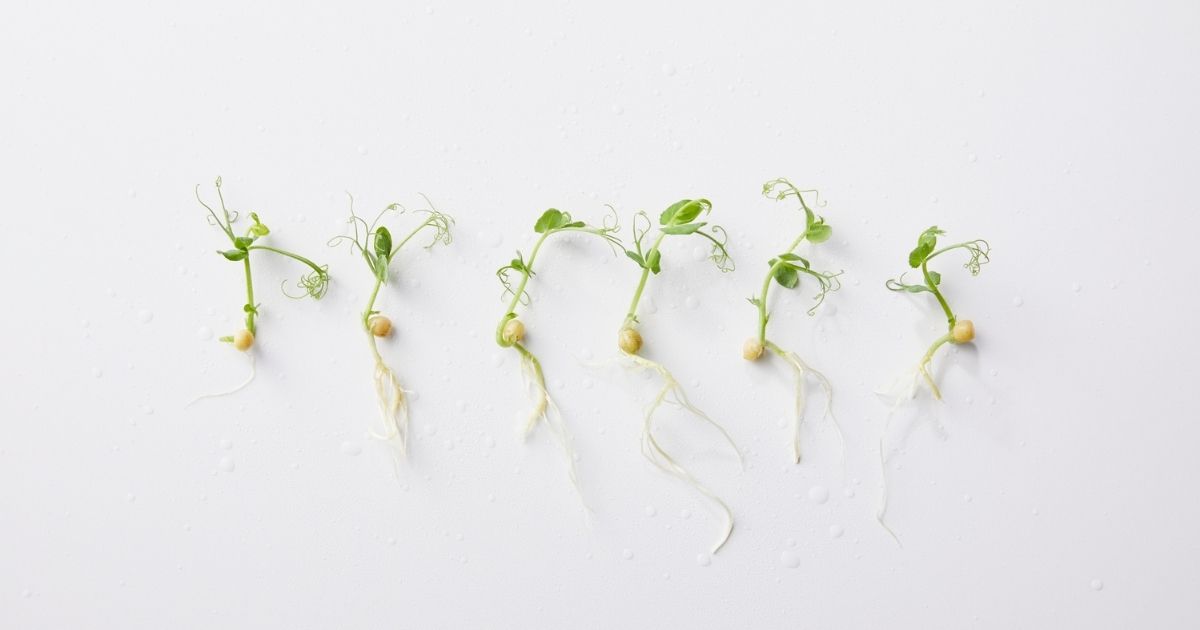
Where microgreens came from: an ancient practice of eating young greens, and a modern restaurant story from 1980s California that is widely repeated but thinly documented.
Microgreens are often treated as a recent invention. The practice of eating young, tender plants is far older, and the modern version is usually traced to the restaurant kitchens of 1980s California.
A note on this history. The account below is the one repeated consistently across horticultural extension material and the trade press, and we have set it out as we found it. It is not, however, documented in primary sources the way a research finding is — there is no contemporaneous record we can point you to for the exact decade, city or chef. Treat the dates as the received story rather than as established fact. The same history, with the same verdict, is set out in the history of microgreens.
The term “microgreens” is modern, but that does not mean the practice began in the last few decades. Eating young, tender plants and sprouts goes back thousands of years. Ancient civilizations in China, Egypt and Rome are described as having valued fresh, unripe greens, cultivating and eating young edible plants to supplement their diets as the weather cooled.
The setting is 1980s California, in the high-end restaurants of San Francisco. Chefs working in the California cuisine movement — the names usually attached to the story are Alice Waters and Wolfgang Puck — were experimenting with plating and garnish, and began growing tiny greens to use in a more deliberate way. The initial goal was aesthetic: appearance first, then flavour. Chefs also valued the intensity of the taste. The early range was small — rocket, basil, beetroot, kale and coriander — and expanded from there.
By the mid-1990s, microgreens had moved beyond Southern California kitchens and were gaining ground in the eastern United States. They raised dishes on both taste and appearance, and since we eat with our eyes as much as our mouths, that visual appeal is part of why they spread.
The turn of the century is the point at which microgreens stopped being a restaurant-only product. They began appearing in local retail stores in the eastern United States, and over the following decade became a familiar sight in grocery stores. The timing helped: they became widely available exactly as interest in healthy eating and in local food was growing.
The microgreens market continues to grow. Several factors sit behind that, and they are worth separating:
Interest in health, sustainability and plant-based eating continues to grow worldwide, and microgreens sit at the intersection of all three. On the current trajectory they look likely to remain a permanent part of the culinary landscape rather than a passing fashion.
This article is part of the free knowledge portal of EVEC Microgreens. Wherever you are on your microgreens journey, there is a path for you:
Co-funded by the European Union.
This portal presents the microgreens methodology; the organisation behind it is EVEC Athens — the European Voluntary and Educational Center (evec.org.gr). Views and opinions expressed are those of the author(s) only and do not necessarily reflect those of the European Union or the European Commission. Neither the European Union nor the granting authority can be held responsible for them.
Open licence. Except where stated otherwise, the educational materials on this portal are licensed under CC BY 4.0 — free to use, adapt and share, including commercially, with credit. See the licence terms.
Accessibility. We aim for WCAG 2.1 AA and publish what does and does not yet meet it — see the accessibility statement. If anything here blocks you, tell us and we will send the material in a format that works for you.