Get in touch
Questions about growing, workshops, the cooperative or partnerships? Send us a message and we will reply by email.
Prefer email? Write to erasmus@evec.org.gr
EVEC Microgreens
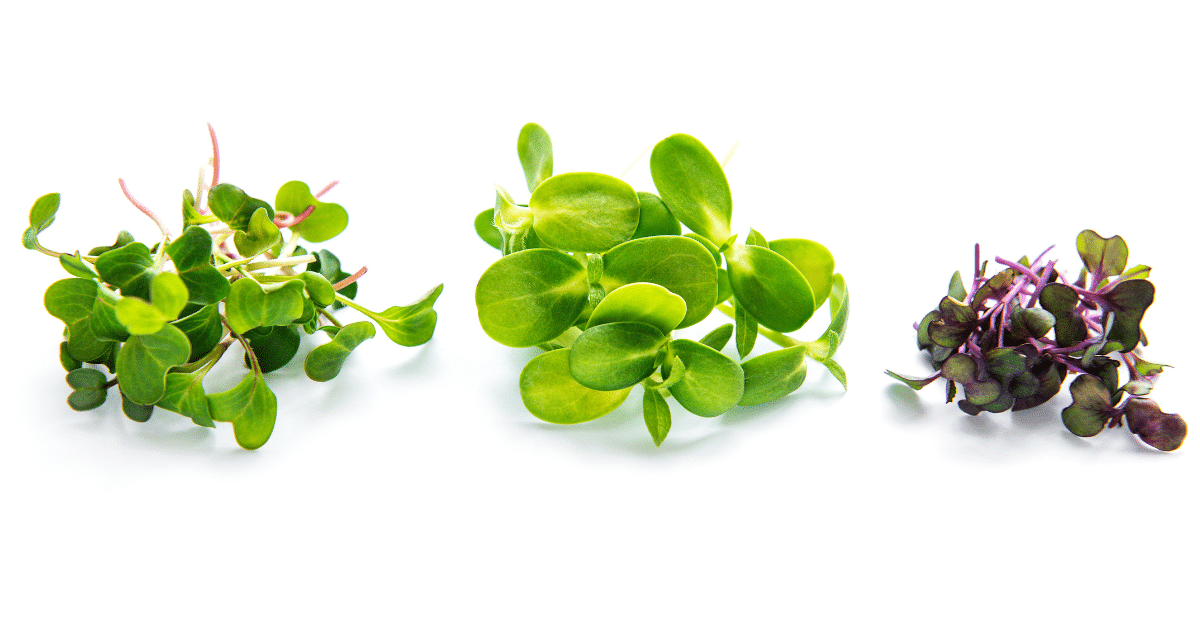
Sprouts, microgreens or young edible plants — do you know the difference? A clear guide to the young edible greens you can grow and eat, and how they differ.
An earlier article, Microgreens and Weight Management: What the Research Shows, looked at what microgreens can and cannot contribute to a weight-management diet. This one deals with a more basic question: what actually separates sprouts, microgreens and baby greens? The distinction is not obvious, and it matters: the three differ in growth time, harvest stage and growing medium. The final section collects a set of facts about microgreens.
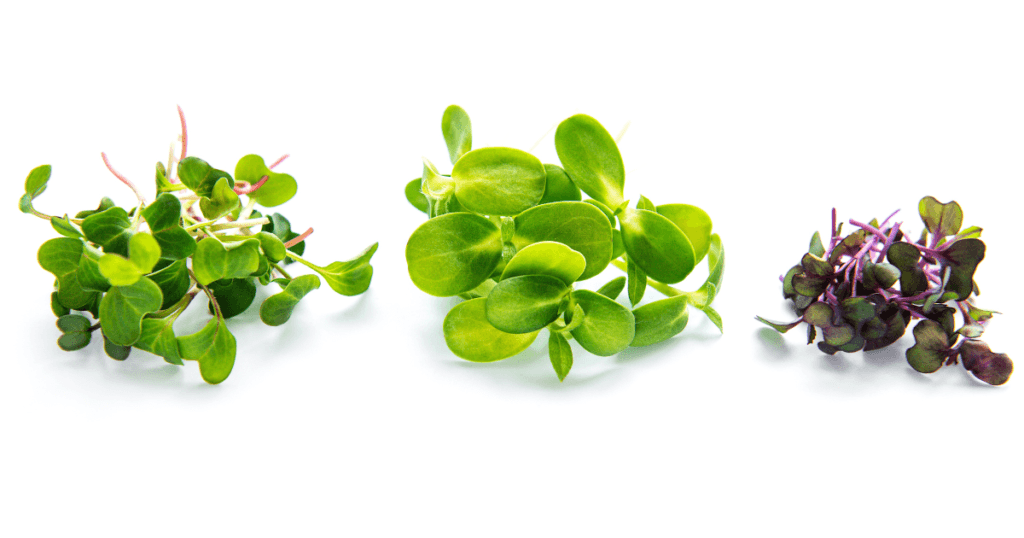
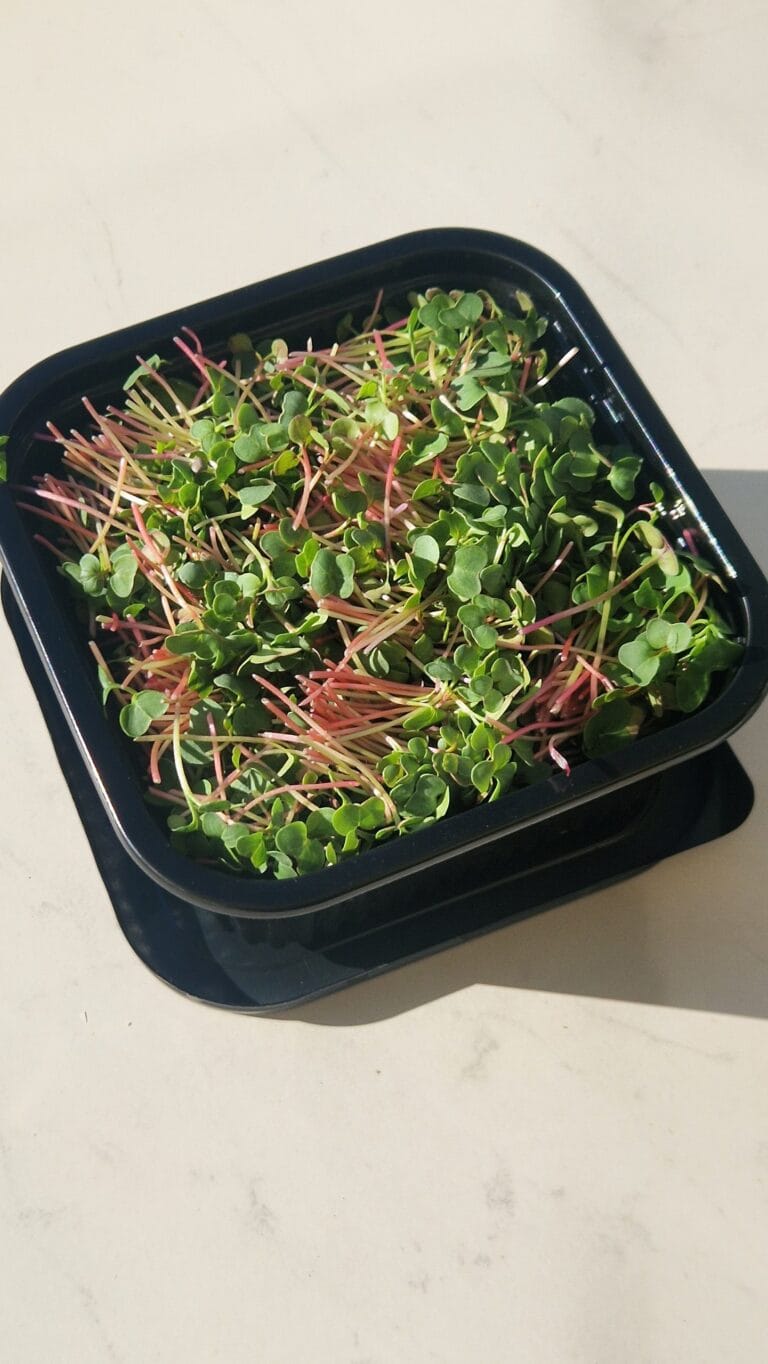
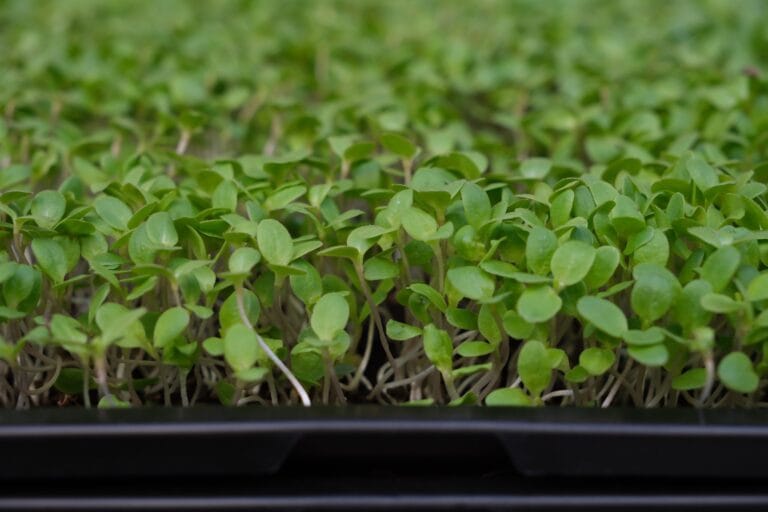
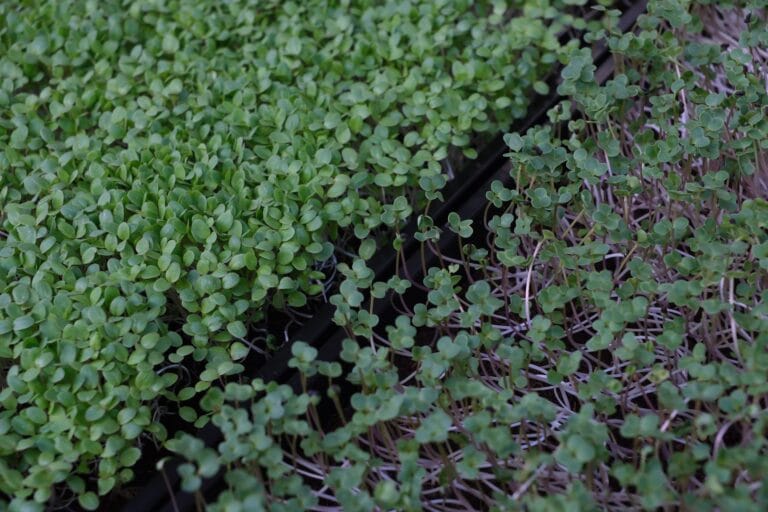
Microgreens – In the academic article Microgreens Production: Exploiting Environmental and Cultural Factors for Enhanced Agronomical Benefits“Microgreens are defined as small plants with two fully developed cotyledons, a pair of small true leaves, and a central stem.Microgreens are an emerging crop and are tender seedlings harvested at the emergence of the first true leaves”1.
Sprouts – According to researchers, sprouts are “consist of shoots and roots obtained from germinating seeds that grow for 2-7 days and are harvested when the cotyledons are still immature and the first true leaves have not yet appeared”2
Baby greens – in LED light effect on growth, pigments, and antioxidants of lettuce (Lactuca sativa L.) baby greens article scientist describes baby greens as „Young and tender edible leafy vegetables and herbs known as baby greens are harvested shortly after the true leaves emerge and before the eighth true leaf stage, typically within 20 to 40 days after germination. They are nutrient-dense, providing a high concentration of vitamins, minerals, and antioxidants”3.
The biggest difference between microgreens, baby greens and sprouts is in the size of the plant and time of growth. Baby greens are a later stage of microgreens. Microgreens are older than spreads but younger than baby greens. Therefore microgreens and spreads are consumed at an immature stage. Sprouts are just germinated seeds, which grow mainly in water and darkness. Microgreens need light and a substrate, which limits the risk of bacterial contamination.
Comparison table:
| Type | Growth time | Harvest Stage | Medium |
| Microgreens | 7-21 days | First true leaves | Soil/light |
| Sprouts | 2-7 days | Before true leaves | Water/dark |
| Baby greens | 20-40 days | Up to 8 true leaves | Soil/ light |
Sprouts, microgreens and baby greens are often treated as one category. In practice they are three different crops, separated by how long they grow, the stage at which they are cut, and whether they are raised in water and darkness or in a substrate under light.
Now your turn! Surprise your friends with facts that even many foodies don’t know. Join our green revolution— and let the tiny leaves make a big change!”
Karolina
This article is part of the free knowledge portal of EVEC Microgreens. Wherever you are on your microgreens journey, there is a path for you:
Co-funded by the European Union.
This portal presents the microgreens methodology; the organisation behind it is EVEC Athens — the European Voluntary and Educational Center (evec.org.gr). Views and opinions expressed are those of the author(s) only and do not necessarily reflect those of the European Union or the European Commission. Neither the European Union nor the granting authority can be held responsible for them.
Open licence. Except where stated otherwise, the educational materials on this portal are licensed under CC BY 4.0 — free to use, adapt and share, including commercially, with credit. See the licence terms.
Accessibility. We aim for WCAG 2.1 AA and publish what does and does not yet meet it — see the accessibility statement. If anything here blocks you, tell us and we will send the material in a format that works for you.