Get in touch
Questions about growing, workshops, the cooperative or partnerships? Send us a message and we will reply by email.
Prefer email? Write to erasmus@evec.org.gr
EVEC Microgreens
Are microgreens safe during pregnancy? Food-safety guidance on raw greens, which to avoid, and how to wash and handle them when you are expecting.
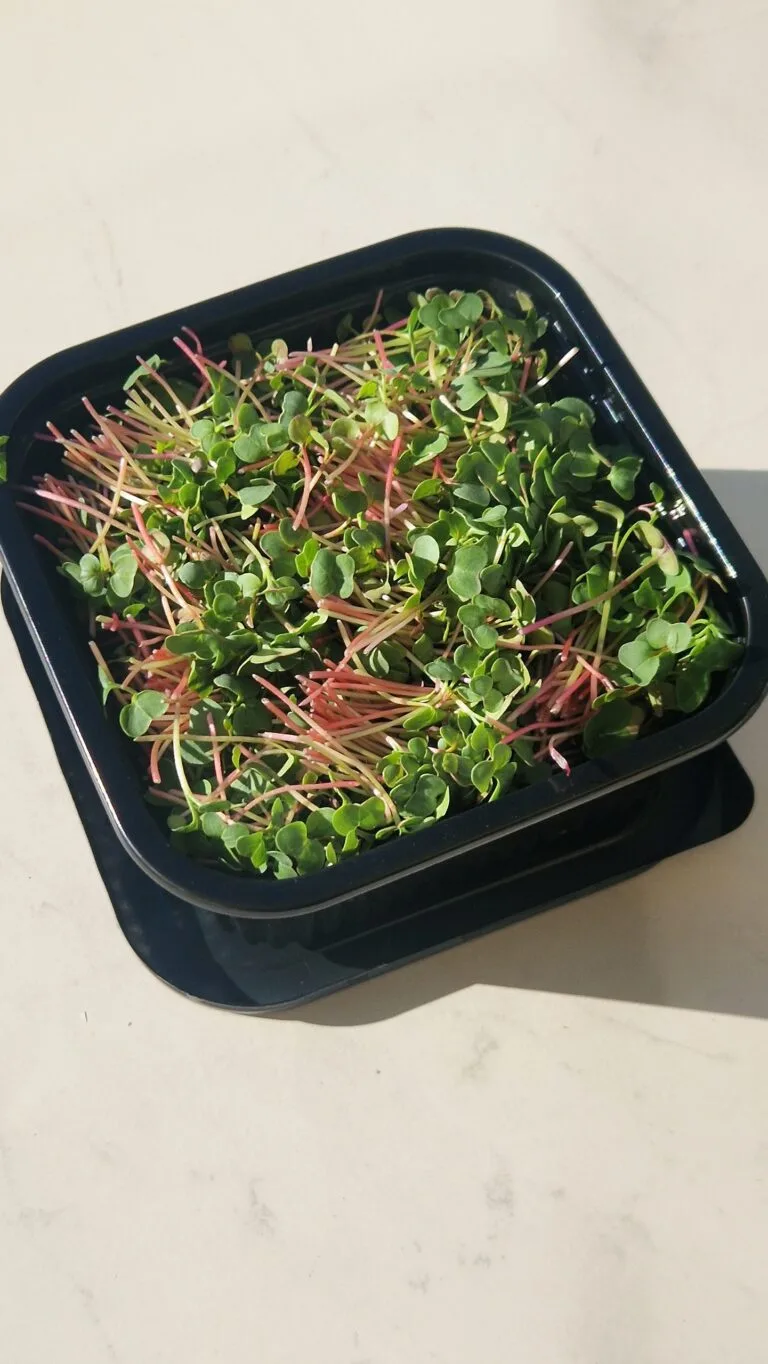
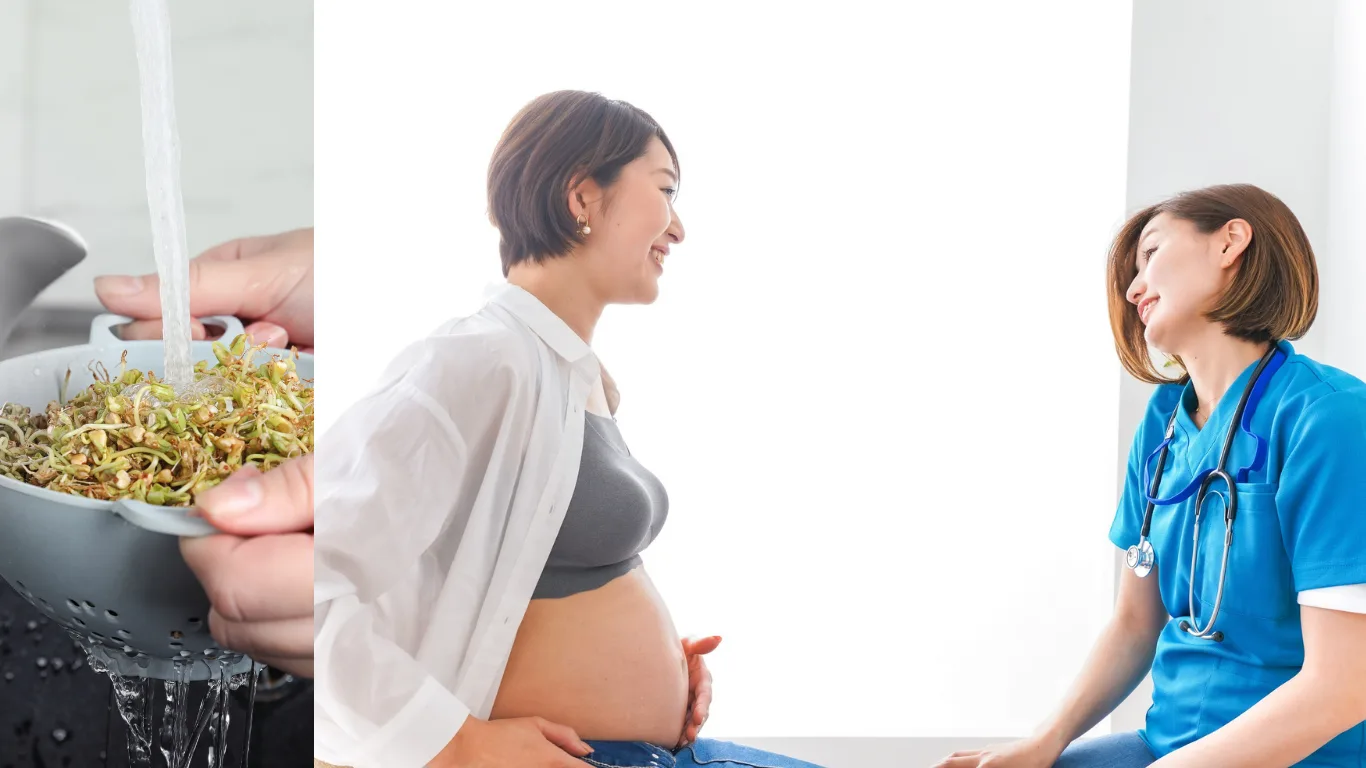
Are microgreens safe during pregnancy? Microgreens are not sprouts, and that distinction is the heart of the answer — but they are still a raw, ready-to-eat green, so washing, storage and cooking all matter. This is the safety instalment of our pregnancy series: what food-safety guidance says about eating microgreens while expecting, and how to handle, wash and store them. Pregnancy raises the stakes on raw ready-to-eat greens, which is where the risk in this crop actually sits.
Important: This is general food-safety information, not medical advice. During pregnancy, national health services such as the NHS and food-safety agencies advise avoiding raw sprouts because of the risk of Listeria, E. coli and Salmonella, and eating them only when cooked thoroughly. Always follow the advice of your own doctor or midwife.
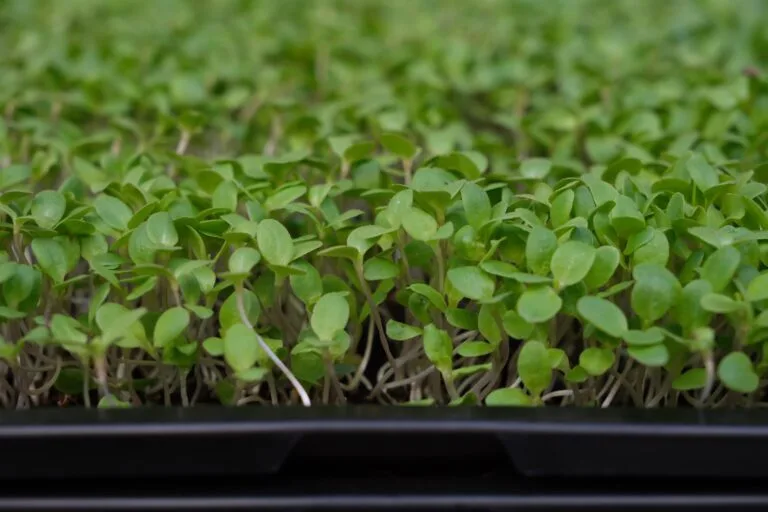
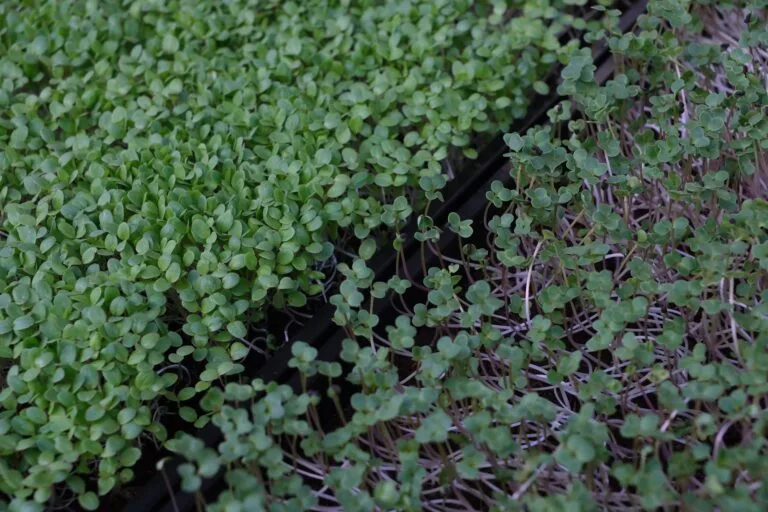
Sprouts and microgreens both come from seeds, but they are not the same. Sprouts are grown in warm, very humid conditions and eaten whole — including the root — which is why health authorities single them out as a higher-risk raw food, especially in pregnancy. Microgreens are grown in less humid conditions and only the young stems and leaves are harvested above the seed, which generally makes them a lower-risk raw product than sprouts.
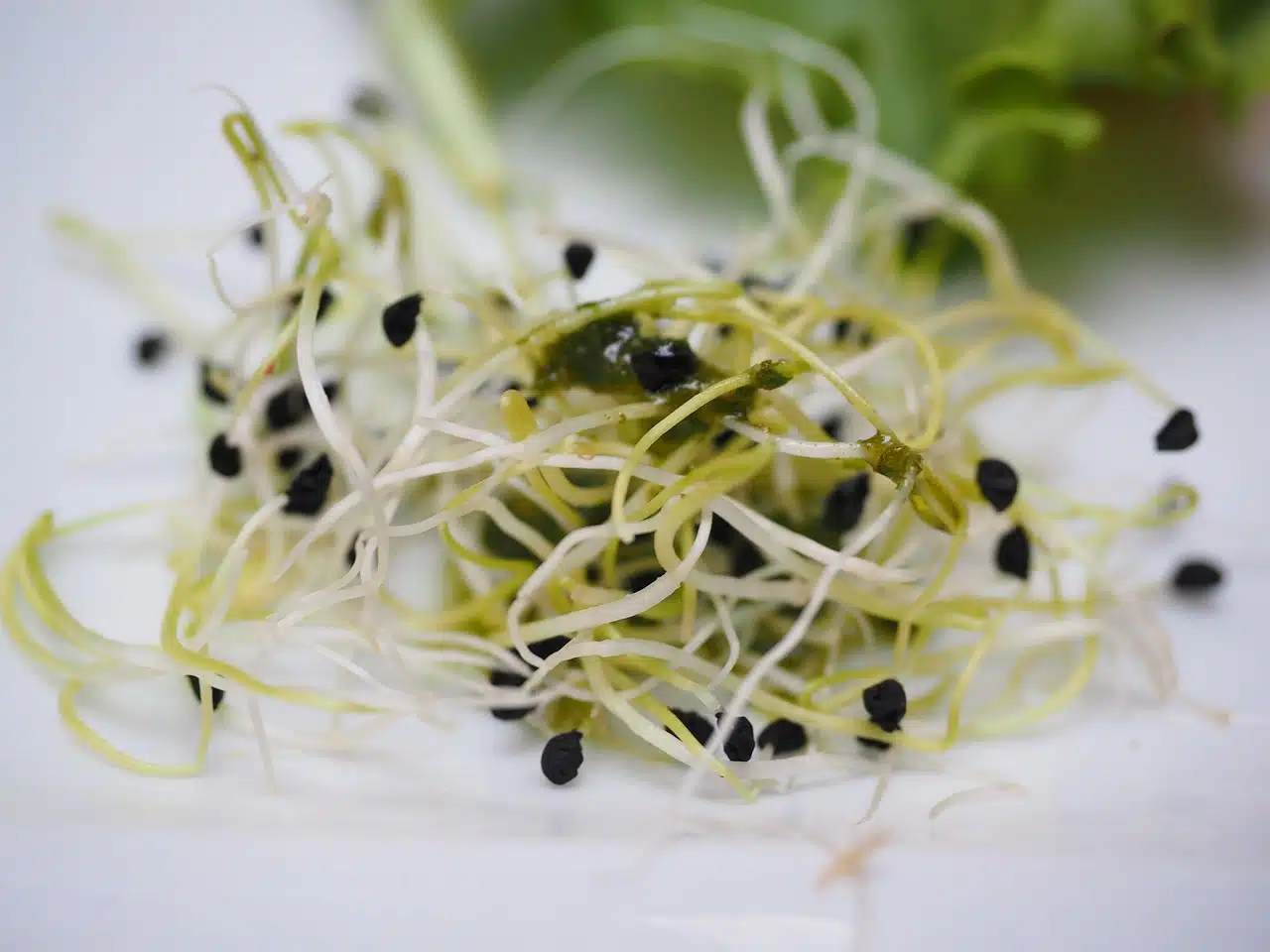
“Lower risk than raw sprouts” is not the same as “risk-free,” though. Microgreens are still a raw, ready-to-eat green, so during pregnancy they should be washed thoroughly and — if you have any doubt about how they were grown, handled or stored — cooked before eating. When in doubt, cook them.
Most culinary microgreens (pea, sunflower, radish, broccoli, kale) are considered fine in a normal diet when washed well. A few plants, however, are not safe to eat as microgreens or seedlings at all — for example seedlings from the nightshade family (tomato, potato, pepper) and rhubarb leaves. See our guide to which microgreens are not safe to eat, and if you are unsure whether a specific variety is appropriate during pregnancy, ask your doctor or midwife rather than guessing.
With careful handling, good hygiene and your healthcare provider’s okay, microgreens can be a nutritious addition to a balanced pregnancy diet.
This article is part of a series; the earlier articles cover microgreens and pregnancy more broadly.
That’s all for today!
If you’re reading this and are pregnant, we hope this article and the previous ones are useful to you. If you’re not, but know a family member or friend who is or who might be interested, don’t hesitate to share them.
See you next time!
Carlota
This article is general information, not medical advice. Dietary needs in pregnancy are individual — always follow the guidance of your doctor or midwife.
This article is part of the free knowledge portal of EVEC Microgreens. Wherever you are on your microgreens journey, there is a path for you:
Co-funded by the European Union.
This portal presents the microgreens methodology; the organisation behind it is EVEC Athens — the European Voluntary and Educational Center (evec.org.gr). Views and opinions expressed are those of the author(s) only and do not necessarily reflect those of the European Union or the European Commission. Neither the European Union nor the granting authority can be held responsible for them.
Open licence. Except where stated otherwise, the educational materials on this portal are licensed under CC BY 4.0 — free to use, adapt and share, including commercially, with credit. See the licence terms.
Accessibility. We aim for WCAG 2.1 AA and publish what does and does not yet meet it — see the accessibility statement. If anything here blocks you, tell us and we will send the material in a format that works for you.