Get in touch
Questions about growing, workshops, the cooperative or partnerships? Send us a message and we will reply by email.
Prefer email? Write to erasmus@evec.org.gr
EVEC Microgreens
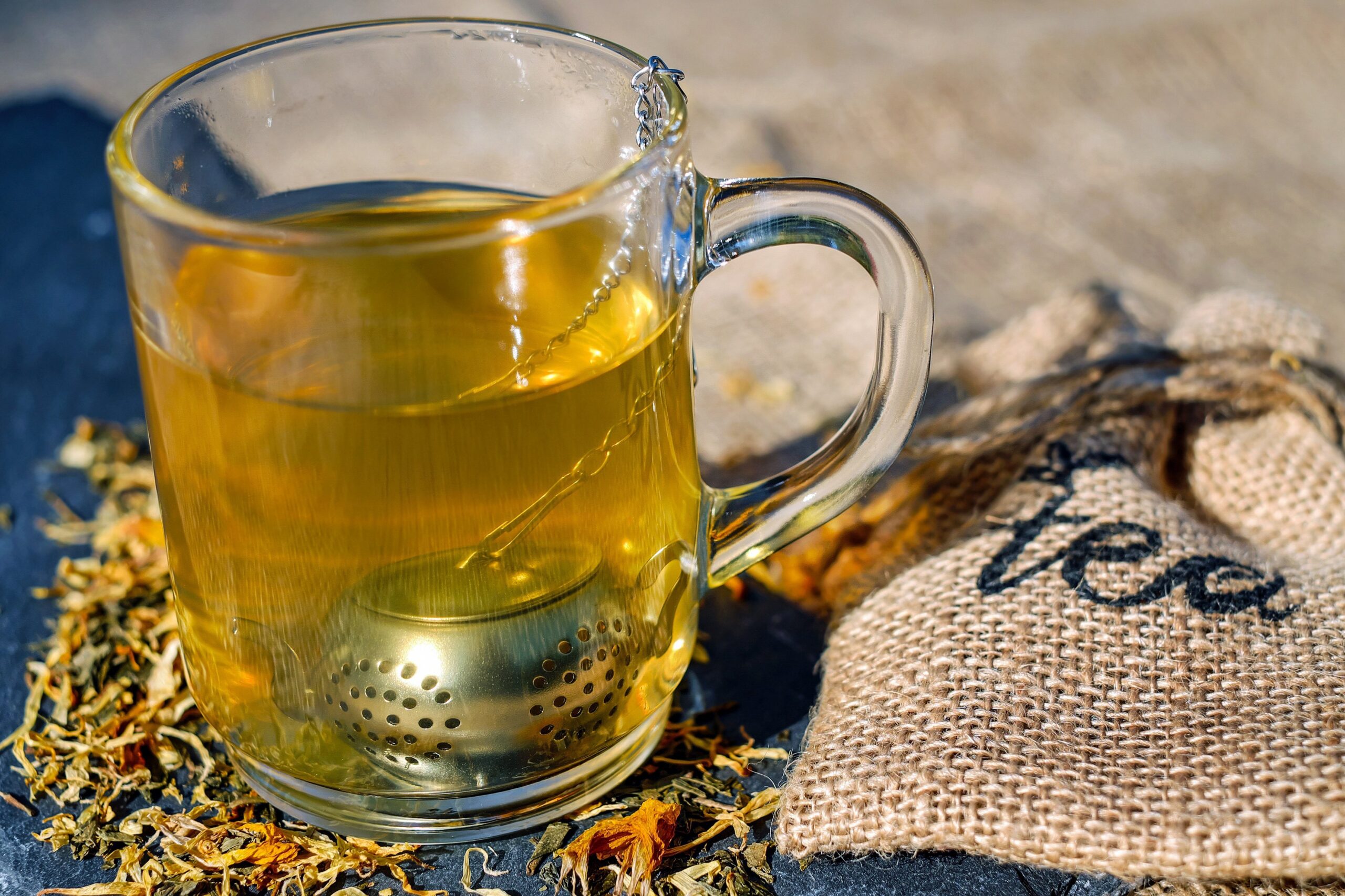
Microgreens tea is an unexpected way to use your harvest. How to make it, what it tastes like, and the challenges of brewing with these delicate young greens.
Salads, sandwiches, toasts, pasta dishes, juices and smoothies have all been covered here as ways of getting microgreens into a diet, either blended or whole. A new way to integrate microgreens into our daily routine is microgreens tea: what is currently known about preparing them as an infusion, their potential benefits, and the challenges involved.
The idea of turning them into tea presents a new opportunity to take advantage of their compounds, introduce them in a more digestible liquid format, and explore new flavor experiences.
• Drying or using fresh: To maximize compound extraction, it’s recommended to use dried or partially dehydrated microgreens.
• Temperature and infusion time: When combining microgreens with traditional tea (black, green, or white), the infusion time varies between 3 and 5 minutes; if using only microgreens, without any other tea, 10 to 15 minutes is recommended.
• Water to microgreens ratio: About one teaspoon of dried microgreens per cup of water is suggested.
• Higher mineral content in the infusion. Newman et al. (2023) brewed lemon balm harvested at the microgreen stage and at maturity, and measured more calcium, potassium, magnesium, phosphorus, copper and zinc in the microgreen-stage tea. That is a measurement of what ends up in the cup, not of how much of it the body absorbs.
• Antioxidants, polyphenols and other bioactive compounds do pass into the infusion. What that does inside a person has not been tested — no clinical trial of microgreens infusions has been published.
• An alternative way of consumption, more accessible for people who don’t usually eat large amounts of vegetables.
It’s important to note that, although these findings are promising, there are still no clinical studies that directly prove that microgreens infusions produce the same effects as consuming them fresh.
Likewise, not all compounds present in microgreens can be effectively extracted with hot water, limited steeping times, or varying blends. Additionally, some bioactive compounds may degrade due to heat or oxidation.
Despite these challenges, we can anticipate that in the coming years more clinical studies will emerge evaluating the effects of consuming microgreens infusions on health.
We can also expect the development of commercial “microgreens tea” products standardized in dosage, quality, and flavor, or even hybrid blends that combine microgreens with traditional teas (green, white, etc.) to enhance both flavor and functionality.
It will also be crucial to optimize drying, extraction, and presentation methods to preserve as many beneficial compounds from microgreens as possible.
In conclusion, much progress is still needed to retain all the properties of microgreens in tea form.
See you in the next article as we continue discovering new ways to unlock the full potential of microgreens!
Carlota
Newman, R. G., Moon, Y., Tou, J. C., McManus, T., & Waterland, N. L. (2023). Harvest stage and brewing conditions impact mineral content, phenolic compounds, and antioxidant capacity of lemon balm (Melissa officinalis L.) herbal tea. Plant Foods for Human Nutrition, 78(2), 336–341. https://pubmed.ncbi.nlm.nih.gov/36971946/
Tallei, T. E., et al. (2024). A comprehensive review on the antioxidant activities and health implications of microgreens. International Journal of Food Science & Technology, 59(1), 58–??. https://academic.oup.com/ijfst/article/59/1/58/7807901
Vučetić, A., Šovljanski, O., Pezo, L., Gligorijević, N., Kostić, S., Vulić, J., & Čanadanović-Brunet, J. (2025). A comprehensive antioxidant and nutritional profiling of Brassicaceae microgreens. Antioxidants, 14(2), 191. https://pubmed.ncbi.nlm.nih.gov/40002378/
This article is part of the free knowledge portal of EVEC Microgreens. Wherever you are on your microgreens journey, there is a path for you:
Co-funded by the European Union.
This portal presents the microgreens methodology; the organisation behind it is EVEC Athens — the European Voluntary and Educational Center (evec.org.gr). Views and opinions expressed are those of the author(s) only and do not necessarily reflect those of the European Union or the European Commission. Neither the European Union nor the granting authority can be held responsible for them.
Open licence. Except where stated otherwise, the educational materials on this portal are licensed under CC BY 4.0 — free to use, adapt and share, including commercially, with credit. See the licence terms.
Accessibility. We aim for WCAG 2.1 AA and publish what does and does not yet meet it — see the accessibility statement. If anything here blocks you, tell us and we will send the material in a format that works for you.